Jammu
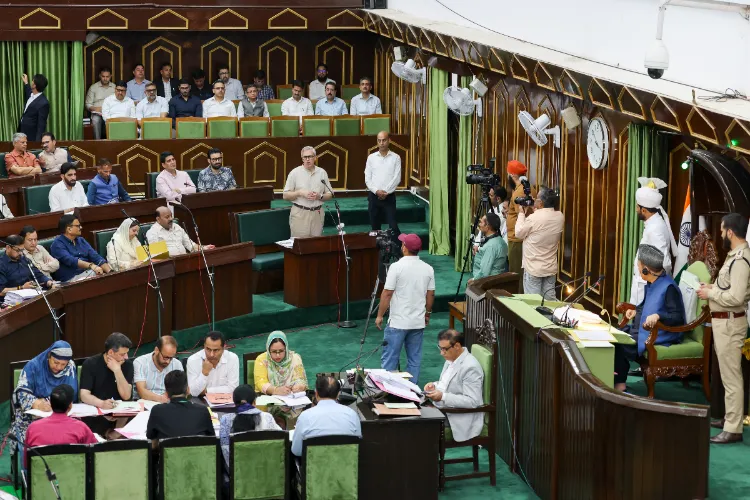
Jammu and Kashmir Chief Minister Omar Abdullah on Wednesday said the government will adopt a Rajasthan-style behavioural training model for tourism stakeholders to improve the experience of holidaymakers visiting the Union Territory.
In reply to questions by Congress MLA Irfan Hafiz Lone and National Conference (NC) MLA Tanvir Sadiq, the chief minister said that clean tourist destinations are vital to ensuring visitors return.
Abdullah, who also holds the tourism portfolio, said that while harassment of tourists is not widespread, even a single incident is unacceptable as it damages the overall tourist experience.
"The government is working on a program inspired by a successful initiative in Rajasthan, where behavioral science-based training — developed in collaboration with IIT — was used to improve the conduct of tourism stakeholders. We want to ensure that such negative tendencies (harassment of tourists) do not grow, and that we provide a better experience to tourists so they return happily," he said.
The chief minister said that no major incidents of tourist harassment or decline in tourist inflow due to overcharging or poor service behaviour have been reported, though isolated complaints have been addressed as per rules.
From January 2025 till date, 508 complaints have been received, of which 413 have been disposed of, he said.
Citing examples, he pointed out that tourists are sometimes forced into uncomfortable situations. In some places, visitors are made to rent heavy winter clothing like long coats and boots even in high temperatures, leaving them uncomfortable.
In other instances, tourists are aggressively approached by service providers — such as pony operators — who insist they use their services, even when unnecessary, Abdullah said, also highlighting cases of overcharging and coercion, where tourists are quoted one price on display boards but later asked to pay more.
He said that training and capacity-building programmes are regularly conducted for tourism stakeholders, including hotel staff, guides, Shikara operators, taxi drivers, and vendors. These programmes cover hospitality etiquette, housekeeping, guiding, food and beverage services, first aid, CPR, safety, rescue, and responsible tourism practices.
"A proposal for mandatory certification of stakeholders is currently under consideration," he said.
However, the chief minister emphasised that addressing these issues is not solely the government's responsibility. Elected representatives from tourist areas like Sonamarg, Pahalgam, Gulmarg, and others must work alongside the government, along with all stakeholders in the tourism sector.
On sanitation, the chief minister stressed that maintaining cleanliness at tourist destinations is critical, as poor hygiene discourages repeat visits.
He said creating employment opportunities for youth through the tourism sector remains a priority, but quality will not be compromised.
Abdullah clarified that applications pending in Gulmarg hill resort have not been delayed due to procedural lapses, but because the number of existing permits is sufficient in view of the current tourist inflow.
The chief minister said it aims to ensure that permits are not concentrated in the hands of a single individual or family. "It has often been observed that one person secures multiple permits across activities — such as pony rides, ATVs, and guiding services — resulting in limited distribution of income.
READ MORE: Aneesa Sayyad: The ‘Golden Girl’ of Indian shooting
"Efforts are underway to rationalise the system so that more families can benefit and employment opportunities are spread more widely. For instance, while some individuals earn during the summer through pony services, others can generate income in winter through sledging and ski guiding," he said.
He said that as tourist arrivals in Gulmarg increase, the number of registrations and permits will also be expanded accordingly.







.webp "Representational Image")
.webp "Defence Minister Rajnath Singh")

_(1).webp)