.webp "Representational image")
New Delhi
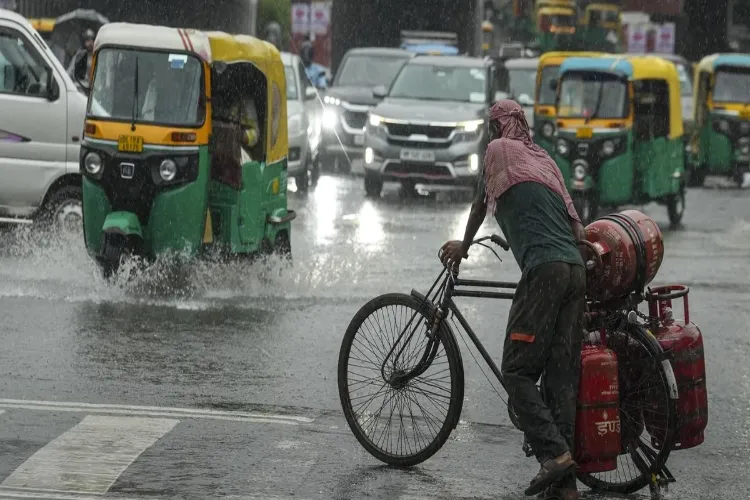
A Delhi court has declined to grant anticipatory bail to a man accused of hoarding and illegally selling LPG cylinders during the ongoing supply concerns linked to the West Asia crisis. The court observed that custodial interrogation remains necessary to uncover the full extent of the alleged black marketing network.
The matter was heard by Additional Sessions Judge Vinod Kumar Gautam, who was considering the anticipatory bail plea of Mukesh Kumar. He has been booked under provisions of the Essential Commodities Act for violating orders related to hoarding, as well as under the Bharatiya Nyaya Sanhita for alleged criminal conspiracy.
During the hearing, counsel for the accused contended that the offence under the Essential Commodities Act carries relatively limited punishment and is bailable. The defence also cited several high court rulings to support the plea and argued that Kumar had expressed willingness to cooperate with the investigation. It was further submitted that recoveries in the case had already been made, and that a co-accused had been granted bail, warranting similar relief.
However, the court noted that the high court rulings cited were not binding and could only serve as persuasive references. Referring to established legal principles laid down by the Supreme Court, the judge emphasised that anticipatory bail is an exceptional remedy and should not be granted routinely, especially in cases involving serious and well-planned conspiracies.
The court highlighted that investigations into organised economic offences require a different approach, particularly when they are at a crucial stage. It stressed that custodial interrogation is often more effective in uncovering the full chain of illegal activities than questioning a person protected by anticipatory bail.
Rejecting the plea, the court stated that the accused had failed to establish sufficient grounds for such relief. It also pointed out that the allegations involve illegal procurement and distribution of LPG cylinders during a period of heightened demand and supply constraints, suggesting a coordinated operation with broader implications for public safety and the distribution system.
The argument seeking parity with a co-accused was also dismissed. The court observed that Kumar’s role appeared distinct, noting that he was allegedly the owner of the vehicle used in the offence and was suspected to be a key conspirator.
The judge further underlined the seriousness of offences involving essential commodities, particularly during periods of price rise and public dependence. Such acts, the court said, have a direct impact on public welfare and undermine the distribution framework.
It clarified that the recovery of material in the case does not eliminate the need for custodial interrogation, especially where a larger conspiracy is suspected. The court also took note of the accused’s failure to join the investigation prior to the hearing, reinforcing the prosecution’s argument that further interrogation in custody was necessary.
READ MORE: Inspirational story of Kolkata’s ‘Hijabi Biker’ Alima Rahman
Concluding the matter, the court dismissed the anticipatory bail application, while making it clear that its observations were limited to the bail proceedings and did not reflect on the merits of the case.










.webp "Prime Minister Narendra Modi")


.webp)