




Ahmed Ali Fayyaz/Srinagar
The government has once again made it clear that violations of Standard Operating Procedures (SOP) during the counterinsurgency operations will not be tolerated in Jammu and Kashmir by taking swift action in the alleged custodial killing of three youths in Poonch, Jammu.
The government launched inquiries against the Army personnel allegedly involved in the interrogation of three young men on suspicion of association with terrorists.
This is the second time in the last three years that the Prime Minister’s Office (PMO) has asserted and communicated to all concerned in a no-nonsense manner that there is zero tolerance for human rights abuse while fighting terrorism.
Incidentally, earlier three civilians killed in a fake encounter in Kashmir also belonged to the area. They were from Rajouri. They were killed at Amshipora in Kashmir’s Shopian district in July 2020. The three were labeled as 'mercenaries - foreign terrorists.'
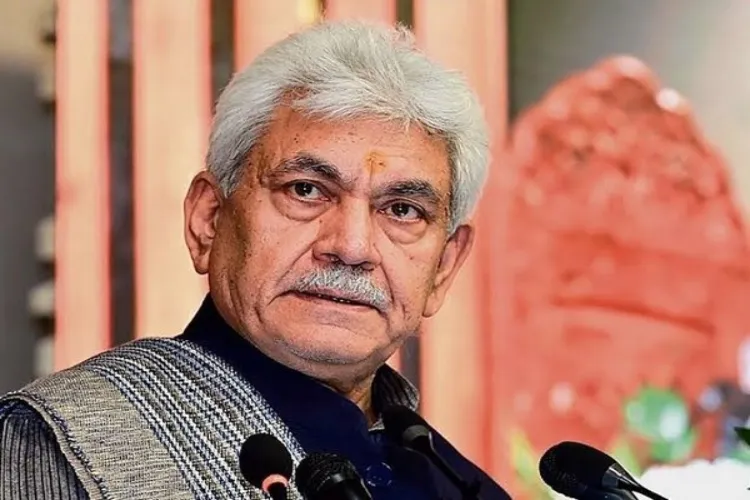
Back then, on PM Narendra Modi’s instructions, Lieutenant Governor Manoj Sinha traveled to Rajourim and met the families of the victims’ families. he promised them substantial monetary compensation and offered government jobs.
The court of inquiry led to the conviction and dismissal of a Captain-level officer. The verdict is currently under review in the Armed Forces Tribunal (AFT).
The court established that the said Army officer had conducted a fake encounter without a reason and for personal benefit.
On 21 December 2023, four soldiers of the Army were killed in an ambush in the Dera Ki Gali (DKG) area on the Jammu-Rajouri-Poonch Road. Later, the bodies of two soldiers were found decapitated.
The next day when senior authorities from the Udhampur-based Northern Command, Nagrota-based White Knight Corps, and the Director General of the J&K Police were taking stock of the situation at a military formation, troops reportedly picked up nine ‘suspects’ for collaborating with terrorists and allegedly subjected them to sustained interrogation. The local police were not in the loop.
Late in the evening, word spread that three of the detainees had died during interrogation. Two particular videos, purportedly showing the soldiers beating the detainees with batons and sprinkling chili powder on the wounds inflicted on their naked posteriors, spread through social media even after the internet speed was first reduced and later fully suspended.
Officials said three persons had been “found dead in mysterious circumstances”.
While the senior officers of the J&K Police and the civil administration were trying to deal with the anger caused by the three custodial deaths, J&K Police lodged an FIR for a murder case against anonymous persons. Apparently under instructions from the highest quarters, the Army announced an internal inquiry and removal of the Sector Commander and three more of his subordinate officers.
It was tantamount to an admission of the breach of SOPs laid out by the Indian Army after the July 2020 fake encounter at Machil in April 2010.
It was only the second time since 1990 that an officer of the rank of Brigadier was removed with the initiation of an inquiry. The Centre, according to well-placed sources, had compelling reasons to initiate tough action in an attempt to restore confidence among the people and protect their decades-long association with the security forces in a strategically sensitive border belt.
Moreover, it was for the first time since 1990 that three civilians died allegedly during interrogation in Jammu and Kashmir. In previous incidents, not more than one detainee had died.
As regards the multiple civilian killings in custody, all such incidents were fake encounters engineered and executed with firearms by one or two officials. Never before had three civilians died during interrogation at one point in time. Such an act had been committed never before during the presence of senior Police and Army officers in an area.
Second, the horrible videos which reportedly filtered out from an encampment created an impression that the security forces were treating the local Gujjar-Pahari tribesmen in the area as ‘enemies’.
These ethnic minorities are considered to be enjoying friendly relations with the security forces and helping them in many counterinsurgency operations.
In his first ‘Lalkar Rally’ in Jammu on 1 December 2013, Modi mentioned the Gujjar community’s nationalist credentials and relationship with Gujarat. Modi was then Gujarat’s Chief Minister and the BJP’s Prime Ministerial candidate.
Thousands of people from the border belt of Rajouri-Poonch, mostly Gujjars, Bakarwals, and Paharis, work in the J&K Police, CRPF, BSF, and the Army. Even in the UT Police, personnel from this belt are considered to be ‘perfectly nationalist’ and ‘most trusted’. The residents still narrate the stories of a local lady Police officer of Poonch who volunteered her post in the special operations group (SOG) Rajouri and wiped out insurgency in the most difficult times.
After the abrogation of Article 370, Prime Minister Modi visited J&K twice. On both occasions, he celebrated Diwali with the security forces in the Rajouri district. Home Minister Amit Shah chose Rajouri to announce the Scheduled Tribe (ST) status to the 15-lakh Pahari community at a well-attended public rally. The death of the three civilians came at a time when the BJP government at the Centre had reserved 9 seats in the UT Assembly for the ST population, ahead of the Lok Sabha and the possible Assembly election.
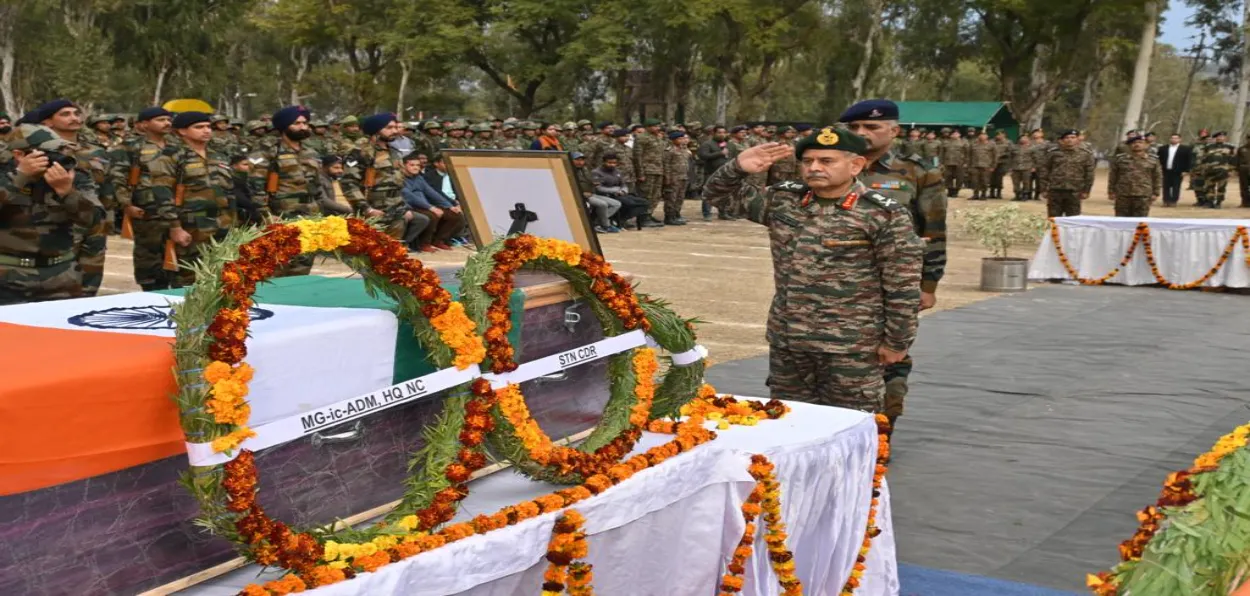
The Army chief’s visit on 25 December—as also his meeting with the President on 26 December—and the Defence Minister’s visit to Poonch on 27 December are seen as a result of the signals from the highest quarters which are in contrast to the initial silence and guarded reactions from the security forces.
ALSO READ: Terrorists in Poonch-Rajouri attacking Army may be Pak ex-troopers
“As of now there are positive indications that no law and order situation was created and no curfew was imposed. The situation is being handled discreetly as winning the peoples’ confidence and keeping the Army’s morale high in an area bordering PoK are both equally important. Our immediate priority is to wipe out the groups of 30-35 battle-hardened Pakistani terrorists in that area which is possible only with the continued support of the local population”, said an official. He sounded confident that ‘one aberration’ would not wash out “hundreds of the Army’s clean operations, each conducted with total professionalism”.








.webp)