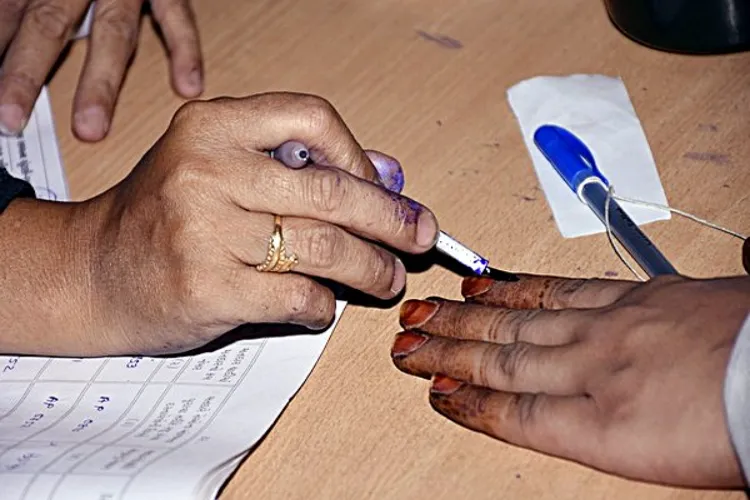
Samserganj
In parts of West Bengal’s Murshidabad district, the coming Assembly election has become more than a contest for power — it is increasingly seen as a battle over identity and the right to vote, as thousands of names have reportedly disappeared from electoral rolls.
In Pratapganj village, farmer Naushad Ali said his son’s name had been removed despite voting in the 2024 Lok Sabha polls before leaving for work in Kochi.
Murshidabad, which has the highest proportion of Muslim residents in Bengal, has seen one of the largest deletions under the Special Intensive Revision exercise. More than 7.48 lakh names are reported to have been removed from the district’s rolls.
The sharpest impact is said to be in Samserganj Assembly constituency, where nearly 92,000 names have been deleted — the highest among constituencies in the state. The neighbouring Lalgola Assembly constituency has reportedly seen the second-highest deletions, with around 68,500 names removed.
Residents say discussions in villages, tea stalls and markets are no longer centred on who will win the election, but whether they themselves will remain eligible to vote.
Seventy-five-year-old Amelia Bibi said she had voted in every election since 1977, but now found her name missing. A first-time voter from Lalgola, Sefat Ali, said his brother’s name remained on the list while his own had vanished.
Across affected areas, families are reportedly gathering voter slips, school certificates, ration cards, electricity bills and land papers in an effort to restore names.
The issue has become a major political flashpoint.
All India Trinamool Congress leaders allege the deletions amount to a “silent NRC” targeting Muslim-majority regions.
Bharatiya Janata Party leaders argue the revision is correcting years of bogus voting and illegal infiltration.
Samserganj BJP leader Shashi Charan Ghosh said genuine citizens had nothing to fear, while those who remained on rolls through political patronage could not stay indefinitely.
Murshidabad MP Abu Taher Khan accused the BJP of trying to implement NRC “through the back door” and politically target Muslim villages, poor residents and migrant families.
Senior Indian National Congress leader Adhir Ranjan Chowdhury said both BJP and TMC were exploiting fear for political gain.
With several Murshidabad constituencies decided by relatively narrow margins, political observers believe the deletions could significantly reshape the district’s electoral landscape in 2026.
READ MORE: Ayesha Tabassum’s journey from breaking news to building narratives
For many residents, however, the core question is simpler and more personal: whether their names — and their place in democracy — still count.











.webp "Congress leader Pawan Khera")
.webp)
.webp)