New Delhi
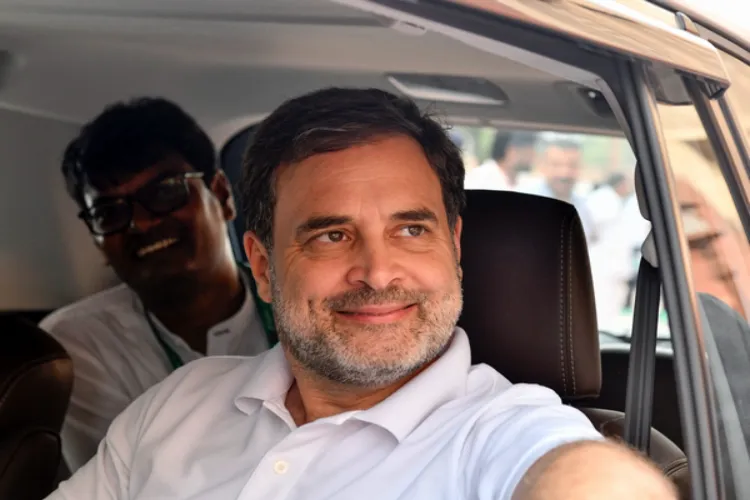
Leader of Opposition Rahul Gandhi on Wednesday launched a blistering attack on the government over the India-US interim trade deal, alleging that it amounted to “selling Bharat Mata” and represented a “wholesale surrender” in which India’s energy security and farmers’ interests had been compromised.
Participating in the debate on the Union Budget in the Lok Sabha, the Congress leader said he does not believe that any Indian prime minister, including Narendra Modi, would agree to such an agreement unless there was a “chokehold” on him.
“Why has he sold India? Because they are choking him. They have a grip on his neck,” Gandhi said, using an analogy from martial arts to argue that once a grip is secured, a chokehold follows and the opponent is forced to tap out.
Referring to earlier remarks by Prime Minister Modi and National Security Adviser Ajit Doval that the era of war is over, Gandhi said the world was instead entering a far more dangerous phase.
“War is there in Ukraine, war was there in Gaza, war is there in the Middle East, there is a threat of war in Iran, and we had Operation Sindoor,” he said.
He stressed that in such turbulent times, India’s greatest strength lies in its people, and that protecting citizens, data, food security and energy systems should be the government’s foremost priority.
Gandhi said that had an INDIA bloc government negotiated the trade deal, it would have made it clear to US President Donald Trump that India must be treated as an equal partner.
“The most important asset in this equation is Indian data. If the US wants to protect the dollar, it must recognise that Indian data is the biggest asset,” he said, adding that access to such data could not come at the cost of sovereignty or dignity.
He said an INDIA bloc government would have declared India’s energy security as non-negotiable and would also have ensured protection for Indian farmers, even while acknowledging America’s own agricultural voter base.
“We would go there as equals. We would not be made equal to Pakistan,” Gandhi said, adding that India would not remain silent if US actions placed the two countries on the same footing diplomatically.
The LoP alleged that under the interim trade deal, India had effectively lost control over its energy choices.
“They will decide who we buy oil from. Our prime minister will not decide. They will monitor us, and if we buy oil they don’t want us to, they will punish us with tariffs going up to 50 per cent,” he claimed.
In a sharp rebuke to the treasury benches, Gandhi accused the government of allowing the weaponisation of India’s finance and energy systems.
“How can you come to this House and defend this? Are you not ashamed of what you are giving away?” he asked.
Repeated objections from ruling party MPs, who accused him of making unsubstantiated claims, were brushed aside by Gandhi, who said he was prepared to authenticate his statements.
He alleged that the agreement had compromised farmers’ interests, devastated the textile sector and handed over India’s energy security to the US.
“This is a wholesale surrender,” he said.
Calling it a national tragedy, Gandhi said the deal was not merely the surrender of a prime minister but of the future of 1.5 billion Indians. He further alleged that the prime minister acted under pressure to protect the BJP’s financial architecture, referring to a case in the US, though he was cautioned by the Chair against naming individuals not present in the House.
“We are heading into turbulent times, and the nation has been sold out — its data, its farmers, its software engineers, small and medium businesses, our forces and our energy security,” he alleged.
Criticising the digital trade provisions of the deal, Gandhi claimed that the government had surrendered control over digital trade rules, removed data localisation norms, allowed unrestricted data flows to the US, limited digital taxation and waived source code disclosure requirements, while offering long tax holidays to major technology companies.
On tariffs, he claimed that India’s average tariff burden had risen sharply from 3 per cent to 18 per cent, while US tariffs had fallen from 16 per cent to zero.
“US imports will jump from USD 46 billion to USD 146 billion. This is absurd,” he said.
For the first time in India’s history, Gandhi said, farmers were facing an unprecedented crisis.
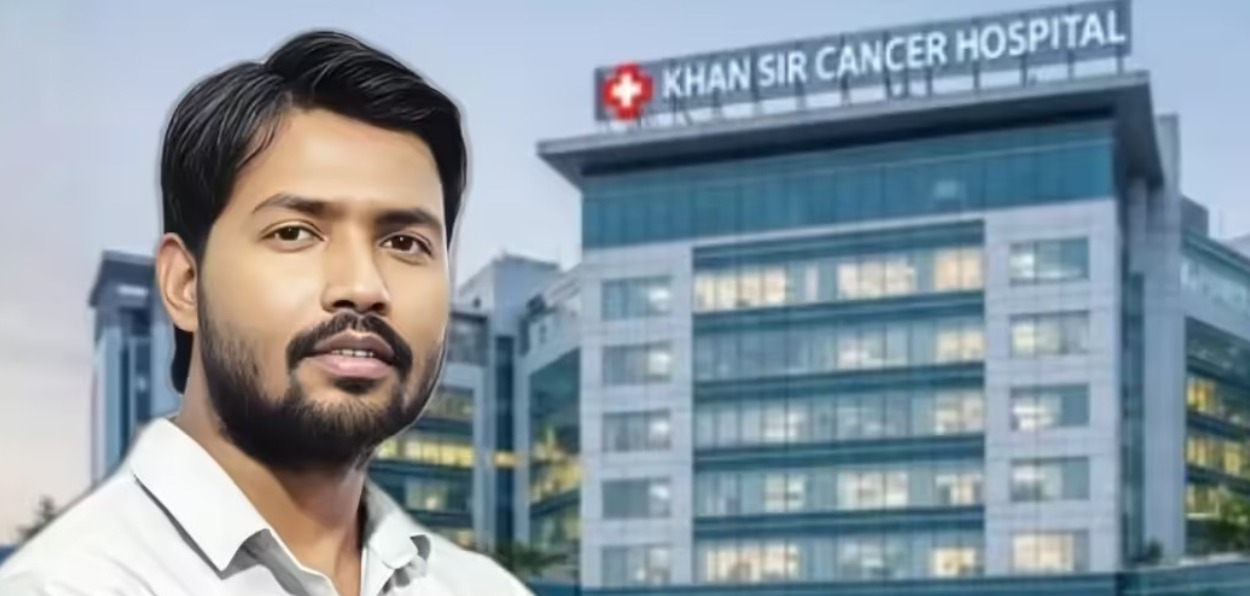
READ MORE: Khan Sir’s affordable hospital in Patna becomes lifeline for poor
“You have opened the doors to mechanised American farms spanning thousands of acres, crushing our small farmers. It is disgraceful. No prime minister before you has done this, and no one after you ever should,” he said.







.webp)