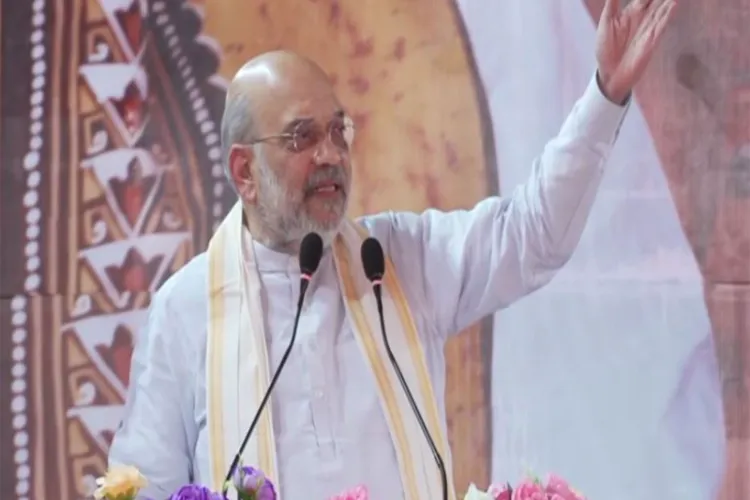
.jpg "Representational Image")
New Delhi
India and Canada on Monday unveiled a fresh framework to reset and deepen bilateral ties, sealing landmark agreements on long-term uranium supplies and critical minerals, while setting an ambitious target of expanding annual two-way trade to USD 50 billion by 2030.
Following wide-ranging talks between Prime Minister Narendra Modi and his Canadian counterpart Mark Carney, the two sides also committed to fast-tracking a Comprehensive Economic Partnership Agreement (CEPA) and broadening cooperation across defence, clean energy, nuclear technology, education and critical technologies.
Addressing the media, Modi said the relationship between India and Canada is now marked by “new energy, mutual trust and positivity”. He noted that the civil nuclear agreement — valued at about USD 2.6 billion — would support India’s clean energy transition through assured uranium supplies.
Both leaders underlined that terrorism, extremism and radicalisation pose shared global threats. “Our close cooperation against these challenges is essential for international peace and stability,” Modi said.
The two prime ministers also discussed the volatile situation in West Asia. Modi reiterated India’s position that conflicts should be resolved through dialogue and diplomacy, adding that New Delhi remains engaged with partners to ensure the safety of Indian nationals in the region.
A key outcome of the talks was the decision to substantially expand trade and investment ties at a time when Ottawa is seeking to diversify economic partnerships amid strained relations with Washington. Current India–Canada bilateral trade stands at around USD 13 billion annually.
“Our objective is to raise trade to USD 50 billion by 2030. Unlocking the full potential of economic cooperation is our priority, and therefore we have decided to conclude the CEPA at the earliest,” Modi said, adding that the pact would spur investment and job creation in both countries.
Highlighting investor confidence, Modi noted that Canadian pension funds have already invested nearly USD 100 billion in India, calling it a strong endorsement of India’s growth prospects.
Under a new memorandum of understanding on critical minerals, the two countries aim to strengthen resilient supply chains. Canada is a major source of rare earths and other strategic minerals essential for clean energy, electric vehicles and advanced manufacturing.
“In energy, we are building a next-generation partnership encompassing hydrocarbons, renewables, green hydrogen and energy storage,” Modi said. He added that collaboration would also extend to small modular reactors and advanced nuclear technologies.
Defence and security cooperation is set to deepen as well, with both sides agreeing to establish an India–Canada Defence Dialogue to enhance defence industrial ties, maritime domain awareness and military exchanges.
Education featured prominently in the discussions. Modi said new partnerships between universities in areas such as artificial intelligence, healthcare, agriculture and innovation are being launched, while Canadian universities will also be encouraged to set up campuses in India.
Carney, in his remarks, described the agreements as the foundation of a renewed partnership. “We are launching a strategic energy partnership with enormous potential to expand bilateral trade. The critical minerals agreement spans development, processing and secure supply chains for clean energy and advanced manufacturing,” he said.
Calling the uranium deal a reflection of shared commitment to reliable and sustainable energy, Carney said the agreements would create “generational opportunities” for workers and businesses while helping protect the planet.
Carney arrived in New Delhi after meetings with industry leaders in Mumbai, as Canada looks to build a more resilient and diversified economy. He acknowledged that clean energy collaboration — including wind, solar and hydrogen — would be central to future ties.
India–Canada relations had deteriorated sharply after allegations made in 2023 by then Canadian Prime Minister Justin Trudeau regarding a possible Indian link to the killing of Khalistani separatist Hardeep Singh Nijjar, which New Delhi rejected as baseless. Diplomatic tensions escalated in 2024 with the recall and expulsion of envoys on both sides.
READ MORE: Darakhshan Andrabi - first woman to head Waqf Board proved her mettle
However, Carney’s electoral victory last year paved the way for rapprochement, with both countries restoring high commissioners and resuming high-level engagement. Modi’s visit to Kananaskis for the G7 summit last June and his discussions with Carney there laid the groundwork for Monday’s agreements, signalling a clear intent to move past differences and rebuild the partnership.









.webp)