New Delhi
India and Canada have agreed to move forward with negotiations for a Comprehensive Economic Partnership Agreement (CEPA), targeting conclusion of the pact by the end of 2026, marking what officials described as a strategic “reset” in bilateral ties following leadership changes in Ottawa.
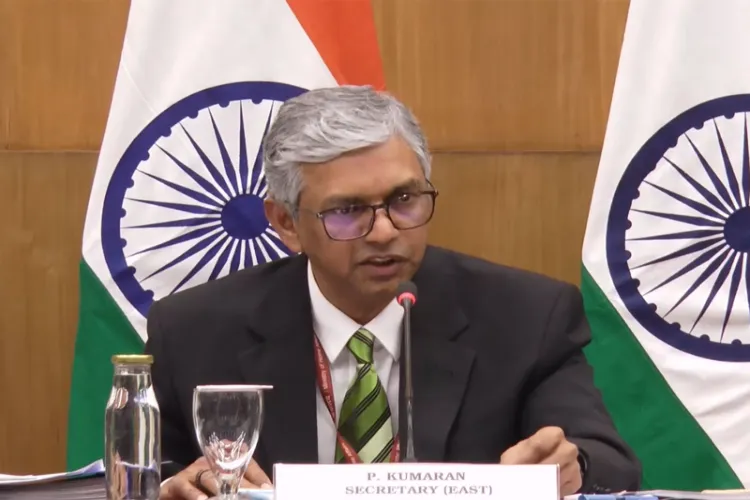
Briefing the media on Canadian Prime Minister Mark Carney’s official visit to India, Secretary (East) P Kumaran said both sides have agreed on the terms of reference and will soon begin detailed discussions.
“We’ve just agreed on the terms of reference, and we will soon get into detailed discussions. The broad deadline is by the end of the year 2026. The signing of the terms of reference provides a clear roadmap to conclude an ambitious, balanced and mutually beneficial agreement,” he said.
The move marks a shift from the earlier proposed Early Progress Trade Agreement (EPTA) towards a full-scale comprehensive deal.
High-level platforms revived
To sustain momentum beyond political cycles, the India-Canada CEO Forum was reconstituted and met in New Delhi on March 2, bringing together leading business figures from both countries to identify investment opportunities.
A new Economic and Financial Dialogue between the finance ministries has also been launched to streamline capital flows.
“Both sides agreed on reciprocal ministerial-led trade and investment engagements to unlock commercial opportunities,” Kumaran said, adding that Carney’s visit witnessed substantial commercial announcements across sectors including pharmaceuticals, agri-food processing, clean technology, financial services, advanced manufacturing, hospitality and digital innovation.
He noted that the partnership is increasingly anchored in long-term economic integration rather than episodic transactions, with investments spanning next-generation sectors such as regenerative medicine, AI-enabled banking platforms, cybersecurity and clean energy technologies.
Diplomatic reset
Kumaran confirmed that diplomatic ties are now “way better” than the lows of 2023. High Commissioners Dinesh K. Patnaik and Christopher Cooter have returned to their respective posts, and both sides have agreed to progressively increase diplomatic staff strength to pre-2023 levels.
“This was his first visit to India since assuming office and the first bilateral visit by a Canadian Prime Minister in eight years. The visit marks an important inflection point in the India-Canada relationship,” Kumaran said.
Carney’s itinerary included a two-day business-focused programme in Mumbai aimed at catalysing investment flows and expanding innovation partnerships.
Pension funds, critical minerals in focus
Canadian pension funds, which account for around 30 per cent of their Asia-Pacific investments in India, were a key focus area. Discussions covered clean energy, civil nuclear cooperation, critical minerals such as lithium and cobalt, infrastructure, advanced manufacturing and education partnerships.
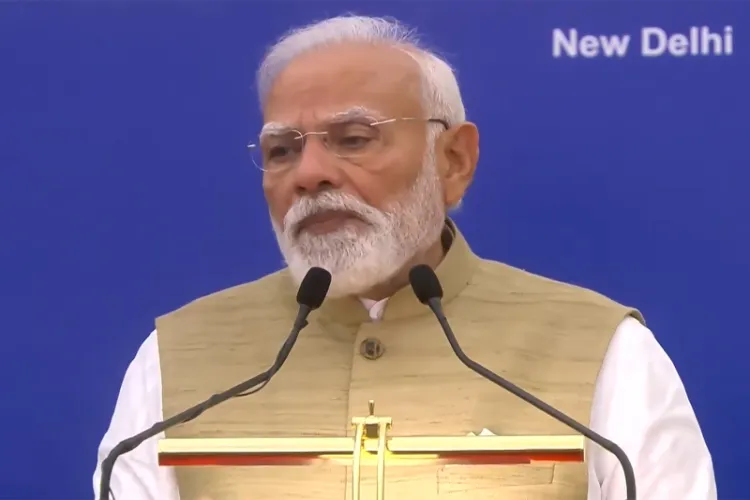
Prime Minister Narendra Modi, addressing the India-Canada CEO Forum alongside Carney, highlighted the potential of the partnership.
“India and Canada together represent a substantive economic force, combining capital and capability,” Modi said, adding that cooperation could deepen in areas including AI, food processing, infrastructure and capital markets.
Official Spokesperson of the Ministry of External Affairs Randhir Jaiswal said Modi has directed officials to explore providing benefits to pension funds to enhance India’s competitiveness as an investment destination.
READ MORE: Darakhshan Andrabi - first woman to head Waqf Board proved her mettle
Kumaran described the visit as a historic “inflection point,” effectively ending the diplomatic freeze that began in 2023 and shifting ties towards a strategy of deep economic integration.









.webp "Prime Minister Narendra Modi")


.webp)