Kochi
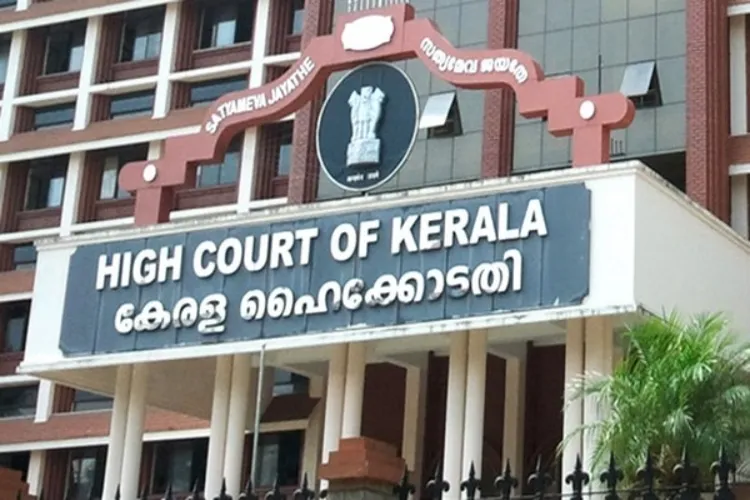
The Kerala High Court has held that laws, rules and regulations should not become tools for creating discord among religions, castes or communities, and must instead act as instruments of unity and social harmony.
The observation was made while dismissing a petition challenging the entry of two Christian priests into the Adoor Sree Parthasarathy Temple in Pathanamthitta district in 2023. The plea had alleged that their entry violated the Kerala Hindu Places of Public Worship (Authorisation of Entry) Act, 1965.
The priests, Dr Zacharias Mar Aprem and another clergyman, were invited to the temple to attend a function organised in connection with the Sreekrishna Jayanthi celebrations on September 7, 2023.
The petition, filed by Sanil Narayanan Nampoothiri, a school teacher, also sought directions to the Travancore Devaswom Board (TDB) and temple authorities to prohibit the entry of non-Hindus into the shrine.
A bench comprising Justices Raja Vijayaraghavan V and K V Jayakumar referred to the Sanskrit dictum from the Taittiriya Upanishad — “Matru Devo Bhava, Pitru Devo Bhava, Acharya Devo Bhava, Atithi Devo Bhava” — and observed that the verse emphasises treating one’s mother, father, teacher and guest as divine, deserving reverence and respect.
The court noted that the priests were permitted to enter the temple as invited guests by the tantri, which, it said, was “fundamentally distinct from an entry claimed as a matter of right”.
“Such a ceremonial and permissive entry cannot be construed as a violation of the provisions of the Act, the rules framed thereunder, or the established rites, usages and customs governing the temple,” the bench said.
The judges further observed that the primary objective of the Kerala Hindu Places of Public Worship (Authorisation of Entry) Act was to enable all sections and denominations of Hindus to access temples and to eliminate discrimination among them.
However, the court pointed out that while framing the rules under the Act, a provision was introduced that was not part of the parent legislation. Rule 3(a) of the Rules expressly bars the entry of non-Hindus into temples, whereas the Act itself does not contain any such prohibition.
“It is settled law that in the event of any inconsistency between a parent statute and the rules framed under it, the provisions of the statute must prevail,” the court said.
Emphasising the broader role of law in a democratic society, the bench observed that the purpose of legislation is to promote social harmony and public welfare.
“As society evolves and becomes increasingly inclusive, statutory provisions and subordinate legislation must be interpreted in a manner that advances constitutional values and social cohesion,” it said.
The court cautioned that legal provisions should not be allowed to fuel division. “Statutes, rules and regulations ought not to become instruments for fostering discord or disharmony among religions, castes or communities. Rather, the legal framework must operate as a unifying force that encourages mutual respect and peaceful coexistence,” the bench observed.
Taking note of the apparent inconsistency between the Act and Rule 3(a), the court suggested that the state government examine whether the rule requires reconsideration or amendment to align it with legislative intent and constitutional principles.
READ MORE: Muslims must prioritise education for girls: Ex-Maha minister Anees Majeed Ahmed
“It is for the government to decide whether Rule 3(a) should continue in its present form or be suitably amended, after due consultation with the Travancore Devaswom Board, tantris, religious scholars and other relevant stakeholders,” the bench said while dismissing the petition.









.webp "Assam Chief Minister Himanta Biswa Sarma")

_leader_Rohit_Pawar.webp "NCP (SP) leader Rohit Pawar")