New Delhi
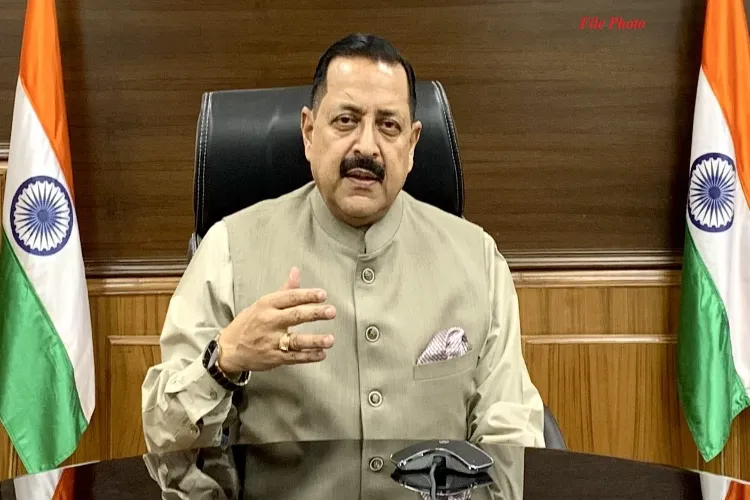
Union Minister Jitendra Singh on Saturday congratulated ISRO on its successful test of the CE20 cryogenic engine in Tamil Nadu.
In a post on X, Jitendra Singh said, "Congratulations to #ISRO on the successful sea-level hot test of the CE20 Cryogenic Engine at 22-tonne thrust at the ISRO Propulsion Complex, Mahendragiri, Tamil Nadu. The successful test featuring the nozzle protection system and multi-element igniter marks another important step in strengthening India's advanced cryogenic propulsion capabilities and further enhancing the reliability of the LVM3 programme."
ISRO successfully conducted a sea-level hot test of its Cryogenic engine (CE20) at 22 tonne thrust using nozzle protection system and multi-element igniter, on March 10 at ISRO Propulsion Complex, Mahendragiri.
Congratulations to #ISRO on the successful sea-level hot test of the CE20 Cryogenic Engine at 22-tonne thrust at the ISRO Propulsion Complex, Mahendragiri, Tamil Nadu.
— Dr Jitendra Singh (@DrJitendraSingh) March 14, 2026
The successful test featuring the nozzle protection system and multi-element igniter marks another important… pic.twitter.com/ee75Pkc6Na
Earlier, the sea level tests utilising the nozzle protection system was being carried out at 19 tonne thrust level.
The CE20 cryogenic engine powers the upper cryogenic stage of LVM3 launch vehicle. In order to enhance the payload capability of the LVM3 vehicle, future missions of LVM3 are planned to be operated with an uprated C32 stage with 22 tonne thrust for the CE20 engine, the ISRO said. In view of this, the flight acceptance test of the CE20 engine also needs to be conducted at 22 tonne thrust level.
READ MORE: Quran and Gita help Jasmine Sultana crack Assam civil services exam
Therefore, the present test qualified the sea level testing of the engine with a test duration of 165 seconds at 22t thrust level using the Nozzle Protection System (NPS). The performance of the engine as well as the test facility was as expected during the entire test duration.
Testing the CE20 engine at sea-level possess considerable challenges primarily due to high area ratio nozzle, which has an exit pressure of ~50 mbar. Main concern during testing at sea-level include flow separation inside the nozzle, which leads to severe vibrations & thermal problems at the flow separation plane leading to possible mechanical damage of the nozzle.

_(1).jpg "Visitors gather at the Santosh Mitra Square Durga Puja pandal, themed on the 150th anniversary of Vande Mataram and its historic role in India's freedom movement, ahead of the festival, in Kolkata")

.jpg "Gujarat’s women entrepreneurs bring their craftsmanship to life during Navratri")







.webp "Bollywood actor Tiger Shroff")




.webp)