Kolkata
As suspended Trinamool Congress (TMC) MLA Humayun Kabir mounts a fresh political challenge ahead of the West Bengal assembly elections, the state is witnessing a familiar cycle of Muslim socio-political mobilisation—one that generates intense debate but has historically failed to significantly alter electoral outcomes.
With polls to the 294-member assembly only months away, Kabir’s rebellion has revived speculation about a potential fracture in the TMC’s minority vote base, widely regarded as its electoral backbone. Yet Bengal’s electoral history suggests that such moments of assertion, though highly visible, tend to flatten once voting calculus takes over.
Minority voting patterns in the state have shown remarkable consistency over decades, shaped less by religious charisma or symbolic mobilisation and more by organisation, alliance structures and vote consolidation.
Similar episodes have played out before. In 2016, cleric Toha Siddiqui commanded attention during campaign season. In 2021, Abbas Siddiqui of Furfura Sharif drew massive crowds and headlines. Today, Kabir’s sharp rhetoric and emotive symbolism echo that trajectory—intense mobilisation, high expectations and eventual electoral containment.
Each phase has raised hopes of an alternative Muslim political axis emerging to dent the TMC’s dominance. Each time, electoral arithmetic has prevailed.
From Abbas Siddiqui’s political debut to Kabir’s current venture, Muslim-centric initiatives have followed a predictable curve: pre-poll momentum, heightened media discourse, and stabilisation without a proportional transfer into seats.
“Religious or emotive influence can shape sentiment, but it cannot ensure vote transfer across constituencies,” said political analyst Maidul Islam. “At the booth level, voters ask a basic question—who can win, and who can stop the BJP.”
The Indian Secular Front (ISF), launched by Abbas Siddiqui ahead of the 2021 elections and aligned with the Left and Congress, was projected as a major disruptor. It ultimately secured just one seat, reinforcing a recurring lesson in Bengal politics: visibility does not equal viability.
“Rallies are driven by emotion, but votes are cast with calculation,” said Naushad Siddiqui, the ISF’s lone MLA. “If voters feel their choice could indirectly help the BJP, they pull back.”
While Furfura Sharif remains a powerful site of political signalling, allegiance there has historically proved fluid, narrowing sharply once electoral stakes crystallise.
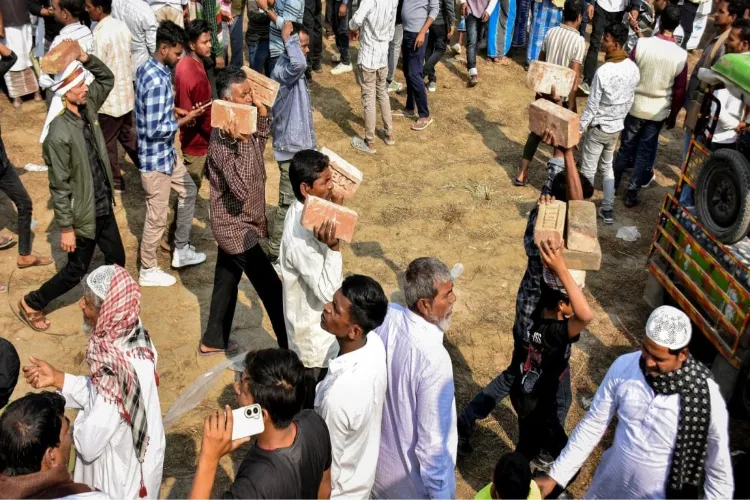
The current churn around Kabir reflects a similar moment. His criticism of the TMC’s perceived “pro-Hindu optics,” the announcement of a Babri Masjid replica and the launch of the Janata Unayan Party have injected volatility into the pre-poll narrative. Kabir has spoken of contesting over 135 seats and keeping channels open with the Left, ISF and AIMIM.
“I am not dividing votes; I am giving voice to those who feel unheard,” Kabir has said, as his rallies in Murshidabad draw sizeable crowds.
Yet even opposition leaders concede that enthusiasm without booth-level machinery rarely survives polling day. “Cadres, polling agents and micro-level organisation decide elections, not just rhetoric,” a CPI(M) leader noted.
The BJP, meanwhile, argues that identity-driven mobilisation sharpens polarisation and consolidates Hindu votes—an outcome it believes works to its advantage in multi-cornered contests.
Analysts identify three structural constraints that repeatedly blunt Muslim political mobilisation in Bengal: absence of statewide organisation, lack of cross-community appeal and voters’ long political memory.
“Bengal has not seen a Muslim leader with pan-state appeal, organisational depth and governing credibility since A B A Ghani Khan Choudhury,” said social researcher Sabir Ahamed. “Without that combination, religious mobilisation remains fragile.”
Historically, Muslim voters in Bengal have aligned not around theology but political security—shifting from the Congress to the Left, and later to the TMC, as power equations evolved. That logic continues to shape behaviour, with minority support for the TMC coinciding with its position as the principal counter to the BJP.
“Communities here have seen what vote-splitting has done elsewhere,” Ahamed said. “That memory acts as a restraint.”
Dissent does surface in minority-dominated pockets. But as polling day approaches, consolidation tends to return.
State minister Firhad Hakim maintains that minorities understand the stakes. “Only the TMC can stop the BJP in Bengal,” he said.
“In Bengal politics, charisma makes noise, but arithmetic decides outcomes,” Islam said. “Until a Muslim-led formation demonstrates organisation, cross-community reach and governing capacity, such mobilisations will influence discourse, not results.”
READ MORE: IUML's Fatima Muzaffar Ahmed is the epitome of Muslim woman leadership
As leaders rise and rhetoric swells, the minority vote—older and more seasoned than the cycles around it—continues to settle where survival is decided by numbers, not slogans.