




 Rajeev Narayan
Rajeev Narayan
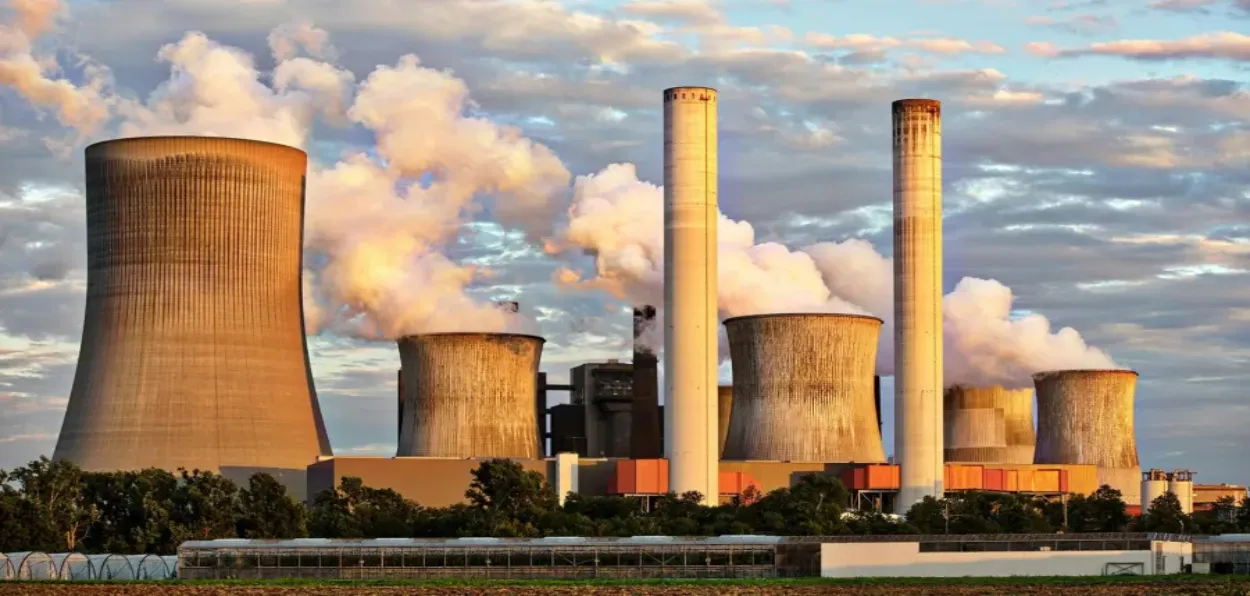
On a recent winter evening in Delhi, far from the glare of protest or polemic, India altered the grammar of its energy future. With a legislation allowing private participation in the long-guarded civil nuclear power sector, Parliament signalled not rupture but readiness…Readiness to rethink how India will power itself through some very demanding decades ahead. There were no dramatic speeches invoking atomic destiny, no sweeping claims of instant transformation or the divina ex machina syndrome.
The moment was one of relative calm. Yet, like the click of a closing circuit, it triggered something irreversible. For the first time since independence, India acknowledged that the scale of its energy challenge and the urgency of its climate commitments demand a broader coalition of capability, capital and confidence. Nuclear power has always occupied a peculiar place in India’s imagination: a symbol of scientific self-reliance, a strategic asset and a source of pride. But it has been constrained by capital intensity, gestation hiccups and institutional caution. Opening the sector to private funding is not an abandonment of a legacy, but an attempt to extend it into a future that looks very different.
Why Nuclear Now
India’s energy dilemma is stark in its arithmetic. Power demand is expected to more than double by mid-century as incomes rise, cities expand and industry deepens. Further, India has pledged to reduce the emissions intensity of its economy and move toward net zero. The twin imperatives of growth and decarbonisation pull in opposite directions unless anchored by reliable, low-carbon power.
Renewables have transformed the energy landscape. Solar parks stretch across deserts, wind turbines crown ridge lines and installed capacity has surged. Yet renewables, for all their sated promise, remain intermittent. Storage technologies are improving, grids are evolving, but the physics of power still demands a stable backbone. And this is where nuclear energy enters the frame, providing as it does continuous, base-load electricity with negligible carbon emissions. For decades, energy planners have recognised this, though expansion was slow. As the International Energy Agency has noted, achieving deep decarbonisation “will be harder, more expensive and riskier” without nuclear power in the mix.
India’s nuclear capacity remains modest relative to its ambition. The state’s target of scaling capacity dramatically by 2047 reflects a recognition that incrementalism is no longer sufficient. Thus, opening the sector to private participation is less a policy experiment, more a response to arithmetic reality.
Opening the Floodgates
Private participation in nuclear energy does not mean privatisation of control. Strategic and regulatory authority, as also safety, remains with the state. What changes is the source of capital; execution capability and tech partnerships. The logic is simple. Nuclear projects demand vast investment and long operational horizons. India’s public sector, despite technical excellence, faces fiscal constraints and competing priorities. Private capital, if regulated and aligned, can accelerate deployment, improve project management and absorb risk that the state alone can no longer shoulder.
“Inviting private players signals seriousness, that India wants nuclear energy to play a meaningful role in replacing coal as the country’s base-load power source,” Karthik Ganesan of the Council on Energy, Environment and Water said. The move, he notes, is about scale and speed, not ideology. The reform also reflects learning from global experience. Countries that have expanded nuclear capacity have relied on a mix of public oversight and private execution, underpinned by predictable policy and long-term planning. India’s challenge is to adapt these lessons to its own institutional context, without diluting safety or sovereignty.
Promise and Prudence
Nuclear energy is not forgiving. Reform must be guided as much by caution as by ambition. Private participation means new incentives and new risks, both of which must be managed. Cost is a central concern. Nuclear power is capital-heavy, and its economics depend on plant lifetimes and stable tariffs. If poorly designed, private participation could lead to higher electricity costs or fiscal stress. ICRA has cautioned that while liability reforms and rules reduce uncertainty, “tariff design and risk allocation will determine whether private investment materialises, and whether it remains affordable”.
Safety is paramount. India’s nuclear programme has had a strong safety record, built on scientific rigour and institutional discipline. That must not only be preserved but strengthened. Regulatory bodies must be independent, technically robust, and empowered to enforce standards without fear or favour. Public trust cannot be assumed either, and communities hosting nuclear facilities deserve transparency, engagement, and accountability. As nuclear ownership structures evolve, the state’s role as guarantor of public interest must become more explicit, not less.
Institutions and Trust
At its core, nuclear power is as much an institutional challenge as a technological one. Reactors can be engineered; trust has to be cultivated. India’s advantage lies in its depth of scientific talent and operational experience. Its challenge lies in ensuring that its regulators keep pace with change. Strengthening bodies like the Atomic Energy Regulatory Board, enhancing transparency, and investing in human capital will be critical.
Equally important is public communication. Nuclear energy has long suffered from opacity, breeding suspicion rather than understanding. An open discourse, such as one grounded in data, not defensiveness, can help shift perception from fear to informed caution.
This moment also offers an opportunity to deepen India’s innovation ecosystem. New reactor designs, including small modular reactors, promise lower costs and greater flexibility. If private participation accelerates experimentation while public institutions safeguard standards, India could emerge as a leader rather than a follower in next-generation nuclear technology.
Balanced Energy Future
India’s energy transition will not be won by any single technology, no matter what it is. Solar, wind, hydro, storage, efficiency and nuclear power must work in close concert. Framing these choices as competing technology options will risk distorting policy and delaying progress. Nuclear power’s role is not to replace renewables but to stabilise them; to provide a dependable foundation upon which a cleaner grid can be built.
Private participation, if phased and evaluated carefully, can strengthen this balance by freeing public resources and accelerating deployment. All said and done, the emphasis must be on gradualism. Pilot projects, transparent review, and institutional learning can ensure that reform strengthens rather than disrupts the sector. Speed matters, but so does steadiness.
As with the trade agreement signed recently in Muscat, India’s nuclear reform did not arrive with spectacle. It arrived with intent. In opening its nuclear sector, India is not surrendering control; it is expanding capacity, be it institutional, financial or imaginative. It acknowledges that the challenges of the coming decades cannot be met with the tools of the past. The path forward lies in marrying ambition with restraint, innovation with regulation, and private capability with public purpose. For the world, this approach offers a lesson in how emerging economies can pursue clean energy transitions without ideological excess or institutional erosion.
ALSO READ: Visiting Lord Ayyappa’s Muslim friend Vavar during the Sabrimala pilgrimage
Nuclear power demands patience. Its timelines are long, its responsibilities enduring. By choosing to open the sector, India is signalling that it is thinking not in electoral cycles or quarterly returns, but in generations.And in an age of climate urgency and energy uncertainty, that long view may be the most powerful source of energy of all.
The writer is a journalist and communications specialist.













.webp)


_(1).jpg)
_(4).webp)