




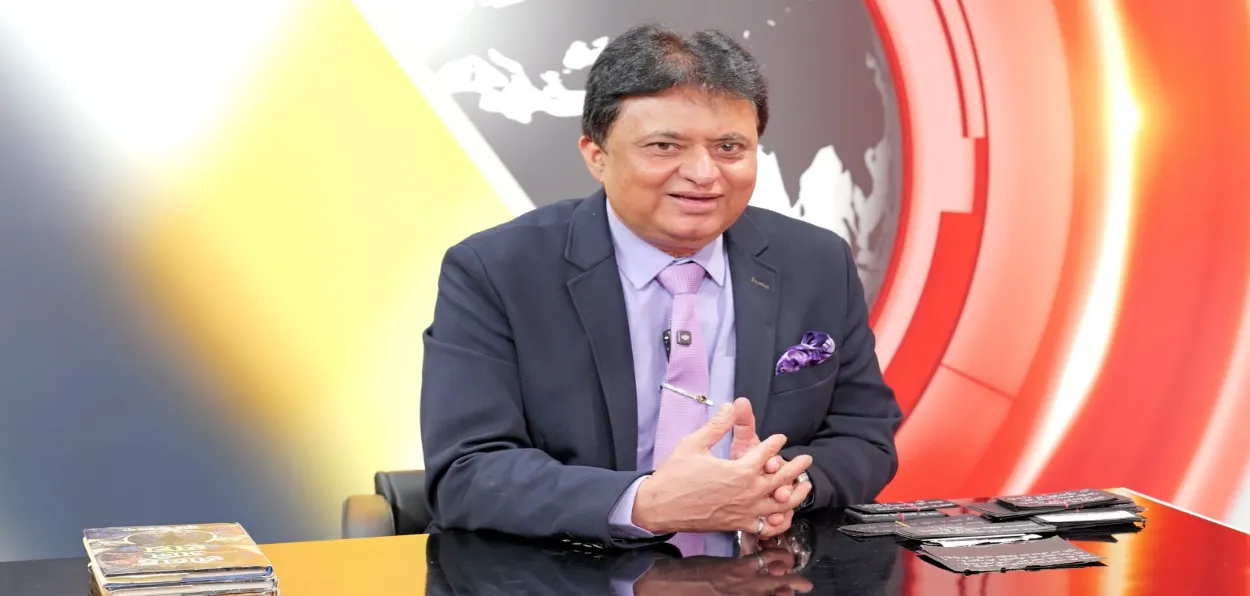
Vidushi Gaur/New Delhi
The thought of joining the Indian Navy never occurred to a young Khurram Shahzad Noor while he was growing up in a village of Western Uttar Pradesh.
It was a meeting with a colonel while he was attending a tuition class. The Army officer encouraged him to consider a career in the armed forces. Today, after retiring from the Indian Navy at the rank of Rear Admiral, a fairly senior leadership position, he remembers the encounter with the stranger who changed his life.
Today, he has a distinguished career in the Indian Navy behind him and is active as a poet, writer, and motivational speaker. His life demonstrates that a person need not have to choose between discipline and imagination, or public service and passion. Both can coexist and enrich life.
Though the armed forces do not believe in flaunting the religious identities of the officers and men, Dr Rear Admiral (retd) Khuram Shahzad Noor is the first Muslim to reach such a top position in the Indian Navy.
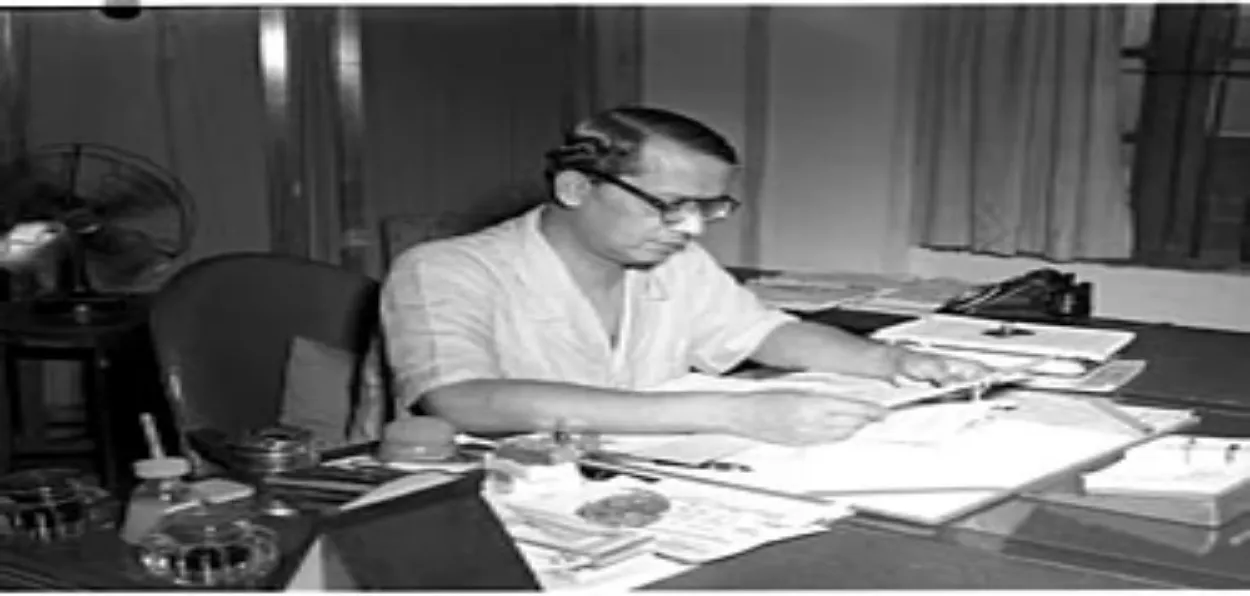
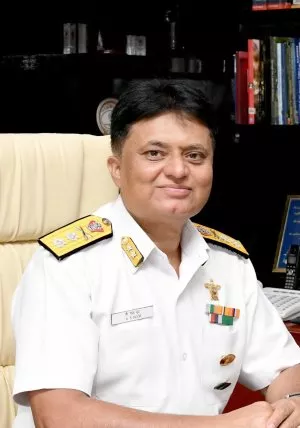 Rear Admiral Khurram Shahzad Noor
Born into a family with roots in the village of Nagina, Bijnor, Noor's childhood did not suggest the extraordinary career that lay ahead. Born prematurely at around seven months, he was physically weaker than many children of his age. He took longer to learn to walk and found ordinary sporting activities demanding. Running for a short distance could leave him exhausted.
For a child growing up with such limitations, the prospect of joining the armed forces might have appeared distant. Yet those early difficulties eventually became a source of strength. Rather than allowing physical limitations to define his future, Noor chose to challenge them.
The road ahead required discipline, education and perseverance. Noor eventually joined the Indian Navy and went on to serve the country for approximately 35 years. His professional journey was closely associated with technology, education and training. He developed expertise in anti-submarine warfare, a specialised field that requires precision, patience and the ability to understand complex underwater operations.
Reflecting on his professional responsibilities, Noor says, “I teach anti-submarine warfare, where I look after the training of Navy officers.” The statement offers a glimpse into another important aspect of his career: preparing the next generation of naval officers for the responsibilities that come with serving at sea.
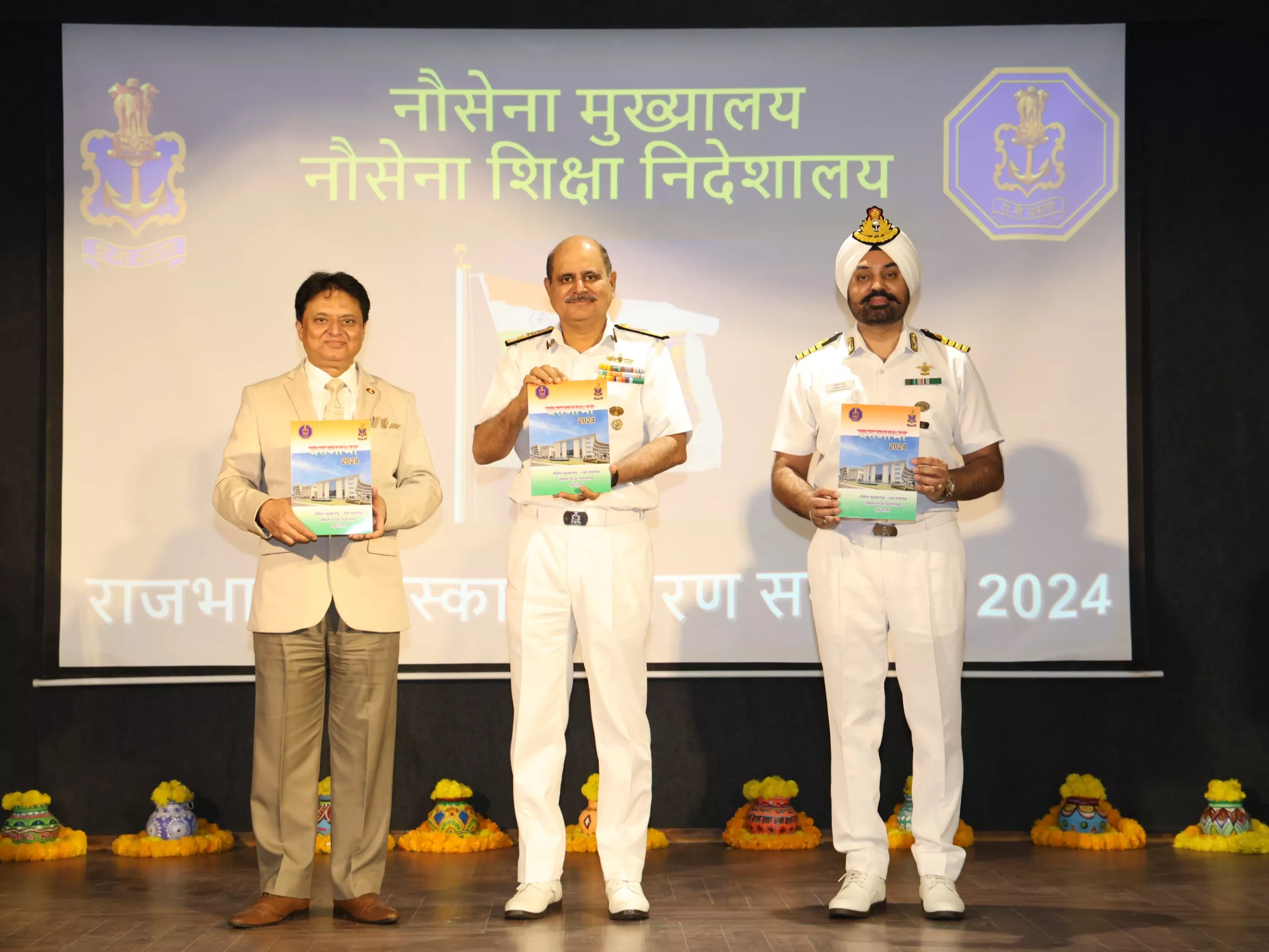 Rear Admiral Khurram Shahzad Noor at an event
Submarine warfare is a highly specialised domain in which knowledge, technology, judgment and teamwork have to work together. Noor's role as an instructor placed him not merely in the position of an experienced officer but also that of a mentor responsible for transferring knowledge to those who would eventually shoulder the nation's maritime responsibilities.
Speaking about the Navy's role during Operation Sindoor, Noor explained that naval operations have a distinct character. “The role of the Navy in wars is very specific. We do not come out in the open until it's a full-fledged war declared,” he said.
For Noor, the Navy's contribution is not limited to moments when ships are deployed in direct combat. He highlights the less visible but equally significant role of maritime engagement.
“The Navy does a lot of Sea Diplomacy, which no other armed forces get to do. This is a positive part that the Navy contributes to,” he said. “Sea diplomacy allows a country's naval presence to serve strategic and diplomatic purposes during peacetime. Through maritime cooperation, international engagements and interaction with other nations, naval forces can help strengthen relationships while simultaneously protecting national interests”, Noor added.
Noor also explained the distinction between the Navy's role during a declared war and its responsibilities at other times. “When it's a properly declared war, we cut lines and follow orders at sea. Otherwise we are never in attack mode, but in support of what is going on the borders, to make things easy for the army,” he said.
His observations underline the coordinated nature of India's defence structure. Different branches of the armed forces have distinct responsibilities, but their larger objective remains common, safeguarding the country and supporting one another when circumstances demand it.
Recalling tough days during his training, a young cadet ran away from the academy. Five days later, the boy returned with a letter from his father. The letter said the boy had two choices - face his father's wrath at home or return to the Naval forces.
Recalling the incident with a laugh, Noor said the young cadet chose to return to the academy.
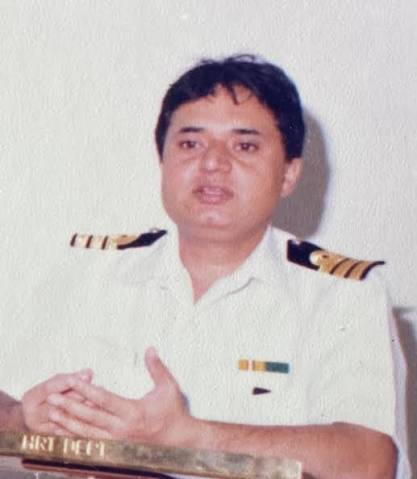 Rear Admiral Khurram Shahzad Noor
Yet behind the uniform and military responsibilities was another personality, one connected with words. “I deeply believe in languages”, Noor shared.
Noor's love for poetry did not disappear amid the demands of naval life. Instead, literature became another way through which he could explore human emotions, relationships and society. The contrast is striking: a professional trained to listen for faint signals beneath the sea also became a poet attentive to the quieter signals of the human heart.
His creative interests extend beyond poetry. He has also explored short filmmaking and storytelling, using creative expression to examine human relationships and social themes. These pursuits reveal a personality that refuses to be confined to a single professional identity.
READ MORE: Woman pilot hit LeT's Muridke center, and more facts about Operation Sindoor
Noor's life challenges the assumption that a person's early circumstances determine the limits of his future. The child who struggled to keep pace on a football field eventually spent decades undertaking demanding naval responsibilities. The officer associated with submarine warfare also became a teacher and mentor. The military professional developed into an educator, poet and communicator.










_(1)_(1).webp)

_(1).webp)