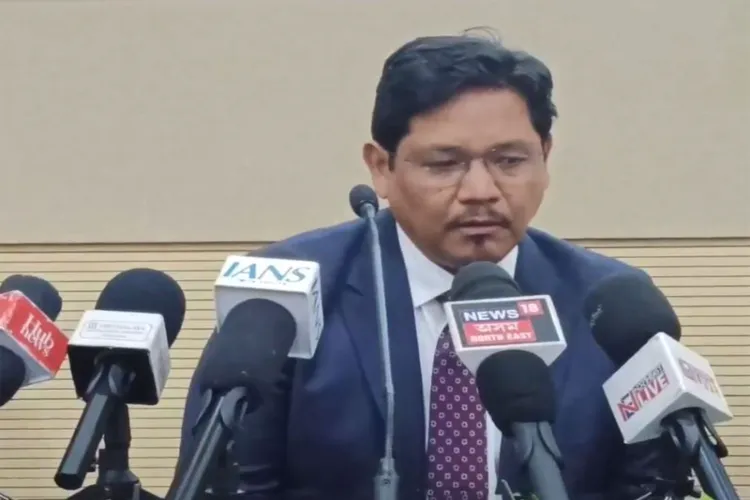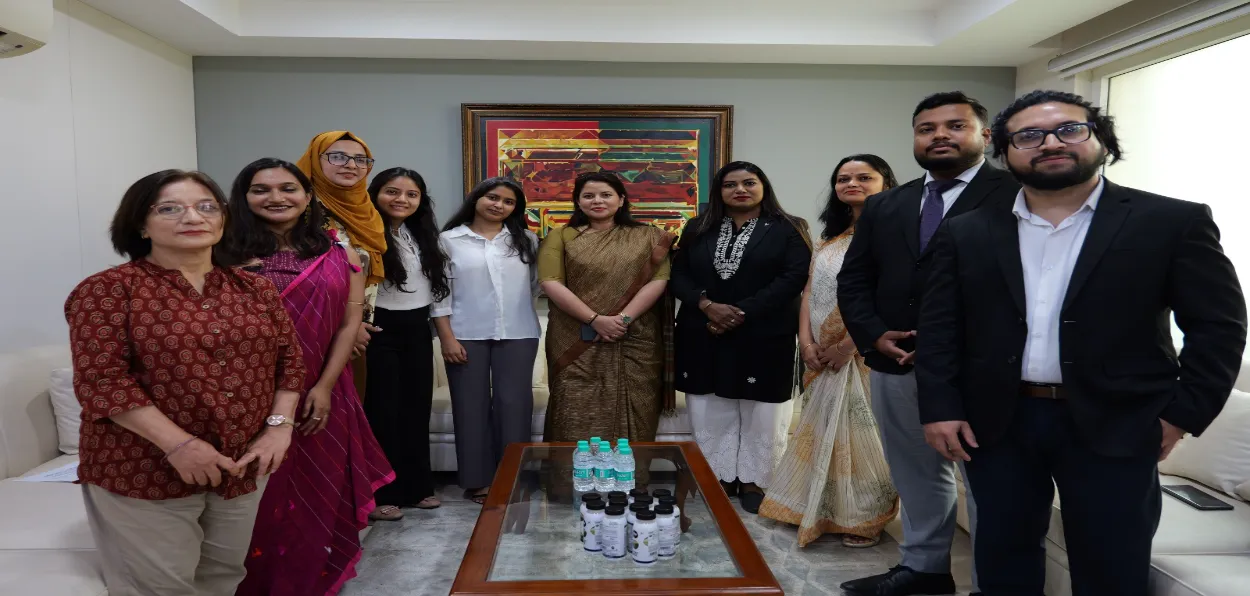
A thought-provoking and impactful panel discussion addressing the persistent social issues of dowry, gender inequality, educational empowerment, family challenges, and societal pressures was recently organised by Awaz-e-Khawteen, an NGO working on women’s causes.
Dr Babli Parveen, Honorary Convenor of NGO Awaz-e-Khwateen, asked the youth to rise against “evils of dowry”, the demand for which creates a toxic environment for newlywed women in their matrimonial homes and at times leads to a tragic end to their lives, as was seen in recent deaths of Twesha Sharma of Bhopal and Deepika Nagar of Greater Noida.
Babli Parveen wondered why Gen Z are not outraged by such incidents while they keep hyping and commenting on entertainment-related and frivolous events on social media. “I am shocked by the apathy of the youth on these two deaths,” she said.
She was speaking at an event organised by her NGO on the issues. Legal experts, academicians, social activists, and journalists who participated in the round table conference highlighted the complexities in dealing with this issue.
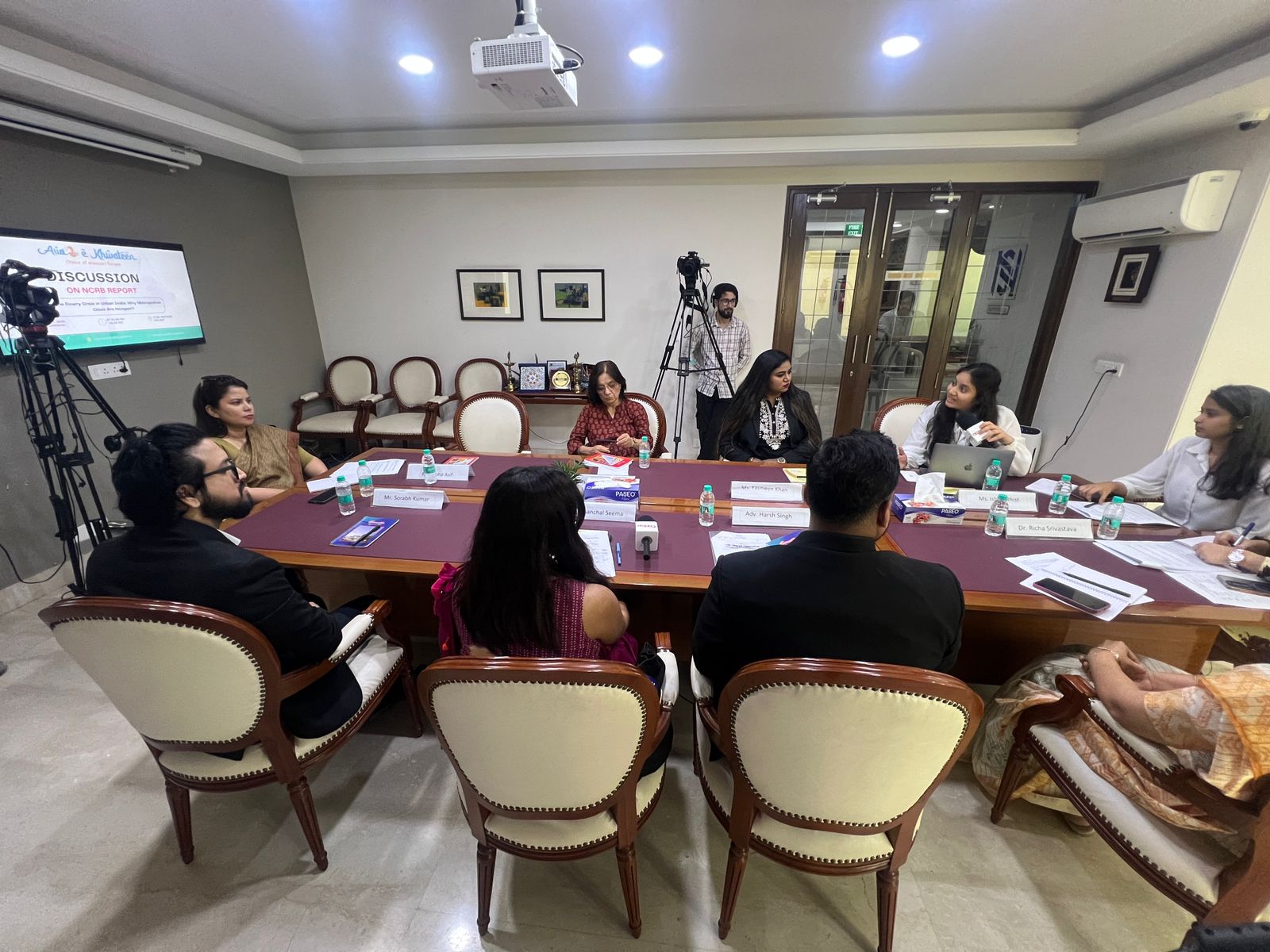
Advocates Ihsita, Yasmeen, Dr Richa, Sourabh, Harsh, Anchal, and journalist Aasha Khosa spoke on the issue.
The general agreement was that, despite harsh laws against dowry, the commercialisation of weddings and social relations is on the upswing.
The big fat Indian wedding that sees the bride’s family spend an insanely huge amount on the function and the dowry has turned the marriages into a vulgar display of wealth. At times, women who get stuck in a toxic marriage or face harassment from in-laws or husband are often advised to “adjust.”
The woman caught in this situation also agrees to continue in a violent or toxic marriage because the burden of the heavy investment her family has made in her wedding weighs heavily on her mind.
In both the above cases, women had spoken to their families about their inability to continue to live with their husband’s families due to harassment and demand for dowry.
The families counselled them to “adjust”, and it resulted in their violent deaths.
The speakers highlighted many instances to make their points and said that there is a need to make weddings simple and make both the dowry giver and taker accountable to the law.
There was a proposal to let young people find their partners without the involvement of their families, as happens in Western societies, as a way to end dowry deaths.
It may be recalled that the Indian law treats any unnatural death of a woman within seven years of her marriage in her matrimonial home as “dowry death”.
The discussion critically examined how dowry not only imposes severe financial burdens on families but also contributes to emotional trauma, domestic conflicts, psychological distress, and the erosion of dignity within marital relationships.
The speakers emphasised that despite legal prohibitions, dowry-related expectations continue to survive through social conditioning, status pressures, and normalised practices, making awareness and social accountability more important than ever.
Awaz-e-Khwateen organised a thought-provoking discussion on NCRB’s latest dowry crime report, exposing the grim reality of 83,327 cases pending trial, 27,154 arrests, and over 6,100 dowry deaths reported in 2023.#AwazEKhwateen #StopDowry #DowryIsViolence #NCRB #JusticeForWomen pic.twitter.com/qu5aADueXi
— Awaz e Khwateen (@AKhwateen) May 21, 2026
A significant portion of the discussion focused on the transformative role of education in empowering individuals, particularly women and youth, to challenge oppressive social norms and make informed decisions. The panellists collectively stressed that education is not merely a means of economic advancement but a powerful instrument for social justice, self-respect, and gender equality.
The session also provided valuable legal awareness regarding the rights and protections available to women under Indian law.
Important insights were shared about Supreme Court initiatives, government welfare schemes, and institutional support systems designed to assist victims of violence and discrimination.
The speakers elaborated on the role and functioning of One Stop Centres, highlighting how these centres provide integrated support services, including legal aid, counselling, medical assistance, shelter, and psychological support for women facing abuse and harassment.
The conference also highlighted the urgent need to create emotionally healthy and respectful family environments built upon equality, communication, and mutual understanding rather than financial transactions and societal expectations.
Speakers called upon parents, educators, legal professionals, and youth to collectively challenge outdated customs that undermine human dignity and social progress.
ALSO READ: Syed Mubin Zehra’s scholarship inspires beyond classrooms
Ms Yusra and Ms Tooba moderated the event.