.webp "Representational Image")
Amir Suhail Wani
Among the many profound teachings of the Prophet Muhammad, few encapsulate the essence of Islam as comprehensively as the Hadith of Jibril. In this remarkable narration, the Angel Jibril asked the Prophet three defining questions: What is Islam? What is Iman? What is Ihsan? The answers revealed that religion is not merely a collection of rituals or a set of beliefs, but a harmonious union of practice (Islam), faith (Iman), and spiritual excellence (Ihsan).
Yet, if one were to examine much of contemporary Muslim discourse, one could be forgiven for thinking that religion consists almost entirely of law, theology, and politics. The third and highest dimension—Ihsan—has often been relegated to the margins. The consequences of this neglect extend far beyond individual spirituality; they have profoundly shaped the trajectory of Muslim civilisation.
The decline of Muslim civilisation did not begin when Muslims engaged in politics. Politics has always been an integral part of Islamic society. Rather, decline began when politics ceased to be guided by Ihsan—when power became more important than purification, identity more important than character, and victory more important than virtue. The result was not merely political fragmentation but the gradual fading of the moral, intellectual, and aesthetic brilliance that once made Islamic civilisation a beacon for humanity.
The Prophet defined Ihsan in words of extraordinary depth: "To worship Allah as though you see Him; and if you cannot see Him, then know that He sees you."
This is not merely a definition of worship; it is a philosophy of life. A person who lives with the constant awareness that Allah sees every intention, every action, and every word naturally strives for excellence in every sphere of existence. Ihsan transforms prayer into humility, knowledge into wisdom, wealth into generosity, authority into justice, and work into an act of devotion.
It was this spirit that animated the greatest periods of Muslim history. The remarkable achievements of Islamic civilisation were never simply the products of wealth or imperial power. They were expressions of a worldview in which beauty, excellence, and service were understood as acts of worship.
The magnificent mosques of Córdoba, Isfahan, Samarkand, Delhi, and Kashmir were not constructed merely to inspire awe. Their harmonious proportions, elegant calligraphy, geometric patterns, and tranquil courtyards reflected a deeper conviction that beauty itself is sacred because the Prophet taught, "Allah is Beautiful and loves beauty." Architecture became theology expressed through stone and light.
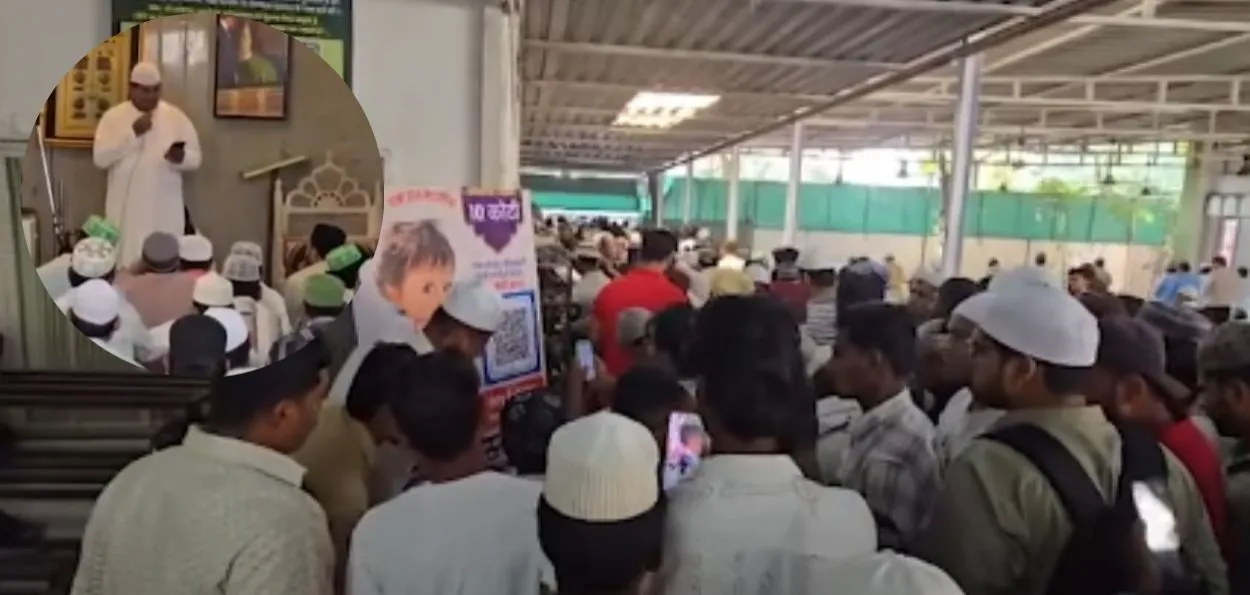
 Muslim Youth praying in a mosque
The same spirit permeated Muslim scholarship. Universities, observatories, hospitals, libraries, caravanserais, and charitable endowments (awqaf) flourished because knowledge and public service were regarded as forms of nearness to Allah. Physicians healed not only because medicine was a profession but because compassion was an expression of faith. Merchants became renowned for honesty because commerce itself was expected to embody Ihsan. Craftsmen perfected their work because excellence was an obligation owed to both the Creator and His creation.
Nowhere is this more evident than in Kashmir, where the Rishi-Sufi tradition became a model of coexistence and spiritual refinement. The enduring legacy of saints such as Sheikh Hamza Makhdoom and Sheikh Nooruddin Noorani lies not in military victories or political institutions but in the transformation of human character. Their greatest monuments were not forts but hearts.
Ihsan also nurtured a remarkable culture of pluralism. Classical Muslim societies were certainly not without flaws, but they often demonstrated a capacity to accommodate diversity that astonished contemporary observers. Jews, Christians, Hindus, and others frequently participated in the intellectual, commercial, and cultural life of Muslim lands. This was not simply the result of legal arrangements; it reflected an ethical disposition shaped by mercy, humility, and confidence rather than insecurity.
The gradual eclipse of Ihsan altered this balance. As spirituality receded from the centre of communal life, political identity increasingly became the dominant lens through which religion was understood. Legal debates multiplied, sectarian divisions hardened, and ideological rivalries intensified. The language of victory often replaced the language of virtue.
Politics is indispensable to any society, and Islam has never advocated withdrawal from public life. The problem arises when politics ceases to be an instrument of justice and becomes an end in itself. Without Ihsan, politics easily degenerates into partisanship, anger, and the relentless pursuit of power. Communities begin to measure success by dominance rather than service, by rhetorical triumph rather than moral excellence.
The consequences extend far beyond government. When Ihsan is neglected, religious practice risks becoming mechanical, knowledge becomes a means of self-promotion, activism becomes driven by outrage rather than wisdom, and public debate loses its civility. Mosques may remain full, yet hearts remain divided. Institutions may grow larger, while trust grows smaller.
One of the most subtle losses has been the decline of beauty itself. Civilisations are remembered not only for their armies and rulers but for the beauty they create—their literature, architecture, poetry, music, manners, gardens, and institutions of learning. Classical Islamic civilisation excelled because beauty was understood as a reflection of Divine perfection. As utilitarianism and political preoccupation gradually displaced this vision, artistic refinement and intellectual creativity often gave way to imitation, suspicion, and cultural stagnation.
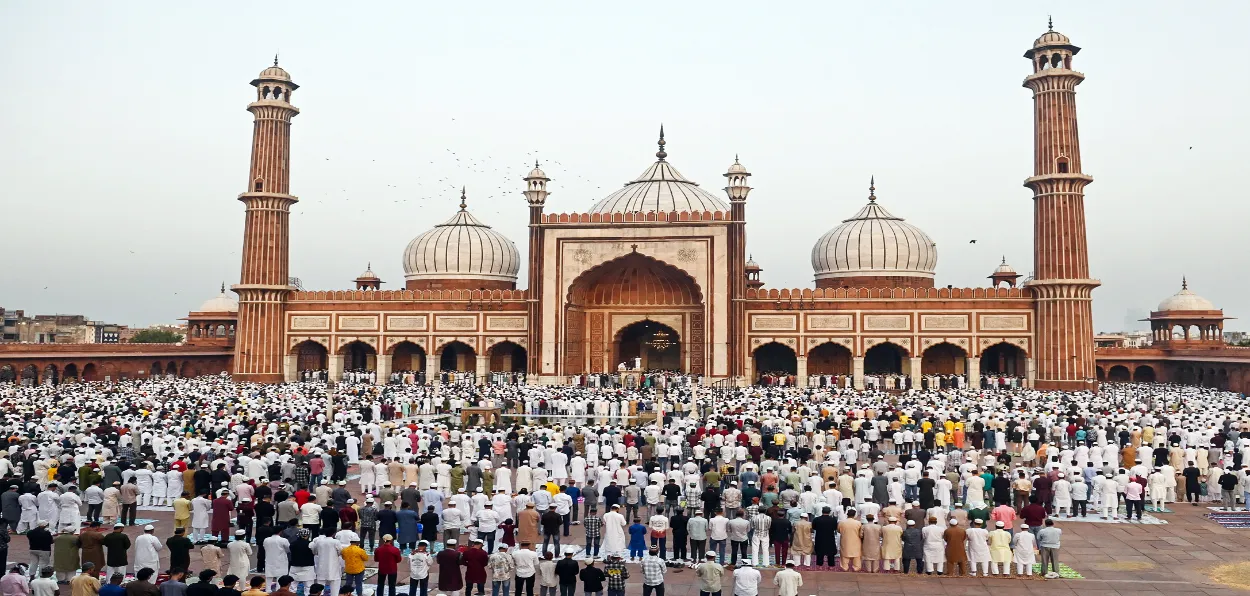 Muslims praying at Jama Masjid in Delhi
History also reminds us that the greatest ambassadors of Islam were seldom conquerors alone. They were merchants whose honesty inspired trust, scholars whose wisdom attracted students from distant lands, physicians who treated the poor without distinction, artisans who elevated ordinary work into beauty, and saints whose compassion transcended religious boundaries. They embodied the Qur'anic ideal of the muhsin—one who does what is beautiful because Allah loves those who excel in goodness.
This is not an argument against political engagement. A just political order remains essential for any flourishing society. Rather, it is an argument for restoring the proper hierarchy. Politics must remain the servant of ethics, not its master. Law must be animated by compassion. Theology must cultivate humility. Scholarship must produce wisdom. Activism must nurture reconciliation alongside justice. In short, every outward structure of religion must be illuminated by the inward light of Ihsan.
The challenges confronting the Muslim world today—polarisation, corruption, declining public trust, educational stagnation, sectarian conflict, and the erosion of civic virtue—cannot be solved by political programmes alone. They require a moral and spiritual renewal that begins with the individual heart and extends outward into society. The Hadith of Jibril reminds us that Islam reaches its perfection not with Islam or Iman alone, but with Ihsan.
The revival of Muslim civilisation will therefore not begin merely in parliaments, conferences, or election campaigns. It will begin when Muslims once again strive to become muhsinun—people whose excellence is visible in worship, family life, scholarship, commerce, governance, art, education, and service to humanity. It will begin when leaders seek justice before popularity, scholars pursue wisdom before prestige, activists cultivate mercy alongside courage, and ordinary believers recognise that every action can become an act of worship if performed with sincerity and excellence.
The world once admired Muslim civilisation not simply because it was powerful, but because it possessed a moral and spiritual charisma that transcended power. That charisma was born of Ihsan. If the Muslim Ummah seeks to recover its lost radiance, it must rediscover the forgotten third dimension of the Hadith of Jibril.
ALSO READ: Muslim translators of Bhagvad Gita helped spread its universal message
For when Ihsan returns to the heart of Muslim life, politics regains its purpose, knowledge regains its humility, beauty regains its meaning, and civilisation once again becomes a mercy to mankind.

.webp "Union Home Minister Amit Shah")








.webp)