Amir Suhail Wani
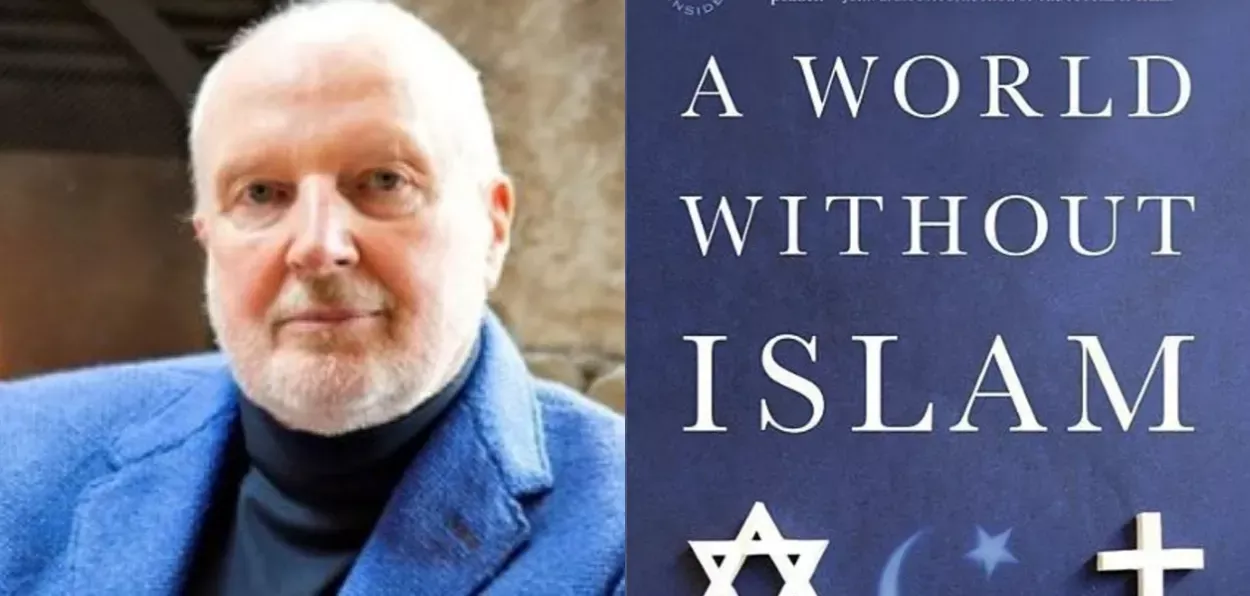
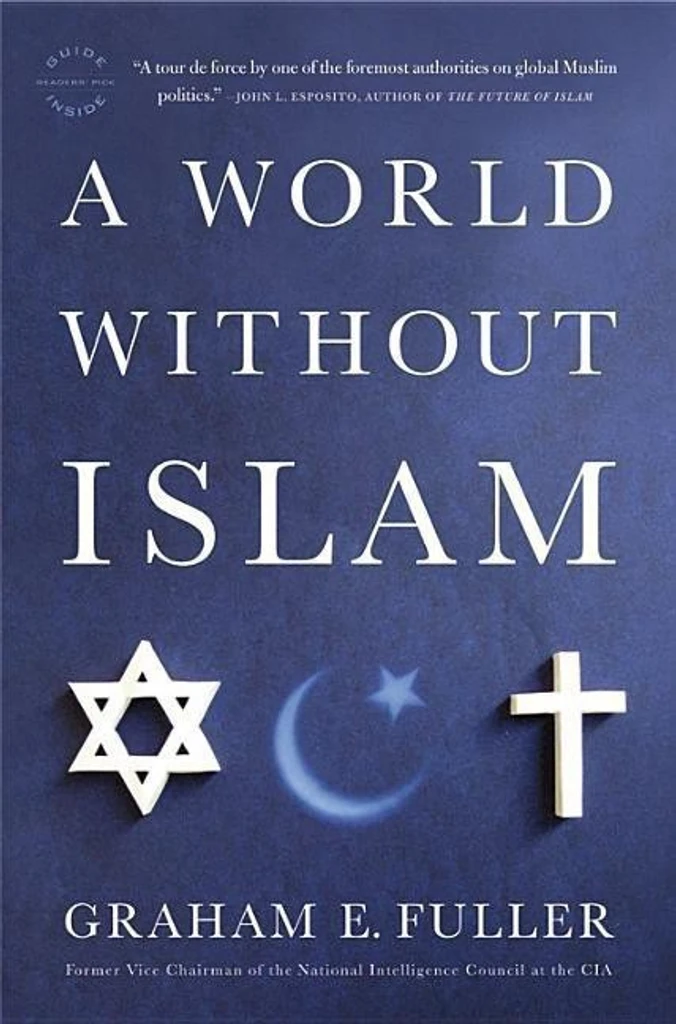
In an age where we often push simplistic narratives of religious conflict, Graham Fuller's A World Without Islam (published in 2010) offers a timely and intellectually courageous intervention. Despite a title that may initially appear unsettling to many Muslims, the book is neither an attack on Islam nor an exercise in speculative hostility. Rather, it is a profound historical inquiry into a question that has haunted contemporary politics: Does Islam cause the world's major conflicts, or are they rooted in deeper political, economic, and civilizational forces?
Book Review
Fuller's central argument is strikingly simple. If Islam had never existed, would the major tensions between East and West, between Europe and Asia, between empires and nations have disappeared? His answer is an emphatic no.
The historical rivalries, often presented as religious conflicts, predate Islam. These would likely have found other ideological expressions. Geography, power, trade, empire, ethnicity, and political ambition, he argues, have always been the primary engines of conflict. Religion often serves as a language through which these struggles are articulated rather than their fundamental cause.
Fuller stands within a distinguished tradition of scholarship. The renowned historian Marshall Hodgson, in his monumental The Venture of Islam, cautioned against viewing Islam as a monolithic force detached from broader historical processes.
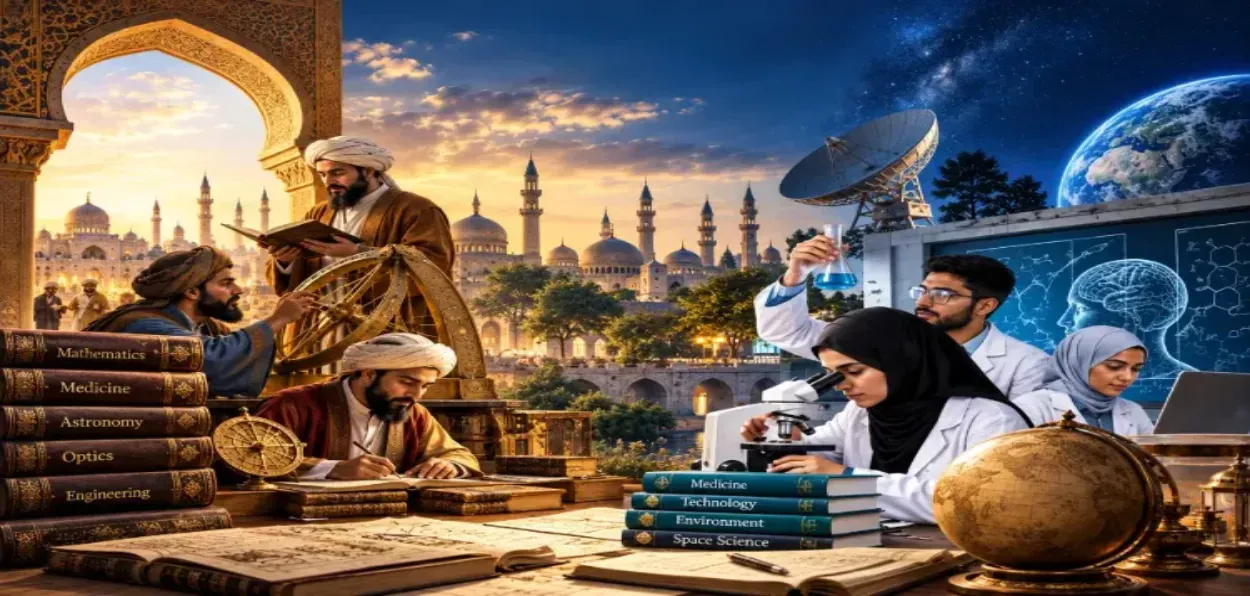
Hodgson distinguished between what was specifically "Islamic" and what he termed the wider "Islamicate" civilisation, demonstrating how Muslims, Christians, Jews, Hindus, and others collectively shaped the cultural and intellectual landscape of Afro-Eurasia. For Hodgson, the history of Muslim societies could not be reduced to theology; it was inseparable from commerce, statecraft, philosophy, and human creativity.
Similarly, Barnaby Rogerson's studies of Islamic civilisation challenge the notion that Islam spread primarily through violence. Rogerson highlights the role of merchants, scholars, mystics, and cultural exchange in connecting vast regions from Spain to Southeast Asia.
The remarkable expansion of Islamic civilisation, he argues, was often driven less by conquest than by trade networks, intellectual curiosity, and the universal appeal of a cosmopolitan civilisation. Such perspectives undermine the popular stereotype that Islam's historical success was merely the product of military power.
Karen Armstrong has perhaps been the most influential contemporary voice in the effort to decouple Islam from violence. Across several works, she has repeatedly demonstrated that no major religion possesses a monopoly on either peace or violence.
Armstrong argues that acts of religious violence are frequently rooted in political grievances, social dislocation, and struggles for power, with theology providing post-facto justification rather than primary motivation. She reminds readers that Christianity, Hinduism, Buddhism, Judaism, and Islam have all been invoked at different moments to sanctify violence, while each tradition has also produced profound philosophies of compassion, justice, and coexistence.
Seen through this broader scholarly lens, Fuller's book becomes more than a defence of Islam. It is a critique of historical reductionism itself. It challenges the tendency to explain complex human conflicts through a single variable, whether religion, ethnicity, or culture. The book asks readers to resist the temptation of easy answers and to engage instead with the intricate realities of history.
This message is particularly relevant in contemporary India. The subcontinent's history is not merely a story of conflict between Hindus and Muslims; it is equally a story of coexistence, intellectual exchange, shared cultural spaces, linguistic synthesis, artistic collaboration, and spiritual dialogue. From the Bhakti and Sufi traditions to the composite culture of North India, the historical record reveals a far richer reality than the binary narratives that dominate modern politics. To attribute every episode of tension solely to Islam is not only historically inaccurate but also intellectually impoverishing.
One need not agree with every conclusion Fuller reaches. At times, he may understate the independent influence of religious ideas. Nevertheless, the book succeeds in posing an essential question: Are we blaming religion for problems whose roots lie elsewhere? In asking that question, Fuller performs a valuable service. He reminds us that civilisations do not clash because of sacred texts alone; they clash because of human ambitions, fears, insecurities, and struggles for power.
READ MORE: Aabroo's rise triggered Muslim women's aspiration to join civil services
At a time when public debate often rewards slogans over scholarship, A World Without Islam deserves careful reading. Far from being a book about a world without Islam, it is ultimately a book about understanding the world as it truly is—complex, interconnected, and far too intricate to be explained by religious labels alone. For Indian readers seeking a more nuanced understanding of Hindu-Muslim relations, Fuller's work offers not certainty, but something far more valuable: perspective.
World Without Islam; Graham Fuller, Little, Brown and Company


.webp "Representational Image")









_(1).webp)