




Tehran (Iran)
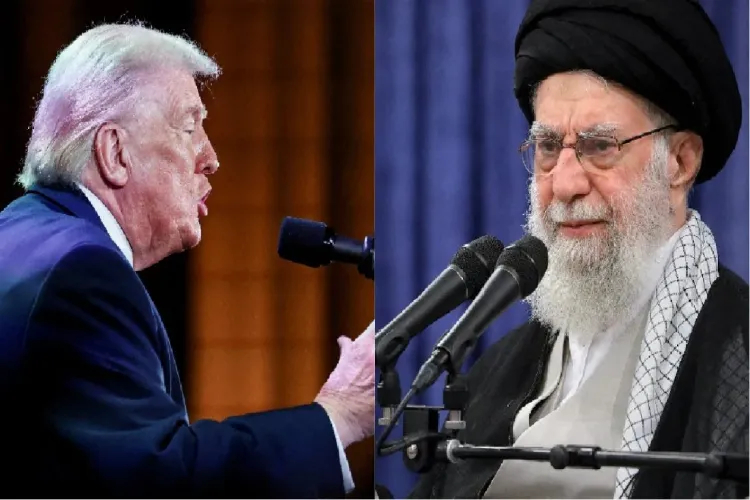
As high-stakes nuclear negotiations resumed in Geneva on Tuesday, Iranian Supreme Leader Ayatollah Ali Khamenei issued a sharp warning to US President Donald Trump, asserting that even the most powerful military could face a devastating collapse.
The remarks came as representatives from Washington and Tehran initiated "indirect talks" aimed at resolving the long-standing nuclear dispute.
According to a report by CNN, senior American representatives, including US envoy Steve Witkoff and Jared Kushner, son-in-law to President Donald Trump, are scheduled to hold discussions with Iranian authorities in Geneva today.
These diplomatic engagements coincide with a speech delivered by Ayatollah Ali Khamenei in Tehran and the arrival of Foreign Minister Abbas Araghchi's delegation in Switzerland.
In a series of provocative posts, Khamenei challenged the American President's frequent assertions of military dominance, stating, "The US President keeps saying that they have the strongest military force in the world. The strongest military force in the world may at times be struck so hard that it cannot get up again."
Addressing the increased American naval presence in the region, the Supreme Leader suggested that US hardware remains vulnerable to Iranian countermeasures.
"The Americans constantly say that they've sent a warship toward Iran. Of course, a warship is a dangerous piece of military hardware. However, more dangerous than that warship is the weapon that can send that warship to the bottom of the sea," he noted.
Reflecting on decades of friction, Khamenei dismissed threats of regime change by citing the historical resilience of the Islamic Republic. "The US President has said that for 47 years, the United States hasn't been able to eliminate the Islamic Republic. That is a good confession. I say, 'You, too, will not be able to do this'," he added.
Meanwhile, reaffirming his hardline stance, President Trump issued a stern warning regarding the "consequences of not making a deal" ahead of the negotiations.
Speaking to reporters on Monday, the President confirmed he would engage in the process "indirectly," describing the discussions as "very important."
While acknowledging that Iran is a "tough negotiator," Trump claimed its leadership has proven to be "bad negotiators, as we could have had a deal instead of sending out B-2s to knock out their nuclear potential."
The President's remarks came in the wake of "Operation Midnight Hammer," which he credited with forcing a return to diplomacy.
On June 21-22, 2025, the United States conducted strikes against Iranian nuclear infrastructure, targeting three key sites in Fordow, Natanz, and Isfahan.
Trump justified the intervention, asserting that without it, Tehran "would have had a nuclear weapon within one month."
Expressing cautious optimism, Trump said he hopes the Iranian leadership would be "more reasonable" moving forward, asserting that economic and political pressures are driving them back to the table.
"They want to make a deal. We have peace in the Middle East," he stated, admitting there might be localised "flames here and there" but maintaining that regional security had been achieved through force.
The renewed diplomatic push follows the collapse of earlier efforts, including rounds of nuclear talks held in April 2025 in Muscat and Rome.
Iran strongly condemned the 2025 strikes at the time, denouncing them as a blatant violation of international law.
Currently, the United States maintains an extensive deployment of maritime and aerial assets throughout the Middle East.
READ MORE: Brotherhood is necessary for growth: Grand Mufti to PM Modi
This strategic presence follows recent warnings from President Trump, who cautioned that "the consequences are very steep" if a deal is not reached.
In response, Tehran has emphasised its preparedness to launch a counterstrike, asserting it "will not tolerate threats" as a negotiating tactic.










.webp)
.webp)

_(1).webp)