Mamdani invokes Ramayana, Mahabharata to champion Hindu community
Story by ATV | Posted by Vidushi Gaur | Date 18-11-2026
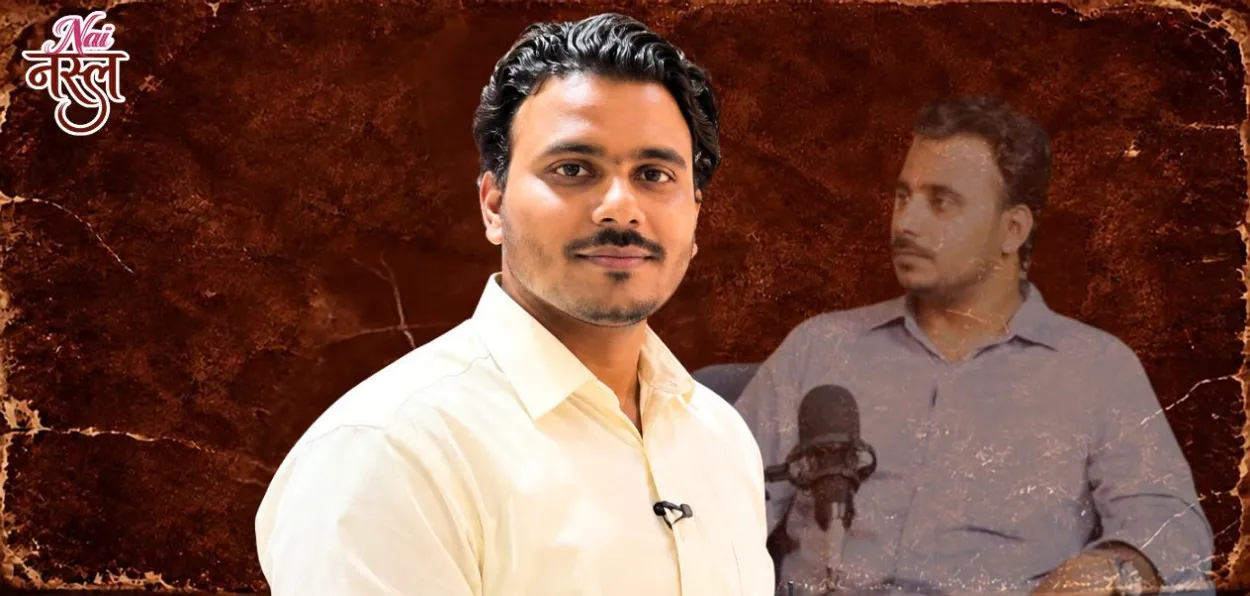
New York Mayor Zohran Mamdani
Onika Maheshwari/New Delhi
New York Mayor Zohran Mamdani, of Indian origin, delivered a message of brotherhood by invoking the teachings of Hindu epics and condemning hatred and discrimination against the Indian-American community. His message, which emphasised heritage, values and humanity beyond religious boundaries, presented a heartening example of social harmony.
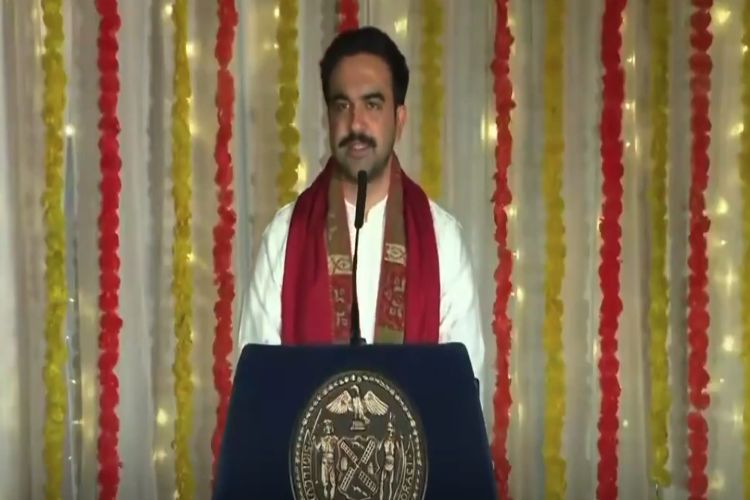
Religion may be one part of a person's identity, but sensitivity, values and respect for other faiths are what broaden one's outlook. New York Mayor Zohran Mamdani conveyed a similar message when he invoked the Ramayana and Mahabharata at a public event and spoke out against growing hatred and discrimination targeting the Hindu-American community. A Muslim mayor sharing life lessons from two great Hindu epics was not merely a part of his speech; it also highlighted the importance of mutual respect between different religions and cultures.
At a Diwali celebration held at Gracie Mansion, Mamdani said the Ramayana teaches us how to be a good brother, spouse and friend, while the Mahabharata reflects the complexities of family relationships and our responsibilities towards dharma. He described the epics not merely as religious texts, but as sources of wisdom on human relationships, morality and life's values.
🇺🇸 NYC Mayor Mamdani Calls Out Targeting Of Hindu Temples & Urges New Yorkers To Embrace 'A Politics Of Light' In Diwali Event Address https://t.co/sZYqNU8JX0
His remarks particularly highlighted how understanding and respecting the teachings and traditions of other faiths, regardless of one's own beliefs, can help bring society together.
A multicultural identity shaped by his mother's heritage and father's values
Mamdani's upbringing has played an important role in shaping his outlook. Born in Kampala, Uganda, into a family of Indian origin, he is the son of renowned Indian filmmaker Mira Nair, who comes from a Punjabi Hindu family, and Mahmood Mamdani, who has a Gujarati Muslim background. He grew up amid two distinct religious and cultural traditions.
In an interview, Mamdani himself said that his mother's family is Hindu and that he celebrated Diwali, Holi and Raksha Bandhan with his family during childhood. He has said that despite being Muslim, Hindu traditions and festivals have helped shape his worldview. The values and principles he inherited from his family remain an important part of his identity.
Mira Nair's role in this regard is particularly noteworthy. Raising a child in a family where traditions from different religions are embraced and respected is, in itself, an important social message. Mamdani's remarks suggest that he sees his mother's cultural heritage not as being in conflict with his Muslim identity, but as something he embraces and respects as part of his life. For him, there is no need for these identities to clash.
Humanity beyond religion and the safety of other communities
Mamdani's outlook has not been limited to cultural traditions. He has also strongly condemned racial discrimination and hate incidents targeting Indian-American, Hindu and Sikh communities.
In his address, he mentioned that a Hindu temple had been targeted and Sikh community leaders had also faced attacks. He expressed concern that hatred, once confined to the fringes of society, was increasingly making its way into public life and political campaigns.
He made it clear that Hindu-Americans have every right to practise their religion, visit temples and live in safety. He said society has a collective responsibility to put an end to such hatred.
His stance is significant because he presented the rights of another community not merely as a formal gesture, but as an integral part of his public responsibility.
He has previously expressed concern over an attempted attack on a Hindu temple and growing hatred against South Asian communities. Meanwhile, 13 US lawmakers had also written to the relevant authorities seeking an investigation into the disruption of a Diwali event in Seattle as a possible hate crime.
A message of shared heritage and Indian culture abroad
Mamdani's story is not simply about a Muslim leader invoking the Ramayana and Mahabharata. It is also a story of family upbringing that taught him to maintain his own religious identity while understanding and respecting the traditions of other faiths.
At a time when divisions based on religion and identity are increasingly visible in many parts of the world, his message serves as a reminder that embracing diversity does not mean abandoning one's identity. A Muslim can draw inspiration from the teachings of the Ramayana, just as a Hindu can respect the Islamic teachings of compassion and justice. This requires not a change of faith, but an open and inclusive mindset.
Mamdani's example also shows how values instilled by parents can shape the next generation across geographical boundaries. A glimpse of India's cultural diversity and shared family traditions is now visible in an international city like New York.
Ultimately, one does not have to be Hindu to share the teachings of the Ramayana and Mahabharata, just as one does not have to belong to a particular religion to speak about humanity, peace and brotherhood. Mamdani's message is that faith has its own place, but respect, safety and humanity must be upheld for everyone.