Ram Kumar Kaushik
For most of the post-independence era, the Indian Ocean was, in strategic terms, India's ocean — a maritime space where New Delhi's navy operated with relatively little competition from other major powers. That era has ended. The steady growth of Chinese naval power and its extension into the Indian Ocean Region represents one of the most consequential shifts in India's strategic environment, and it is reshaping the requirements placed on the Indian Navy accordingly.
The People's Liberation Army Navy has, over the past decade, moved from occasional, short-duration deployments in the Indian Ocean to a more regular and sustained presence, including anti-piracy patrols, research vessels, and periodic task group deployments. What began as episodic activity has increasingly taken on the character of routine presence — precisely the kind of persistent posture that shapes strategic outcomes over time rather than in a single dramatic moment.
Bases and Logistics Facilities
Alongside its deployments, China has invested in a network of ports and logistics arrangements stretching from the Horn of Africa through South Asia, most visibly in Djibouti but also through commercial port investments elsewhere along the ocean's rim. Even where these facilities are framed as commercial in nature, they carry latent strategic utility, offering refuelling, resupply, and maintenance options that extend the reach and endurance of Chinese naval assets far beyond what would otherwise be possible. This logistics architecture is a long-term structural development, not a temporary posture, and it changes the baseline conditions under which any regional navy must plan.
China's own naval modernisation has been extraordinarily rapid, with the PLA Navy developing carrier capability, expanding its fleet of modern destroyers and frigates, and building the underway replenishment ships necessary to sustain operations far from home waters. This transformation — from a force oriented primarily around coastal defence to one increasingly capable of expeditionary operations — mirrors the trajectory of every other major naval power in history and signals clear ambitions that extend well beyond China's immediate periphery.
A Long-Term Reality
It would be a mistake to view this development as a temporary fluctuation. The scale of investment, the consistency of the trajectory over more than a decade, and the stated ambitions of Chinese maritime strategy all point toward sustained competition in the Indian Ocean Region as a durable feature of the strategic landscape, not a passing phase to be waited out. Planning on any other assumption would leave India's maritime posture perpetually reactive rather than prepared.
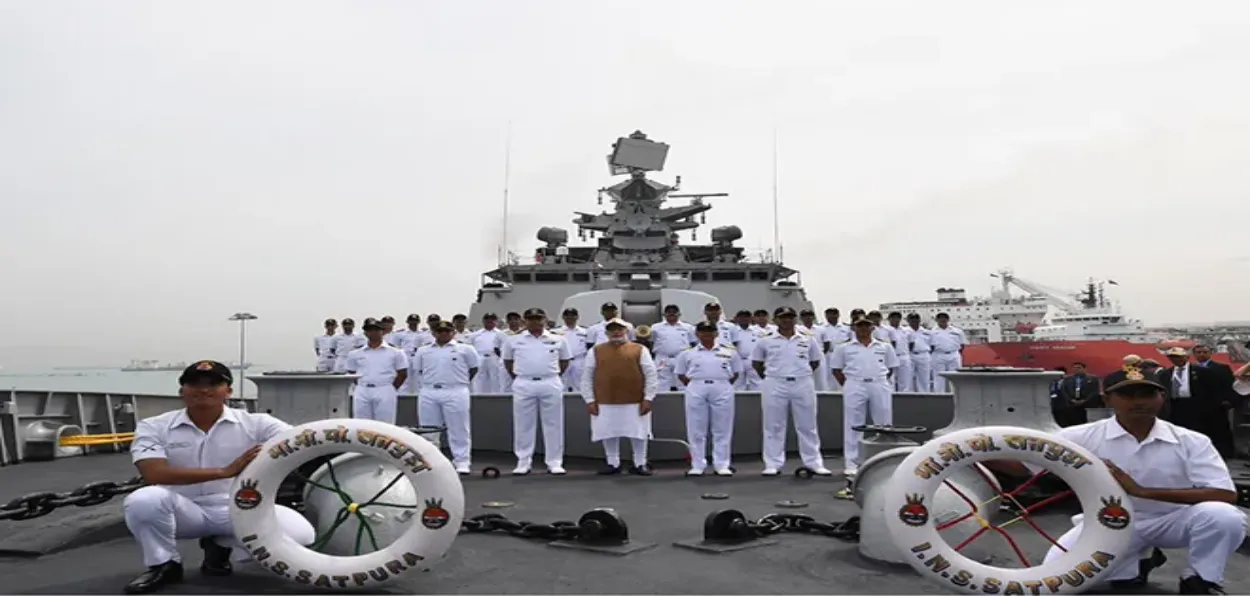
This evolving picture places a clear requirement on India: the ability to maintain sea control in waters vital to its own interests, and, where necessary, sea denial capability to complicate the calculus of any power seeking to operate unchallenged close to Indian shores. This is not a call for confrontation — India's approach has consistently emphasised stability, freedom of navigation, and rules-based order in the Indian Ocean, benefiting all users of these waters. Rather, it is a recognition that credible deterrence and a stable regional order depend on India possessing the surface fleet, underwater capability, and naval aviation necessary to be the most consequential maritime actor in its own backyard.
ALSO READ: Sundarbans student Selima Molla to witness ID Parade from Invitees' Gallery
Balanced Response
Meeting this challenge does not require matching China vessel for vessel; it requires a fleet structured around India's geographic advantages — proximity, familiarity with the terrain, and a dense network of regional partnerships — combined with the reach to maintain persistent presence across key chokepoints and sea lanes. As Chinese naval activity in the Indian Ocean continues its steady expansion, the Indian Navy's own growth, modernisation, and forward posture will remain central to preserving a stable, multipolar maritime order in the region — one in which India, not any external power, remains the natural guarantor of security in its own ocean.
The author is a senior journalist



_(1).webp "Graves of Sufis at Triveni-Saptagram Khanqah")






.webp "Representational Image")

_(1).webp)