




New York
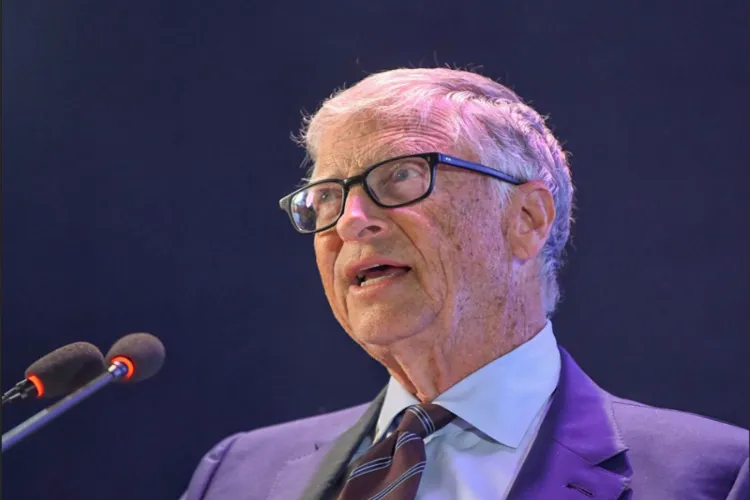
The decisions taken on artificial intelligence (AI) over the next 12 to 18 months will play a major role in determining who benefits from the technology in the years ahead, Microsoft co-founder Bill Gates said in an exclusive interview with ANI, while stressing the need for local-language AI, Indian data, safety and homegrown talent.
“None of this can wait. The decisions made in the next 12 to 18 months will shape who benefits—and who doesn’t—for years to come,” Gates said.
Gates said AI was unlike previous technologies and that its risks and benefits would depend on how it is developed and used.
“AI is like nothing we have seen before. I’ve written about the risks, which we all need to take seriously. But two things can be true at once. While AI introduces new unknowns and dangers, it can also be very, very good. It all depends on how it’s used, and the choices we make now,” he said.
He also added that India has a significant opportunity to use AI to ensure that the benefits of technology reach villages and small towns along with cities. India's digital public infrastructure provides a strong foundation for this, he said.
Gates pointed to examples where farmers can use a mobile phone to take a picture of a diseased leaf and receive information within minutes about the problem and possible action in their own language. A drone can then be used to spray the field and help prevent a pest attack or crop loss.
He also highlighted the importance of making AI work effectively across India's languages and local dialects.
He said AI systems trained largely on English could misunderstand health-related questions asked in local languages, making testing particularly important in healthcare.
“Language matters – but so does local context. For AI to be useful for all Indians, it has to be built on Indian data for Indian conditions, with India deciding how that data is managed and protected,” Gates said.
He also stressed the need for India to develop AI talent across different fields, including policymakers, researchers, doctors, teachers and agriculture experts who will determine how the technology is used.
Gates said AI could also improve healthcare by giving service providers better information to make timely decisions. AI tools could help an ASHA worker or a doctor at a health centre identify conditions earlier and refer patients to specialists when required.
However, he cautioned that healthcare AI needs a longer development timeline to ensure safety. He also said health data is deeply personal and protecting privacy is essential.
In agriculture, Gates cited Maharashtra's MahaVISTAAR advisory service as an example of how AI can already be used at scale. The free service has been built into the state's digital infrastructure and allows farmers to use an app, voice call or message in their own language to receive tailored advice on crops, weather and pests.
More than 700,000 farmers have joined the service, while around 70,000 more sign up every month, he said.
Gates also flagged cybersecurity as a near-term concern. The same AI tools that can help people perform useful work can potentially be used to attack critical systems.
“One near-term concern is cybersecurity. The same tools that help people do good work can help someone attack a hospital's systems, so governments and companies need to invest in defence now,” he said.
He also said the nature of work would change quickly as AI becomes more common, making skills development important for India's young and tech-savvy workforce.
READ MORE:How Mudasir Dar’s brought peace to hotbed of militancy in Kashmir
Gates said efforts such as Bhashini would be important in making AI accessible across India's linguistic diversity. He added that the foundation, along with other organisations, has committed to helping 3 billion people access AI in their own language, particularly underrepresented languages.
He said India's AI opportunity would ultimately depend not only on access to the technology but also on how it is adapted to local needs, protected through appropriate data practices and supported by talent capable of deploying it responsibly.







.webp "Representational Image")


.webp)