




Uzma Khatoon
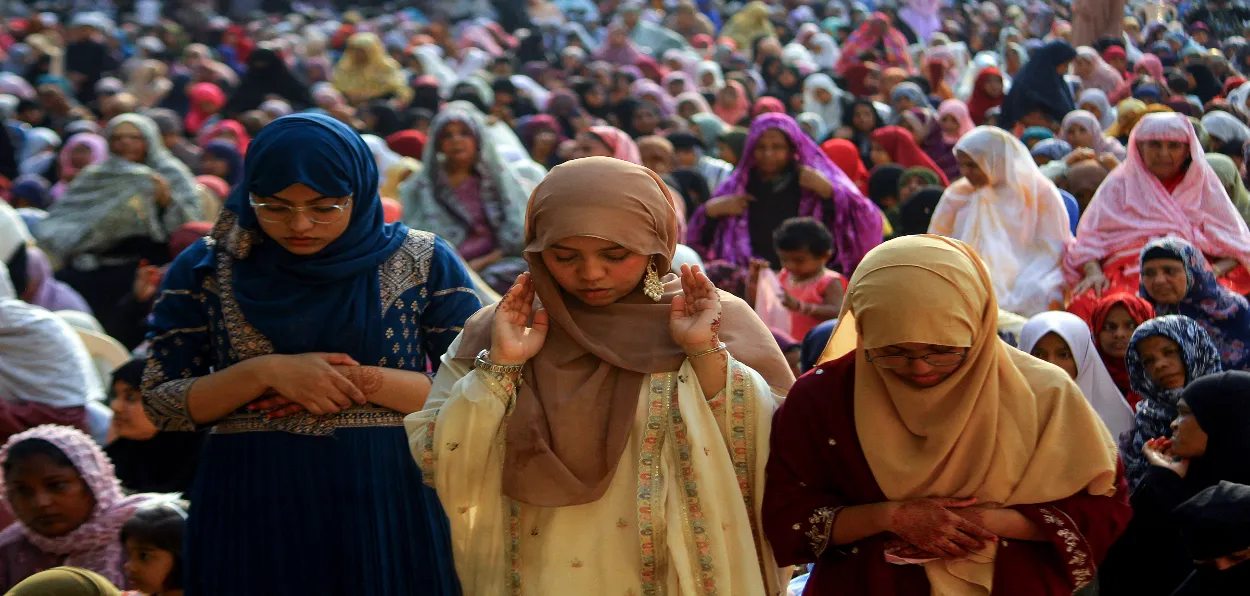
The Indian public sphere was recently stirred by controversial remarks from a prominent traditional Sunni leader, who defended a circular issued by a conservative group advising local mahalls and madrasas not to place women on public stages alongside men during religious festivities.
The Sunni leader argued that bringing women into the public sphere would lead to “great destruction” and claimed that Islam mandated strict seclusion (purdah) to prevent it. To illustrate his argument, he compared women to a “gold necklace” that must be kept locked inside a cupboard, box and layers of wrapping, contrasting it with a roadside stone grinder that people simply step over.
Such reasoning reduces women to objects whose value, dignity and safety are supposedly dependent on their confinement. Under the paternalistic language of “honour” and “protection”, it effectively denies women a public identity, professional aspirations and individual agency.
Such attempts to justify permanent domestic confinement in the name of respect deserve serious scrutiny.
Islam and Women’s Public Agency
Viewed through the Quran and the historical record of early Islam, the claim that women must be excluded from public life is difficult to sustain. The Quran does not establish female confinement or absolute male authority over women. Its central principle of Tawhid—the absolute oneness of God—also rejects the notion that one human being possesses inherent sovereignty over another based on gender.
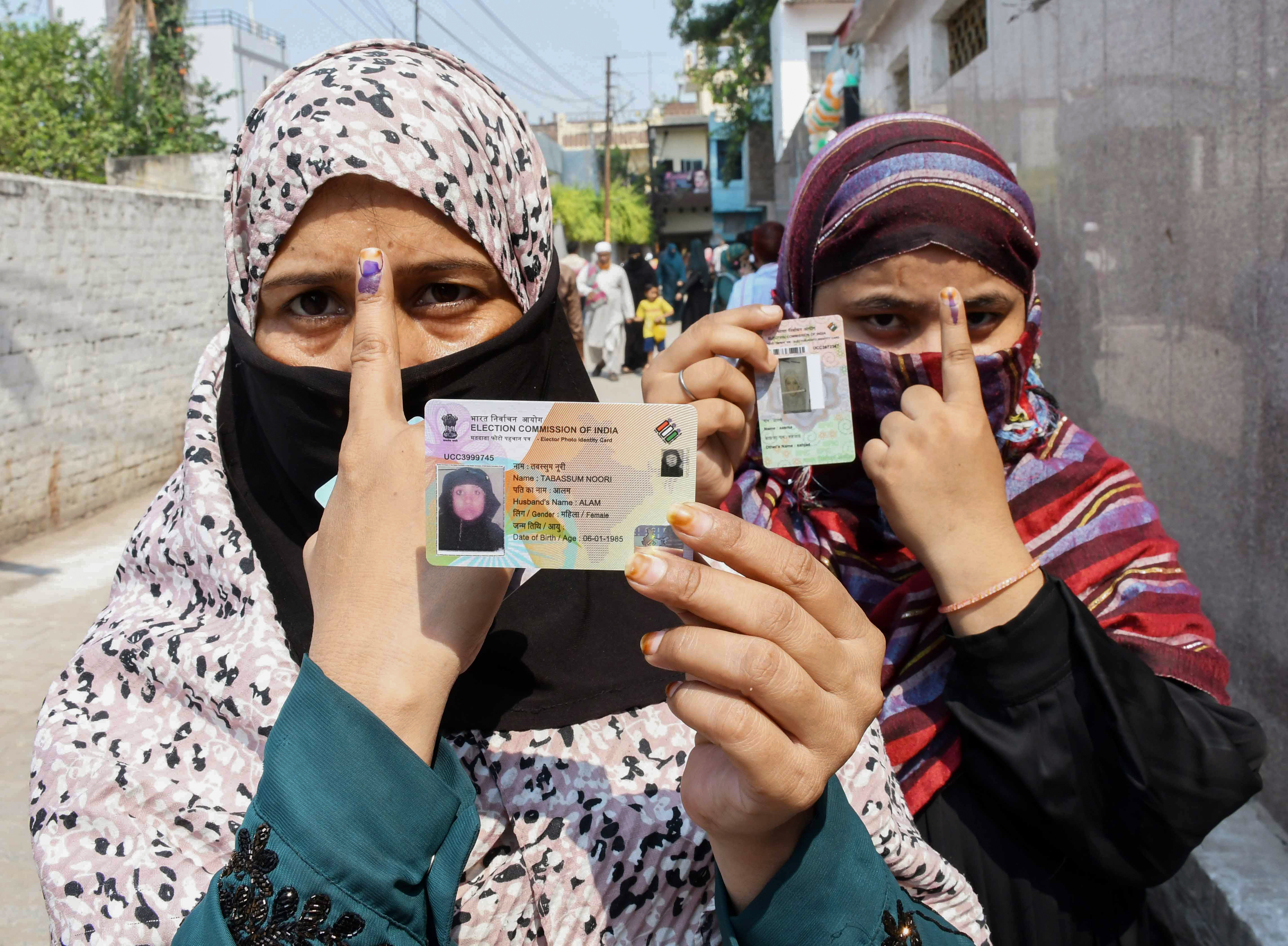 Women showing their finger mark after voting in elections
The formative period of Islam provide several examples of women exercising social, economic and public agency. Khadija was a successful merchant, while Umm Salamah and Nusaybah bint Ka'ab are among the women associated with the intellectual, social and political life of the early Muslim community. Their lives demonstrate that female participation in society was not incompatible with Islamic identity.
The Quranic emphasis on modesty, moreover, applies to both men and women. Surah An-Nur (24:30) first instructs believing men to lower their gaze and guard their chastity, followed by verse 24:31, which addresses believing women. Modesty, therefore, cannot reasonably be reduced to a restriction imposed exclusively on women.
Nor do these verses establish a general prohibition on women's participation in public life. The broader Islamic tradition contains extensive discussions of women's rights, responsibilities, education, commerce and participation in society.
The contemporary Muslim world also offers numerous examples of women occupying public and political positions. Pakistan elected Benazir Bhutto as its Prime Minister, while Bangladesh has experienced decades of prominent female political leadership. Indonesia elected Megawati Sukarnoputri as president, and Singapore was led by Halimah Yacob, a Muslim woman, for six years. In Malaysia, Wan Azizah Wan Ismail served as Deputy Prime Minister.
Indian Muslim women, too, have long participated in public life. They include parliamentarians such as Maimoona Sultan and Mofida Ahmed, former Jammu and Kashmir Chief Minister Mehbooba Mufti, Lok Sabha MP Iqra Hasan, senior political leader Mohsina Kidwai, Odisha MLA Sofia Firdous, Delhi Haj Committee Chairperson Kausar Jahan and political leader Dr Sameena Begum.
Women have also participated in religious scholarship and institutional life across Muslim societies, serving as teachers, scholars, judges and public representatives. Restrictions imposed by extremist groups such as the Taliban, including bans on girls' secondary education and severe limitations on women's public participation, should therefore be understood in the context of those groups' particular ideological and political interpretations rather than as the only possible expression of Islamic tradition.
Intersectionality and Daily Survival
The consequences of restrictive social attitudes become particularly significant when viewed through the experiences of marginalised communities. For Pasmanda Muslim women in India, the struggle for empowerment intersects with gender, economic disadvantage and social hierarchy.
For many such women, empowerment is not an abstract debate but a question of education, livelihood, dignity and economic survival. Working-class and Pasmanda women have historically worked outside the home in agriculture, construction, artisan occupations and informal labour, often because their families depend on their earnings.
They therefore confront multiple forms of disadvantage while also carrying substantial responsibilities within their families and communities.
Any inclusive movement for Muslim women's empowerment must consequently place these women's experiences at its centre rather than confining the debate to questions of social respectability. Grassroots leadership, education and economic independence are essential to enabling women to negotiate their position within both family and society.
The Indian Constitution provides an important framework for this struggle. Articles 14, 15 and 21 guarantee equality before the law, prohibit discrimination on specified grounds, and protect life and personal liberty. Freedom of religion must coexist with these constitutional guarantees rather than become a basis for denying women their fundamental rights.
Reform and Internal Debate
The controversy also highlights the diversity within traditional Sunni scholarship. While some conservative interpretations emphasise social separation and restrictive gender norms, other Muslim scholars have challenged such approaches by drawing on the Quran, Hadith and the historical experience of Muslim societies.
These debates need not be framed as a confrontation between religion and modernity. Within a democratic society, religious traditions can engage with constitutional principles, social change and questions of gender justice through dialogue and reinterpretation.
The recent remarks were themselves challenged by religious and political voices across Kerala. Dr V.P. Suhaib Moulavi, chief priest of Thiruvananthapuram's Palayam Juma Masjid, criticised the position in his Friday sermon, citing Quranic verses and Hadith to argue that Islam does not prohibit women from public engagement.
The controversy thus reflects a broader debate within Indian Muslim society over the relationship between religious interpretation, women's rights and constitutional citizenship.
For Muslim women, particularly those from economically and socially marginalised communities, genuine empowerment cannot rest on confinement in the name of protection. It requires access to education, livelihoods, public participation and equal citizenship.
ALSO READ: Why Maulana Maududi's political Islam is not relevant in twenty-first-century India
The challenge, therefore, is not to exclude women from public life in the name of religious respectability, but to create social and religious spaces in which their dignity, agency and rights are recognised.
Dr Uzma Khatoon is a Post-Doctoral Fellow in the Department of Islamic Studies at Jamia Millia Islamia, New Delhi.







.webp "Kassim Ahmad")

.webp)