Firdous Khan
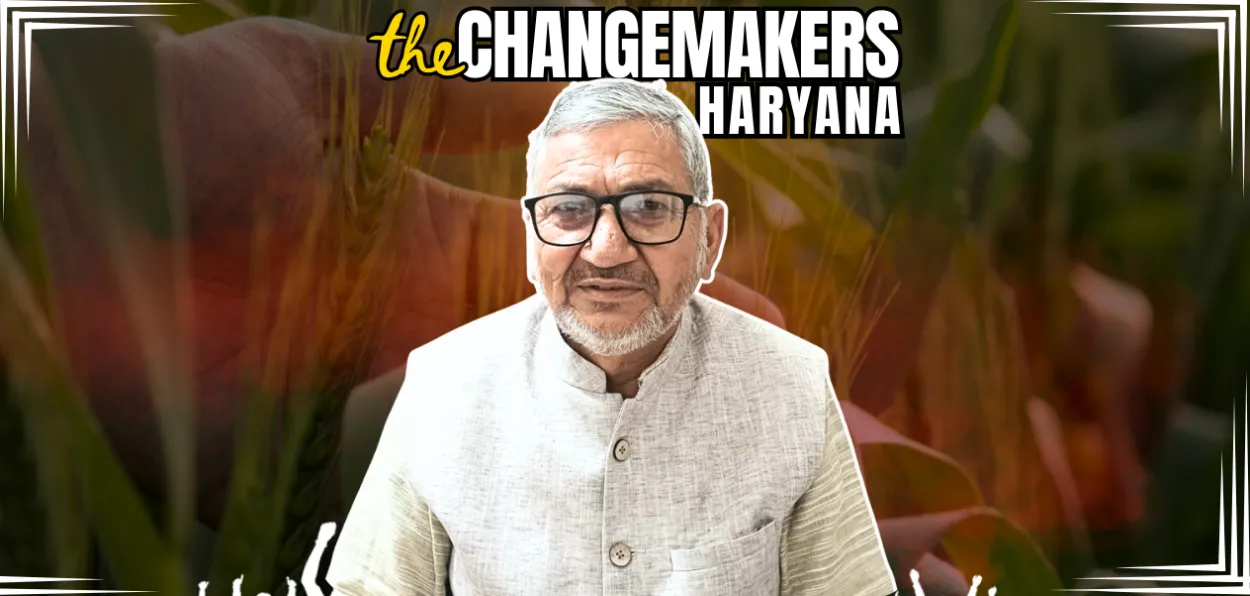
Hoshiyar Khan, 67, has been involved in matters concerning Waqf lands and properties in the Punjab since it included today’s Haryana. In Hisar, many Waqf properties were not being properly utilised. With the support of the All-India Muslim Welfare Committee, he played a key role in improving the system.
Hoshiyar Khan furnished his inputs for bringing about the 2013 amendment to the Waqf Law, which made the lease process transparent and based on open bidding.
Following this amendment, an estimated four hundred crore rupees in annual revenue became possible. The committee has also continuously coordinated with the administration to remove illegal encroachments from several cemeteries in Hisar and across Haryana.
.jpeg) Changemaker Hoshiyar Khan
Changemaker Hoshiyar Khan
Sharing his life story, Hoshiyar Khan says, “I was born on 15 December 1958 in the Thurana village of Hisar district, Haryana. At that time, this region was part of undivided Punjab. My mother, Nimbo, was a religious and devoted woman, and my father, Abdul, was simple, honest and deeply faithful. They always ensured that no one around them suffered.”
Although his parents were uneducated, they made every effort to provide quality education to him and his siblings. Islam places great importance on knowledge, and seeking education is obligatory for every Muslim. “Back then, earning a bachelor’s degree was seen as a major achievement, and I was able to accomplish it,” he says.
.jpeg) Hoshiyar Khan at an event in Haryana
Hoshiyar Khan at an event in Haryana
In 1978, Hoshiyar Khan joined government service as a supervisor in the Irrigation Department. He continued working there until 2016, fulfilling numerous professional and social responsibilities during this long tenure.
He also fought for employee rights—ensuring proper duty assignments and timely salaries, including arrears. “During my government service,” he recalls, “I served as president, secretary and chairman of the Mechanical Union. From 1998 to 2017, I was also president of the Mini Secretariat Housing Colony. I devoted a significant part of my life to such responsibilities.”
Alongside his professional duties, Hoshiyar Khan has remained actively involved in religious and social work. Since 2004, he has been serving as president of the Muslim Welfare Committee (Rural & Urban), working tirelessly for the upliftment of society and the Muslim community.
The committee addresses community issues and demands by holding meetings on concerns such as backwards-class rights and reservations, and organises demonstrations when required.
.jpeg)
Hoshiyar Khan Offering Namaz
To facilitate the Muslim community in Hisar, the committee organises Eid al-Fitr and Eid ul-Azha congregational prayers. As the city lacks sufficient mosques, arrangements are made in Krantiman Park, with all expenses borne by the committee.
The committee also manages the Barah Quarter cemetery in Hisar. A boundary wall was constructed to prevent animals from entering, and maintenance work such as grass cutting, soil refilling after rains and cleaning of graves is done regularly. Unnecessary trees were removed to ease grave digging and improve land use.
.jpeg)
Hoshiyar Khan with Former CM of Haryana Late Om Prakash Chautala
A madrasa operates within the cemetery premises, where around forty children receive religious education. They are taught Arabic and Urdu, and accommodation is provided to some of them. The committee covers all their living and food expenses. An imam also resides there and leads regular prayers. Recently, two additional rooms were constructed for the madrasa at a cost of nearly six lakh rupees, part of which had to be borrowed due to limited resources.
A beautiful garden has been developed near the madrasa with roses, jasmine, mehndi, pomegranate, guava and date palm trees. Children play and learn in this serene environment. Neem, moringa and jamun trees have been planted near the cemetery gate, creating a homely atmosphere that supports the children’s mental and educational growth.
ALSO READ: How Aslam Khan turned personal adversity into strength for social good
The life of Hoshiyar Khan is an inspiring testament to commitment towards faith, social service and moral values. He believes that an individual’s duty extends beyond personal or family interests and must include the welfare of society and community. His journey shows that with honesty, patience and sincere intention, even the toughest challenges can be overcome, and one can make a lasting contribution to society.

.jpg "Gujarat’s women entrepreneurs bring their craftsmanship to life during Navratri")