_(1).webp "Representational Image")
Ghaus Sivani
Why did an Islamic thinker like Allama Iqbal take an interest in Hindu philosophers? Why did he mention them in his books and speeches? Why did he appreciate Vedanta philosophy? Why did he praise Hindu saints? He did not consume beef.
Such questions are often asked by many people who want to know more about Iqbal.
There are many controversies surrounding Iqbal, including the question of whether he was the first person to float the idea of Pakistan. However, there is no doubt that Allama Iqbal was a great thinker, poet and philosopher of the Indian subcontinent. He studied the major intellectual traditions of both the East and the West and engaged with them constructively.
At heart, Iqbal was an Islamic thinker, but he also studied the ancient religious and philosophical traditions of India, particularly Vedanta, with seriousness and sincerity. He sought to understand not only Hinduism but also the teachings and lives of prominent figures from other religions. For him, religion was not a vehicle for hatred, discrimination or division, but a path towards spiritual development.
Iqbal’s family had a Kashmiri Brahmin lineage. He remained conscious of this family and cultural heritage and is believed to have had knowledge of Sanskrit and studied Vedanta philosophy.
Allama Iqbal’s ancestors embraced Islam during the seventeenth century, and he was conscious of his rich cultural heritage.
It may surprise many that he did not consume beef, even though it was commonly eaten in his hometown of Sialkot. It’s difficult to know if this was due to his Brahmin ancestry or something else. However, his biographers have noted that he abstained from eating beef.
Also, although he did not believe in astrology, he had a birth chart prepared for his son, Javed Iqbal.
Iqbal’s Kashmiri Pandit ancestors belong to a community which was among the first to learn Persian and qualify to join the government service during the Muslim rule in Kashmir. He belonged to the “Sapru” clan referred to as “Safroo” in Kashmiri.
Iqbal’s son, Justice Javed Iqbal, writes in his book Zinda Roud: “In a registered document, Iqbal had written his caste identity as ‘Sapru (Kashmiri Pandit)’. He had heard from his father that his family belonged to an old lineage of Kashmiri Brahmins. His patronymic was ‘Sapru’. One of his ancestors, Baba Lol Haj, had accepted Islam and later became famous as ‘Luli Haji’.
Professor Jagannath Azad, an expert on Iqbal, has also written that Iqbal belonged to a Kashmiri Pandit family, and his family’s bloodline still exists among the Kashmiris. According to Azad, Iqbal’s ancestors became Muslims about 200 years ago. The family is said to have embraced Islam under the influence of a Sufi saint, whose memory and reverence remained in the family for generations. (Iqbal and Kashmir, Jagannath Azad, p. 32.)
Thus, Iqbal’s family had a Kashmiri Brahmin heritage before embracing Islam. While their religion changed, their cultural and familial connections remained part of their history. Iqbal himself did not confine his identity or intellectual sources to a narrow framework.
In a letter to Muhammad Din Fauq dated January 16, 1934, Iqbal discussed the origins of the term “Sapru”. He wrote:
“Dear Fauq!
“I do not know the exact meaning of the word ‘Sapru’ in the Kashmiri language. It may well mean what you have described—a boy who displays the wisdom of an elder at a tender age. However, I would like to share what I heard from my late father regarding the origin of the ‘Sapru’ gotra (lineage) among Kashmiri Brahmins.
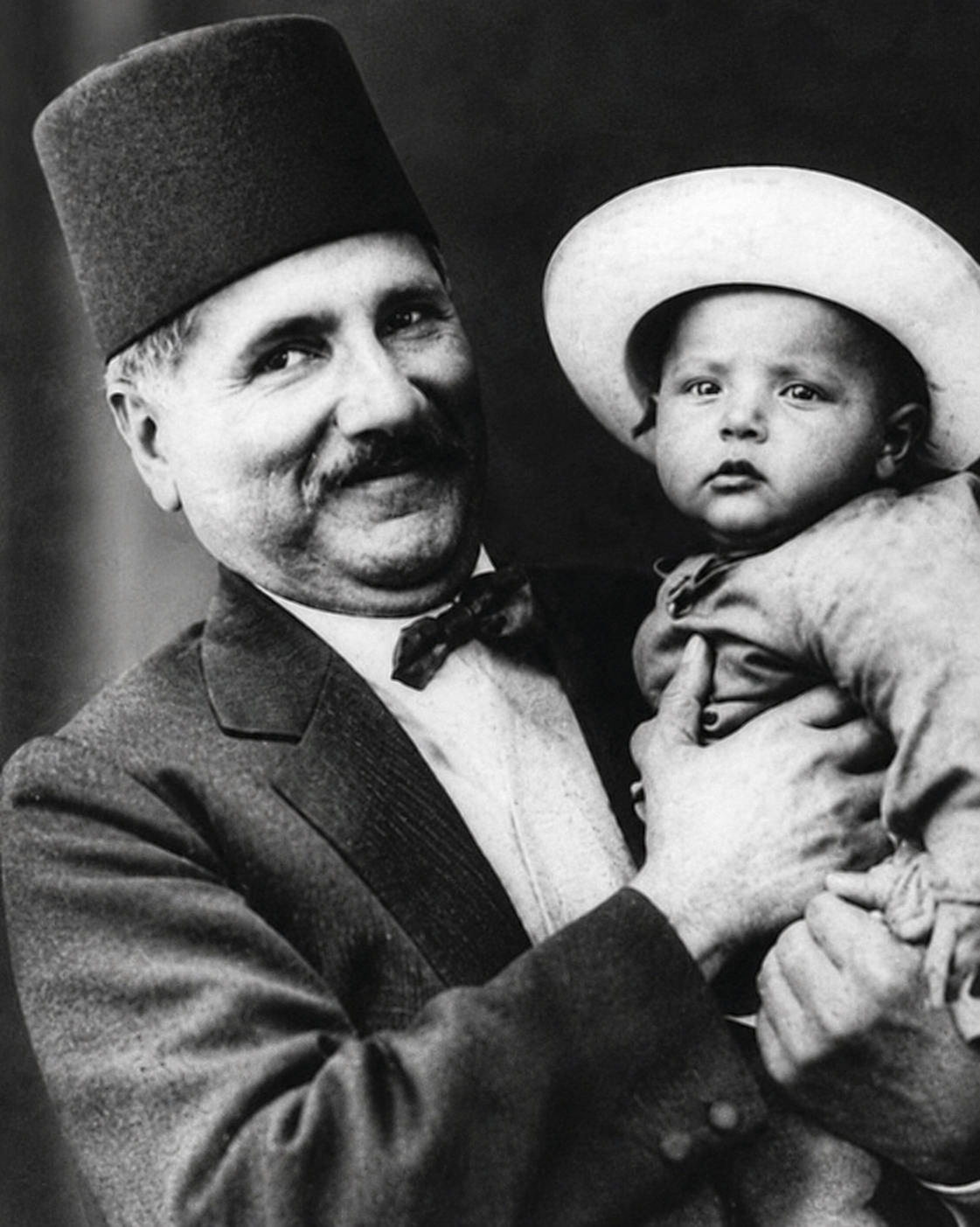 Allama Iqbal holding his son Javed Iqbal
When Muslim rule was established in Kashmir, most Kashmiri Brahmins—due to adherence to old traditions or other reasons—did not pay attention to the language and learning of the Muslim rulers. The group among them that was the first to learn Persian and similar subjects, achieved proficiency in them, and gained the trust of the Muslim administration came to be known as ‘Sapru.’ The prefix ‘Sa’ signifies the person who was the first to begin learning; such a connotation is found in several languages. The root of ‘Pru’ is the same as that from which the word padhna (to read/study) is derived.
My late father used to say that the Brahmins of Kashmir had given this name—initially as a term of sarcasm and scorn—to those of their brethren who were the first to abandon their ancient social and religious traditions in favour of learning the Islamic language and scholarship. Over time, this name became established as a permanent gotra (lineage).
Diwan Tek Chand M.A., who served as a Commissioner in Punjab, had a keen interest in the study of linguistics. Once, in Ambala, he remarked to me that the word ‘Sapru’ is linked to the ancient Iranian king Shahpur. According to him, the ‘Saprus’ were originally Iranians who had left Iran and settled in Kashmir long before the advent of Islam, eventually integrating into the Brahmin community due to their intellect and talent.
God knows best.
As far as I am aware, there are no Muslim households belonging to the Sapru family in Punjab. A thorough search for this was conducted at the time of Aijaz’s wedding, but without success. Muhammad Iqbal 16 January 1934” (Anwar-e-Iqbal, Bashir Ahmad Dar, pp. 76–77, Iqbal Academy, Pakistan, Lahore.)
(However, a gotra is a lineage system in Hinduism that traces a person's ancestry back to an ancient Vedic sage or seer. It represents an unbroken paternal (father-to-child) line of descent)
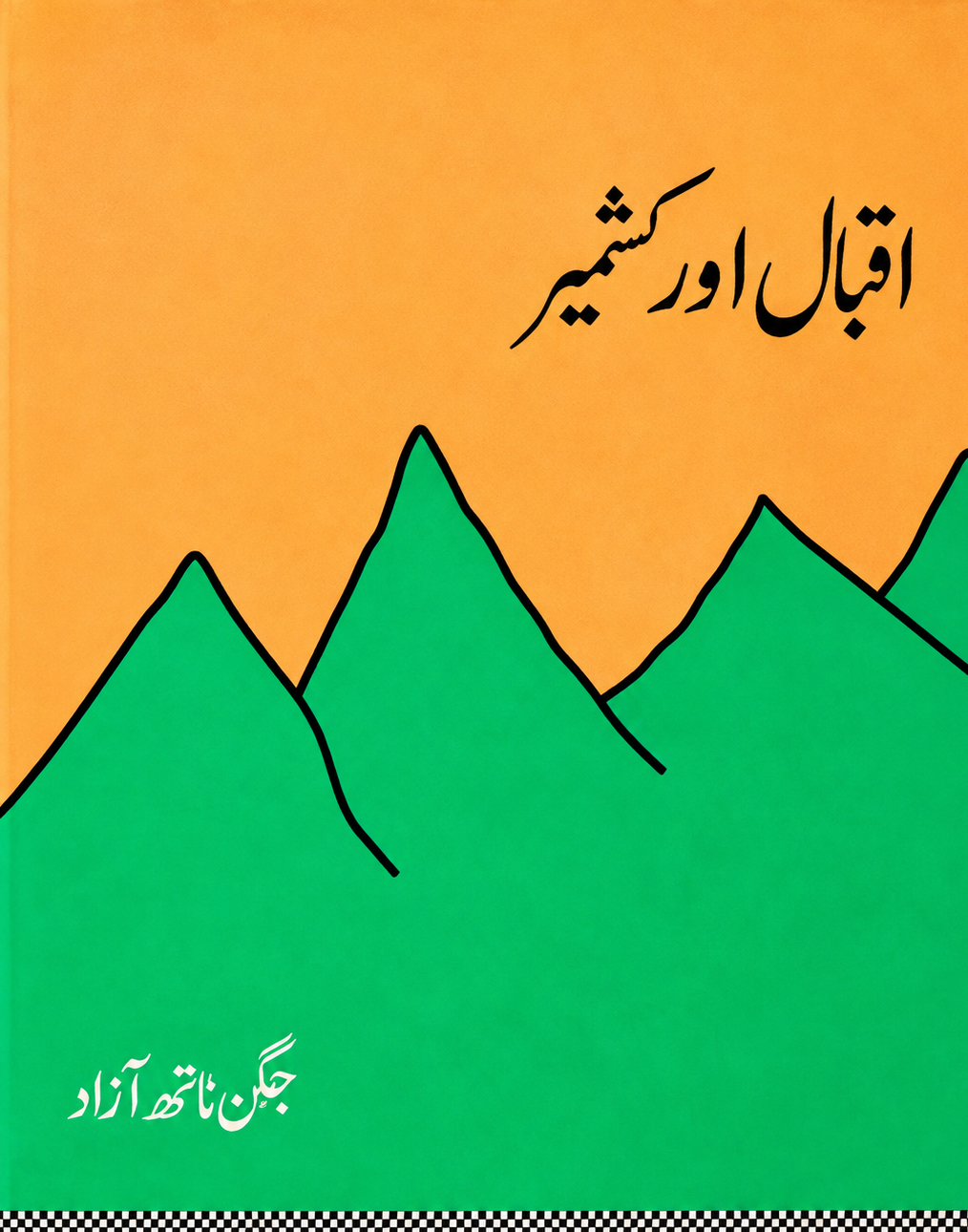 The cover of Javed Iqbal's book
In the letter, Iqbal presents two views about the origins of the “Sapru” family of Kashmiri Brahmins. The first, based on his father’s account, holds that the Saprus were Brahmins who were among the first to master Persian and Islamic studies and subsequently gained positions under Muslim rule.
The second, attributed to Diwan Tek Chand, links the name to the ancient Iranian king Shapur.
Iqbal’s concluding “God knows best” reflects a cautious and scholarly approach: he presents the competing explanations without claiming certainty.
Iqbal’s son, Javed Iqbal, also records the following observation by Pandit Ramchandra Dehlvi, a scholar of Arabic and Sanskrit:
“Only a person born into a Brahmin lineage can truly comprehend divine knowledge and the Word of God. What secret lies hidden in this regarding Iqbal? Simply that he was a Kashmiri Pandit. For thousands of years, his ancestors had shaped his personality through a spiritual tradition.” (Zinda Rood, Justice Javed Iqbal, p. 33.)
Iqbal was a Muslim and an ardent proponent of Islam, yet he also considered it important to respect the cultural traditions of his ancestors and other religions that formed its social fabric. To him, India was not merely a geographical entity but a confluence of diverse civilisations, religions and cultures. He advocated love and brotherhood among its communities.
He declared: “Mazhab nahin sikhata aapas mein bair Rakha; Hindi hein hum watan hain Hindostan hamara..” (Religion does not teach us to harbour enmity towards one another; We are Indians, and Hindustan is our homeland).”
During his speech at the Muslim League session in Allahabad, he also spoke of harmony and brotherhood between Hindus and Muslims: “A community that harbours ill will towards other communities is base and ignoble. I deeply respect the customs, laws, and social and religious institutions of other communities. Moreover, in accordance with the teachings of the Quran, it is my duty to protect their places of worship should the need arise.” (Allama Iqbal’s Allahabad Speech, p. 106.)
Here, Iqbal was addressing people of different faiths in India—including Hindus, Sikhs, Christians and Parsis—and affirming his respect for their traditions. More importantly, he told Muslims that, according to the teachings of the Quran, they had a duty to protect the places of worship of other religions when necessary.
Professor Jagannath Azad, citing Iqbal’s friend and historian Muhammad-ud-Din Fauq, writes: “For the welfare of all humanity, I desire reconciliation and harmony between the Muslims and Hindus here, and I consider this essential. It is the inhabitants of India alone who possess the capacity to build a new world for the new human being upon the ruins of the old world.” (Iqbal and Kashmir, Jagannath Azad; source: Mashahir-e-Kashmir, p. 41.)
This suggests that Iqbal’s vision went beyond peaceful coexistence. He believed Hindus and Muslims could work together to create a new world. His circle of friends included people from different religious communities, and the article presents him as someone who did not judge Indians solely based on religion.
Professor Jagannath Azad, again citing Muhammad-ud-Din Fauq, records: “In addition to English and Islamic philosophy, you have also studied Hindu philosophy. Therefore, you hold all religions in high esteem. You are equally loved and respected by both Hindus and Muslims.” (Iqbal and Kashmir, Professor Jagannath Azad, p. 38; reference: Muhammaduddin Fauq.)
ALSO READ: Operation Safed Sagar made me re-evaluate myself as an artist: Adil Hussain
Iqbal’s engagement with Hindu philosophy, alongside his study of Islamic and Western thought, reflects the breadth of his intellectual interests. Rather than approaching other religions and cultures through prejudice, he sought to understand them through study and reflection. This breadth of inquiry helps explain why his writings could combine a strong commitment to Islam with an appreciation for India’s diverse intellectual and spiritual traditions.

.jpg "Gujarat’s women entrepreneurs bring their craftsmanship to life during Navratri")








.webp)