Bhakti Chalak
For the past five generations, Taj Mohammad and his family in Balapur, Akola, have been making a special kind of rakhi that holds deep significance for Hindu families in Maharashtra.
Known as the ‘Dev Rakhi’, it is the first rakhi traditionally offered to the deity in many households on Raksha Bandhan. For generations, this Muslim family has been making these traditional rakhis, preserving a craft rooted in faith, tradition and trust.
Taj Mohammad, a resident of Balapur in Akola district, inherited the family business. Named after his grandfather, who died before he was born, Taj Mohammad has continued the family tradition with the same dedication.
Speaking to Awaz-The Voice, Taj Mohammad says, “This is our fifth generation making rakhis. The ‘Dev Rakhi’ required for Raksha Bandhan is made at our place. This work has been going on since the time of our ancestors. Not just rakhis, but we also make ‘kardode’ for Diwali, offering items and sarees for Durga Puja; we prepare goods for every Hindu festival and sell them in the market.”
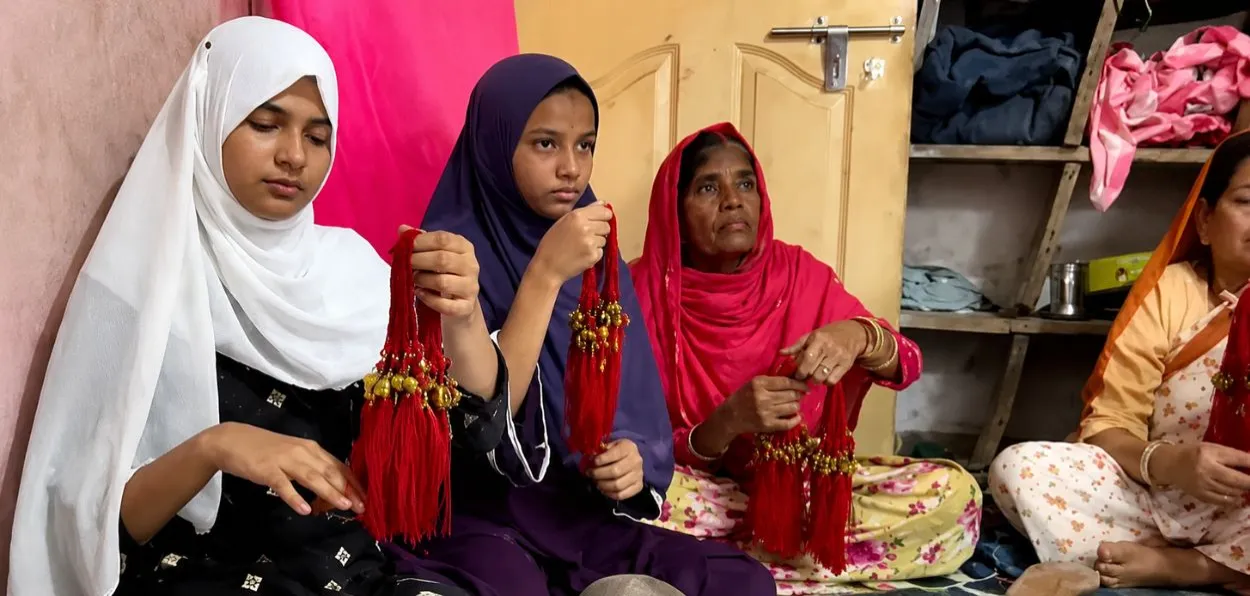
At a time when the market is flooded with plastic and imported rakhis, the traditional Dev Rakhi made by Taj Mohammad’s family remains distinctive. Unlike modern rakhis made with ready-made threads and decorative materials, these rakhis are prepared through a painstaking traditional process.
The process begins with plain white cotton yarn. The yarn is dyed in different colours, boiled to make the colours fast and then dried. It is subsequently woven into colourful threads, with red, yellow and other traditional shades used to create the Dev Rakhi.
As Raksha Bandhan approaches, the entire family spends nearly two months working day and night to meet the demand.
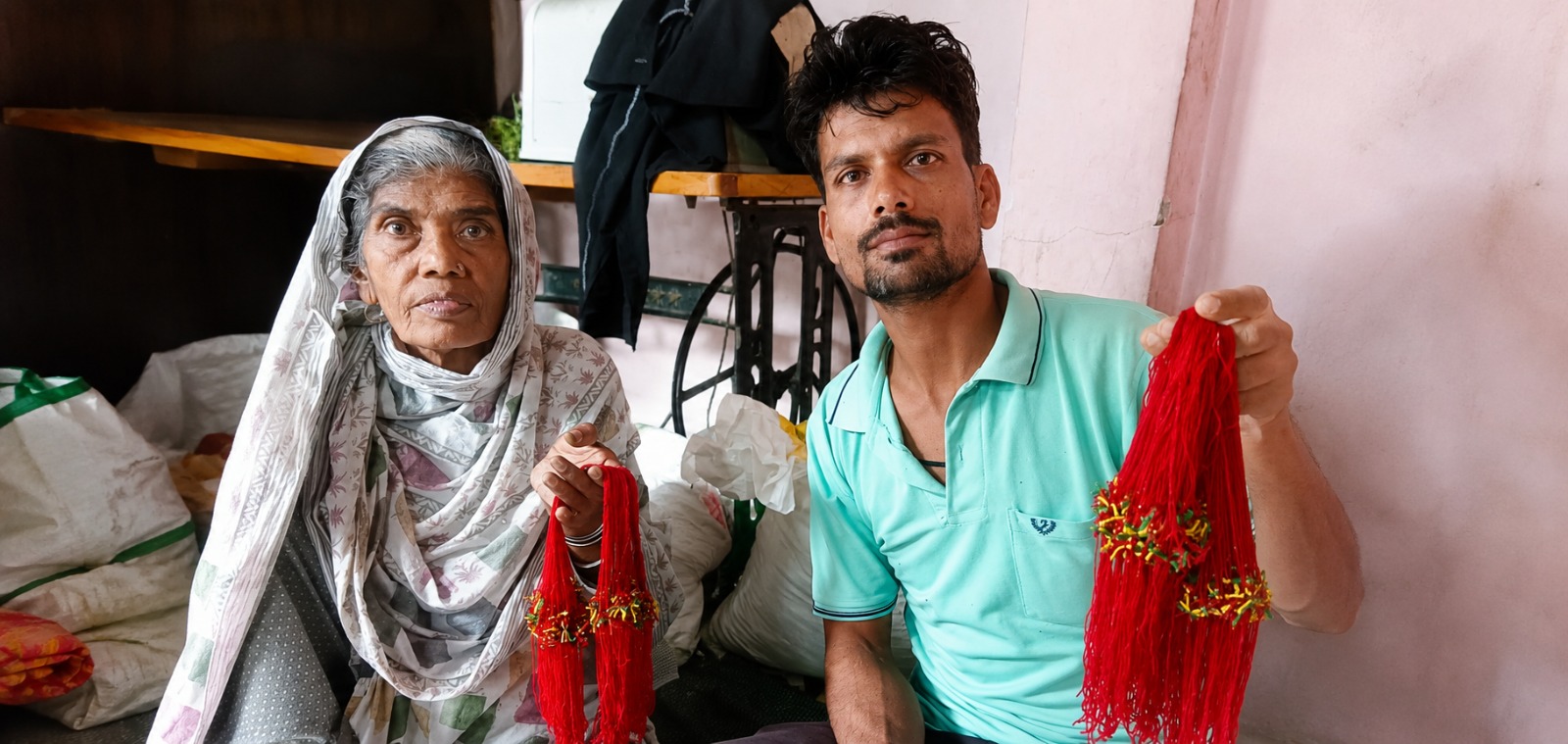 Taj Mohammad with his mother showing the rakhis they have made
The business also provides seasonal employment to families in the neighbourhood. Since one family cannot produce the large quantities required during the festival season, Taj Mohammad distributes the work among artisans in the surrounding area.
“We get the goods prepared by paying Rs 80 to our regular, old artisans and Rs 60 to the new ones. This allows our neighbours to make a little profit during the festive days. Our business is about taking everyone along with us,” he says.
For Taj Mohammad, the business has never been driven by the desire to make excessive profits. The family continues to invest thousands of rupees in raw materials and puts in long hours of labour to keep the traditional craft alive.
“The greed for more money belongs to those whose needs are big. We are not like that. If we earn our daily wages, our work keeps running, and the neighbours associated with us also make a little profit, we are satisfied. Earning Rs 50 on an item worth Rs 10 is not our mindset. This is our ancestors’ business, it is a matter of people’s faith; keeping only this sentiment in mind, we do this work,” Taj Mohammad says.
A day before Raksha Bandhan, the rakhis are completed at the family’s workshop in Balapur and sent to the main market in Akola. Traders who have been buying rakhis from the family for decades continue to place their trust in them.
Among the family’s longstanding customers are traders from the Gujarati, Marwari and Sindhi communities. Many older traders have passed the relationship on to their children and grandchildren, telling them to continue buying Dev Rakhis from the Balapur family because of the quality of their products and the trust built over generations.
For Taj Mohammad, that trust is more valuable than commercial gain.
With emotion, he says, “Our ancestors never told us that this work belongs to another religion or that this is the work of Hindus and we shouldn’t do it. For us, this is our livelihood. We find immense joy in doing work connected to people’s faith.”
He hopes the story of his family will also challenge prejudices and remind people of the bonds that exist across religious communities.
“In the current times, with the atmosphere of hatred being spread in the country, if our story reaches our Hindu and Muslim brethren, I will be the happiest. Seeing this, perhaps people’s perspective towards Muslims will change,” he says.
Taj Mohammad believes that dignity lies in doing one’s work honestly, irrespective of the religion associated with it.
“Our honest desire is that people should be happy with our work. People should respect the tradition passed down from our ancestors. I would just like to tell society that no work belongs to a specific religion. No work is meant to demean anyone; whatever work comes to your hands, you should do it diligently.”
ALSO READ: Allama Iqbal believed in respecting all religions
Raksha Bandhan celebrates the bond between brothers and sisters, but the story of Taj Mohammad’s family reflects another kind of bond — one built over generations through craftsmanship, livelihood, faith and mutual trust.






.webp)
.webp)