New Delhi
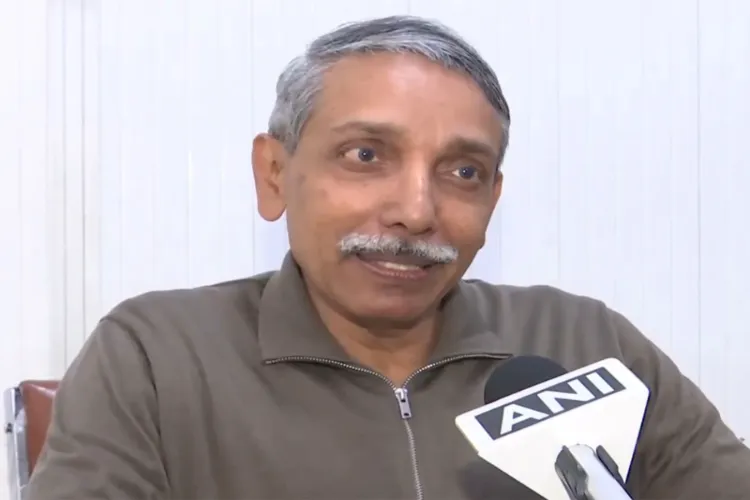
Former UGC chief M. Jagadesh Kumar on Saturday said the rapid automation of routine tasks is transforming the nature of work, making it essential for education systems to emphasise higher-order skills such as judgement, creativity and ethical reasoning.
Speaking at a discussion on “Knowledge as Power” during the two-day convention titled Bharati Naari to Narayani: National Convention of Women Thought Leaders organised by the Rashtriya Sevika Samiti in New Delhi, Kumar said major changes are taking place in the spheres of knowledge, work and power.
He noted that the explosion of information in the digital age has created a new challenge — converting abundant data into meaningful knowledge.
“There is enormous information available today. The challenge is how to transform that information into useful knowledge so that it guides our judgement and action,” Kumar said.
He emphasised that this can happen only if young people develop the ability to question, think critically and clearly explain what they observe.
Highlighting changes in the workplace, Kumar said automation will increasingly replace routine tasks, making advanced skills more valuable.
“Because many routine tasks will be automated, we must now focus on higher-order skills such as judgement, creativity, domain knowledge, ethical reasoning and the ability to work in teams,” he said.
Kumar, who previously served as Vice Chancellor of Jawaharlal Nehru University and chairman of the University Grants Commission, also spoke about shifts in the global power structure.
He said countries that control computing systems, data and advanced models will shape markets, culture and society in the future.
“Today, only those countries which control computing, data and models shape markets, culture and society,” he said, stressing the need to equip young Indians — particularly women — with the skills required to succeed.
Kumar also highlighted the challenge of reducing dropouts from schools and higher education institutions while ensuring greater participation of women in education.
He said curriculum design should encourage students to become critical thinkers, innovators and problem-solvers rather than focusing only on academic degrees.
READ MORE: Mumtaz Thaha, Thrissur’s first Muslim woman Councillor
“Education should be holistic. It is not just about getting degrees but about gaining competencies with evidence,” he said, adding that strengthening skills and competencies in education will help empower women and students to succeed by 2047.