 Saquib Salim
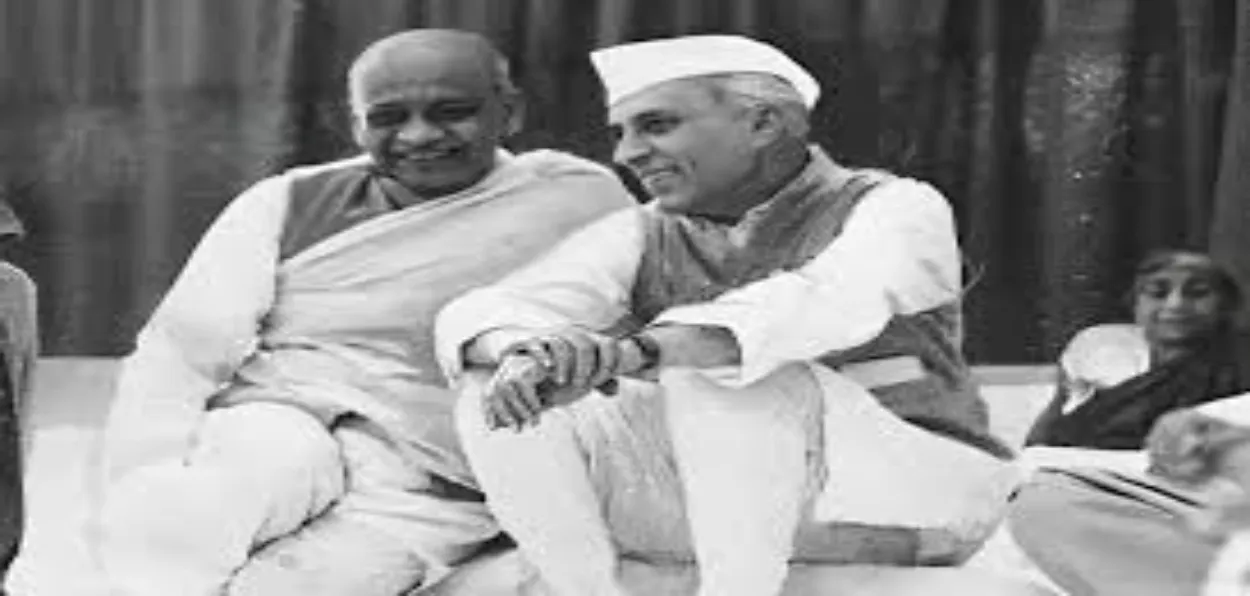
A major political row erupted after Defence Minister Rajnath Singh said, "Pandit Jawaharlal Nehru wanted to (re-)build the Babri Masjid (in Uttar Pradesh's Ayodhya) using public funds. If anyone opposed this proposal, it was Saradar Vallabhbhai Patel, born to a Gujarati mother. He did not allow the Babri Masjid to be built using public funds."
The opposition parties, especially Congress, alleged it was a lie. Congress MP Manickam Tagore says, "They can edit certain parts of the conversations from that time, letters or statements of senior leaders. However, it is very clear that Pt. Nehru always stood for one thing: that government money must not be spent on any other religious purposes. It may be a temple, church, mosque. He has always wanted India's government money to be spent on IITs, IIMs, universities, and dams. He always followed that. Now, Rajnath Singh is making such statements to show that they want to divert from the real issues..."
What does history say on Rajnath Singh’s remarks?
He is speaking the truth. The episode is recorded in the diary of Maniben Patel published by P. N. Chopra. Maniben Patel was the daughter of Sardar Vallabhbhai Patel, her personal secretary, a freedom fighter and later a Member of Parliament.
Chopra records in the introduction to this diary, “It would appear that Maniben meticulously maintained a diary from 8 June 1936 till Sardar expired on 15 December 1950. Maniben would note down Sardar's speeches in Parliament and keep his correspondence handy, besides date-wise notes of visitors and talks conducted with them. Before going to bed, she would make her notations in her diary. She would wake up before the "Pir" Sardar did and get ready to serve him in her multiple roles 0 as Sardar's daughter, secretary, washerwoman and nurse, all in one.”
Chopra also noted, “Nehru also raised the question of Babri Masjid, but Sardar made it clear that the government could not spend any money for building a mosque. He told Nehru that the question of the reconstruction of Somnath Temple was quite different, as a trust had been created for the purpose and about Rs. 30 lakh had been collected. Patel told Nehru that it was a Trust of which Jamsaheb was the chairman and Munshi a member, and no government money was going to be used for this purpose. This silenced Nehru.”
This particular paragraph by P. N. Chopra seems to be the source of Rajnath Singh’s comment. But did Chopra get it wrong? It does not seem so.
Maniben Patel made a diary entry for 20 September 1950, “When reference about Babri Masjid erupted, Panditji (Nehru) said, he had already convinced the Assembly, read out a lengthy statement, subsequently published in the Press. People in his Province are convinced about the situation. Shankar interrupted to say that he should circulate this statement all over in the form of a pamphlet. Panditji frequently refers to it in all places, and if he is not able to tell him (PM), the case would go by default. Bapu (Sardar Patel) said the government cannot give money for building a mosque. He knew it very well, so that Junagadh was taken over well in advance, and land was obtained from the Junagadh Government for Somnath and created a trust and credited Rs 30 lakh. Panditji wrote a chit to Munshi that the government cannot spend money on Somnath, as ours is a secular state. Munshi transferred to him (Bapu). He replied that this is a trust of which Jamshed is Chairman and Munshi, a member and no government money is going to be used in it. He (PM) was silenced then. But this question is sure to erupt in case of Mathura, Banaras and Calcutta.”
What does this mean?
The diary tells us that Jawaharlal Nehru raised the question -- how could the government build a temple (Somnath). However, Sardar Patel took that initiative before the government was formed. The land was taken from the Junagadh government before its merger into India, and money was raised through public funds. He told Nehru that the government could not spend any money on religious construction; therefore, no money could be allotted to Babri Masjid as well.
ALSO READ: When neighbours saved my family and firmed my faith in inclusive India
There is no reason to believe that Maniben reported the event wrongly. Rajnath Singh has followed what Maniben had written, according to P. N. Chopra, who himself does not seem off the mark as well.