New Delhi
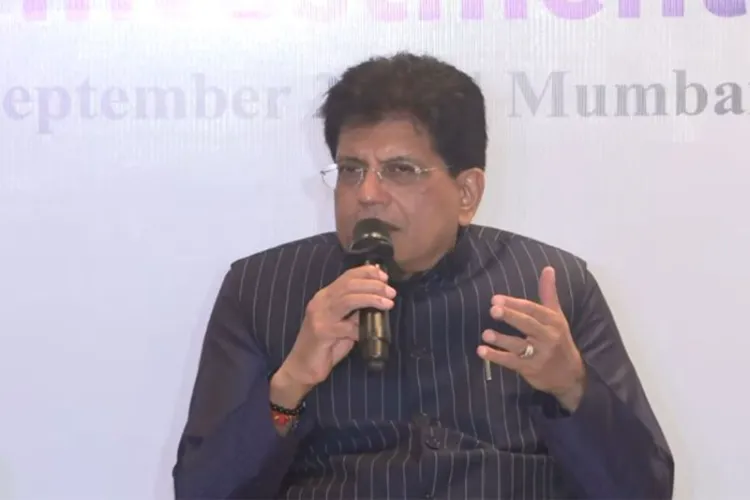
Union Commerce and Industry Minister Piyush Goyal on Tuesday hailed the International Monetary Fund's (IMF) projection of 7 per cent GDP growth for India in 2027, adding, the country's multiple free trade agreements (FTAs) are expected to boost global economic activity and “build resilient supply chains.”
The growth projection comes despite the IMF warning that the global economy’s resilience is becoming increasingly fragile amid rising energy and food prices and heightened geopolitical uncertainty.
“UNSTOPPABLE INDIA! IMF has projected a 7% GDP growth for 2027 for Bharat, making us among the fastest growing major economies. Our multiple FTAs under PM @NarendraModi ji are also expected to positively contribute to global economic activity and build resilient supply chains,” the post read.
https://x.com/PiyushGoyal/status/2109875902322741678
IMF expects global inflation to rise to 4.7 per cent in 2026 before moderating to 4.1 per cent in 2027, majorly driven by higher energy and food prices.
“The global economy remains resilient, but that resilience is becoming more fragile and more uneven,” it said in its October 2026 World Economic Outlook, forecasting the global economic growth at 3.1 per cent in 2026 and 3.4 per cent in 2027.
The IMF noted that the global economy has remained resilient despite repeated shocks, supported by flexible energy supplies, higher production in other countries, the use of existing inventories and a shift towards alternative energy sources. Investments in artificial intelligence (AI) have also helped sustain economic activity and global trade.
However, the Fund cautioned that these factors may not be enough to withstand prolonged disruptions, as declining energy inventories, fresh geopolitical shocks and persistent uncertainty could undermine confidence and economic growth.
READ MORE:Why great care must be taken while selecting an Imam?
“Risks are skewed to the downside,” the report said, warning that prolonged tensions or further escalation in the Middle East could keep energy and food prices elevated, fuel inflationary pressures and slow global growth.

.jpg "Gujarat’s women entrepreneurs bring their craftsmanship to life during Navratri")







.webp "Lok Sabha Leader of Opposition Rahul Gandhi")