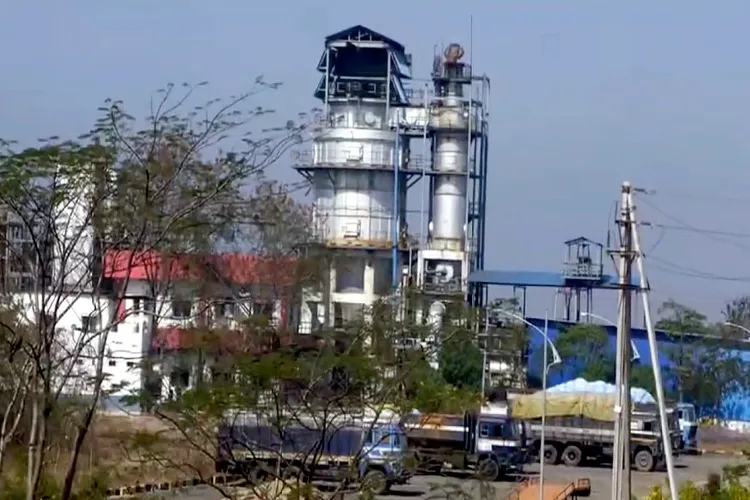
Pithampur
On the 41st anniversary of the Bhopal Gas Tragedy, residents of Pithampur renewed their opposition to the proposed disposal of nearly 900 tonnes of ash generated from the incineration of toxic remnants from the defunct Union Carbide plant.
The ash — produced after 358 tonnes of hazardous waste, including 19 tonnes of contaminated soil, were scientifically burned — is currently kept in a leak-proof shed at a private industrial facility in Pithampur. The government intends to permanently dispose of it in a multi-layered landfill cell being built on the same premises, despite clear reservations expressed by the Madhya Pradesh High Court.
For more than a decade, residents of Pithampur — about 250 km from Bhopal — have raised concerns that the toxic byproducts could damage the local environment and jeopardise public health. Their fears resurfaced after the disposal plan was revived.
Local people say any breach in the landfill could release toxic chemicals into the air and groundwater. “We want the government to listen to us and remove the Union Carbide waste ash from here,” said Prakash Sarkate, a resident of Tarpura village, located barely 500 metres from the incineration unit. Sarkate added that the community had objected to the burning of the waste earlier as well, but their protests went unheard.
Another resident, Nirmala Panwar, claimed that villagers often suffer from recurring ailments such as fevers, sore throats and eye irritation. She added that many households avoid drinking water from local sources because it “looks polluted and causes discomfort”.
Officials of the Madhya Pradesh Pollution Control Board maintain that emissions during the incineration process — including particulate matter and gases like sulphur dioxide, carbon monoxide, hydrogen sulphide and nitrogen oxides — stayed within permissible limits. They further asserted that levels of heavy metals such as mercury and cadmium were also compliant with norms, and said no adverse health impact was recorded among workers or nearby residents during the burning process.
However, the High Court is monitoring the disposal plans closely. On October 8, the Jabalpur bench rejected the proposal for the landfill inside the Pithampur plant, noting that its proximity to residential areas made it unsuitable. The court also pointed to submissions suggesting mercury levels in the ash exceeded acceptable limits, and directed the state government to present alternate locations for disposal.
Government officials contacted by PTI declined to clarify how they intend to respond to the court’s order.
Local activist Anil Dwivedi insisted that the ash must be shifted away from Pithampur. “The government should honour the High Court’s decision. Human health and the environment must not be put at risk,” he said.
ALSO READ: Syed Nawaz Miftahi illuminates the world of the blind
The Bhopal Gas Tragedy took place on the night of December 2–3, 1984, when methyl isocyanate leaked from the Union Carbide pesticides plant. More than 5,400 deaths were officially recorded, and tens of thousands were left with lifelong ailments, making it one of the worst industrial disasters in history.

.webp "Union minister Pradhan")
.webp "Assam Chief Minister Himanta Biswa Sarma")


.png)





.webp "Maharashtra Chief Minister Devendra Fadnavis and Shiv Sena and MP Sanjay Raut")



.webp)