

New Delhi
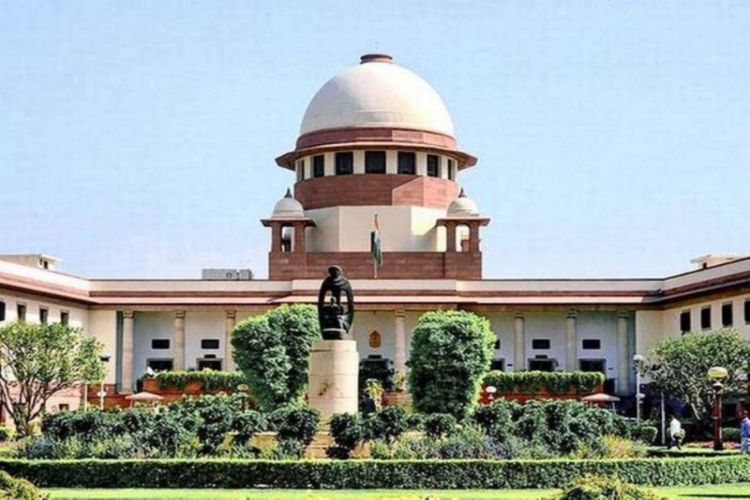
In interim relief to a father facing a retrospective hike in child maintenance dating back to 2016, the Supreme Court has put on hold execution proceedings arising from an order directing him to pay enhanced maintenance of ₹50,000 per month.
The Supreme Court, however, directed the father to continue paying maintenance at the rate of ₹20,000 per month while his challenge remains pending.
A Bench of Justices KV Viswanathan and Arun Palli passed the order on October 30, granting the father protection against the ongoing recovery proceedings and listing the matter for further hearing on December 17. The Court also granted liberty to take out fresh notice on one of the respondents and directed that service be effected through the trial court where the execution proceedings are pending.
The father, represented by Advocate Sumit Gehlot, has challenged a July 23, 2026 judgment of the Punjab and Haryana High Court, which enhanced the maintenance payable towards the minor child from ₹20,000 to ₹50,000 per month and directed that the enhanced amount be paid retrospectively from February 4, 2016.
His principal contention before the Supreme Court is that his financial position changed significantly over the years and that an assessment of his income or earning capacity made at a later stage cannot be mechanically applied to create a uniform maintenance liability stretching back nearly a decade.
According to the petitions, the High Court assessed his earning capacity at ₹2.25 lakh per month, while the father relied upon an income affidavit showing his net monthly income at ₹94,175. He has contended that there was no corresponding year-wise material to justify applying the higher income assessment throughout the retrospective period.
Advocate Sumit Gehlot, appearing for the father, has argued that maintenance for different periods should bear a reasonable relationship with the actual income and financial circumstances prevailing during those periods.
The petitions raise the question of whether a parent’s income or earning capacity assessed years after the filing of a maintenance application can be used to retrospectively calculate the liability from the date of the original application. The father has relied on the principles laid down by the Supreme Court in Rajnesh v. Neha in raising this issue.
The father has also pointed to his existing financial obligations. According to his plea, the enhanced maintenance of ₹50,000 per month towards the child was in addition to ₹20,000 per month, which he claims he was liable to pay to his estranged wife under separate proceedings.
He has claimed that his disclosed net monthly income was ₹94,175 and that the combined monthly liability of ₹70,000 would consume a substantial portion of his stated income.
The father has further claimed that he has already paid approximately ₹50 lakh towards the child’s maintenance since 2016, apart from meeting school expenses. His petitions refer to income-tax returns, Form 16 documents, payment calculations and school-fee receipts in support of these claims.
He has also contended that his financial circumstances were not static during the period for which the enhanced maintenance has been made retrospective. The petitions refer to, among other circumstances, the termination of his employment in 2018 and other financial expenses.
The dispute originated from a Family Court order dated May 25, 2023, which directed the father to pay ₹20,000 per month towards the maintenance of the minor child, in addition to educational expenses. Both sides subsequently approached the Punjab and Haryana High Court challenging different aspects of that order.
Before the Supreme Court, the father has sought reconsideration of both the quantum of maintenance and the date from which the enhanced amount is payable. He has sought that the enhancement be set aside or reduced and, alternatively, that any increase be made applicable prospectively rather than retrospectively.
In its latest order, the Supreme Court specifically directed that the execution proceedings be kept in abeyance, subject to the petitioner continuing to pay maintenance at the rate of ₹20,000 per month.
READ MORE: Ghazala Parveen uses art to challenge social stereotypes
Advocate Sumit Gehlot appeared for the father along with Advocate-on-Record Mukesh Kumar. Advocates Manju Gehlot, Tervender Thakran, Meenakshi Sood, Mohd. Arham and Sunny Chaudhary were also part of the legal team.
The matter will now be taken up by the Supreme Court on December 17.