New Delhi
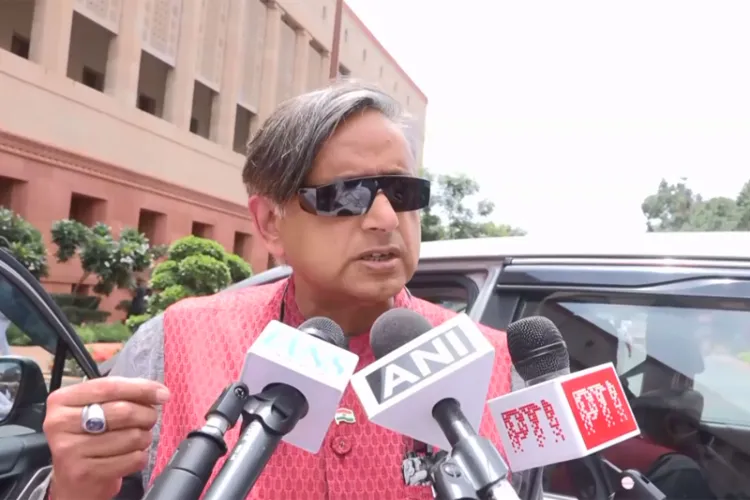
Senior Congress MP Shashi Tharoor on Monday noted that despite the ruling government holding a majority, opposition perspectives remain vital to be placed on record, even for future judicial review.
Speaking to reporters here, Tharoor emphasised the critical need for dialogue and debate in Parliament, saying that there was no opportunity to know why the bill was passed.
"There was no opportunity to know why the bill was passed, what the logic was, what the other side's arguments were. So, even when we know the government has a majority, we should speak and place our views on record so that there is a record, even for future judicial cases, whatever, as to what the concerns were at the time the bill was discussed and so on," he said.
Tharoor further pointed to a widening gap in communication between the government and the opposition, arguing that maintaining smooth parliamentary operations is a core responsibility of the government.
"There is a level of, shall we say, lack of communication between the government and the opposition that has resulted in this unhappy situation. I believe that part of the job of the government is to ensure that Parliament functions properly, because it is in their interest. They want to get their bills passed; all that they should do is come and talk to the opposition. I don't know whether enough talking is taking place, because normally, there is some give-and-take," he said.
Tharoor urged serious discussions between the government and the Opposition as bills such as the FCRA bill, the Viksit Bharat, Shiksha Abhiyan, the delimitation bill, and women's reservation can leave a significant impact on the country.
"Parliament should ideally be a forum wherein tomorrow they might bring something like the FCRA bill, the Viksit Bharat, Shiksha Abhiyan, the delimitation bill, women's reservation; these are all issues of great consequence for the entire nation. I'm hoping that there will be some accommodation between the government and the opposition very soon," he said.
The remarks came after the Public Examinations (Prevention of Unfair Means) Amendment Bill, 2026, which was passed by the Lok Sabha on Wednesday, was cleared by the Rajya Sabha on Friday, with Opposition members staging a walkout during the voting.
The legislation triggered a sharp political divide, with Opposition parties accusing the Centre of rushing the amendments and failing to address the root causes of recurring examination paper leaks. They alleged that the Bill was brought to defuse widespread student protests rather than introduce systemic reforms to prevent future irregularities.
READ MORE: Shabana Dagar safeguards 500-year musical legacy
The Centre, however, defended the amendments, saying they reflected the government's willingness to "learn from experience" following the implementation of the Public Examinations (Prevention of Unfair Means) Act, 2024, and were aimed at further strengthening the legal framework to curb examination malpractices.









.webp "Representational Image")
.webp "Chief Minister V D Satheesan")
.webp)
.webp)