.gif)




New Delhi
The Ministry of External Affairs (MEA) on Thursday confirmed that it has received a request for consular access from Ukraine following the arrest of six Ukrainian nationals by the National Investigation Agency (NIA) on charges of supporting proscribed insurgent groups in India.
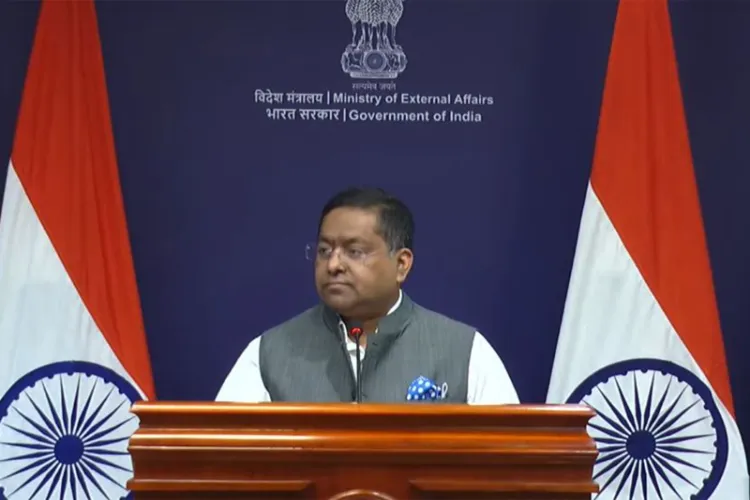
MEA spokesperson Randhir Jaiswal said the matter is under investigation and is being handled in accordance with Indian laws and international obligations.
“We are aware of the case. This is a legal matter, and the relevant Government of India agencies are currently investigating it. We have received a request for consular access, and this will be addressed in accordance with the legal requirements,” Jaiswal said during a press briefing.
According to the NIA, six Ukrainian citizens and one US national have been arrested for allegedly supplying weapons, terrorist hardware, and training to banned insurgent groups in India. The accused are also suspected of aiding ethnic armed groups in Myanmar with similar support.
The arrested individuals include US citizen Matthew Aaron Van Dyke and six Ukrainians identified as Hurba Petro, Slyviak Taras, Ivan Sukmanovskyi, Stefankiv Marian, Honcharuk Maksim, and Kaminskyi Viktor.
A special NIA court, presided over by Judge Prashant Sharma, has remanded all seven accused to 11-day custody for further investigation.
Meanwhile, the Ukrainian Embassy in India expressed concern over the detentions, calling for a transparent and objective probe. In its statement, the embassy rejected any suggestion of state involvement in terrorism, asserting that Ukraine itself is a victim of ongoing conflict and maintains a firm stance against terrorism.
READ MORE: Pregnant Bushra Bano appeared for the Interview, became an IPS Officer
The embassy also indicated readiness to cooperate with Indian authorities under existing bilateral legal frameworks, including the Mutual Legal Assistance Treaty between the two countries.










.webp "Representational image")