





Aasha Khosa/New Delhi
The year 2025 turned out to be an extraordinary year for India. The world that looked at India as a soft power giant with Chai and Yoga as its brands, paused in awe to see the Indian Military smash terrorist-spawning schools deep inside Pakistan, and when provoked, the air bases, including the one with a nuclear stockpile.
Operation Sindoor in May sent a clear message to Pakistan that India has zero tolerance for cross-border terrorism, and to the world that India will deal with global terror on its own, as the rest of the world is not even close to accepting the concept of nation-states using terror as a tool of their external policy.
Operation Sindoor was as much a surprise for the Indian public as it was to the world at large. When, on the morning of May 7, Indian Military leaders announced that they had carried out attacks on nine terrorist training schools in Pakistan, a new India was born. It was India that not just condemned terrorism and helplessly watched terrorists attack Parliament, five star hotels and people; it annihilated fountainheads of terrorism inside Pakistan.
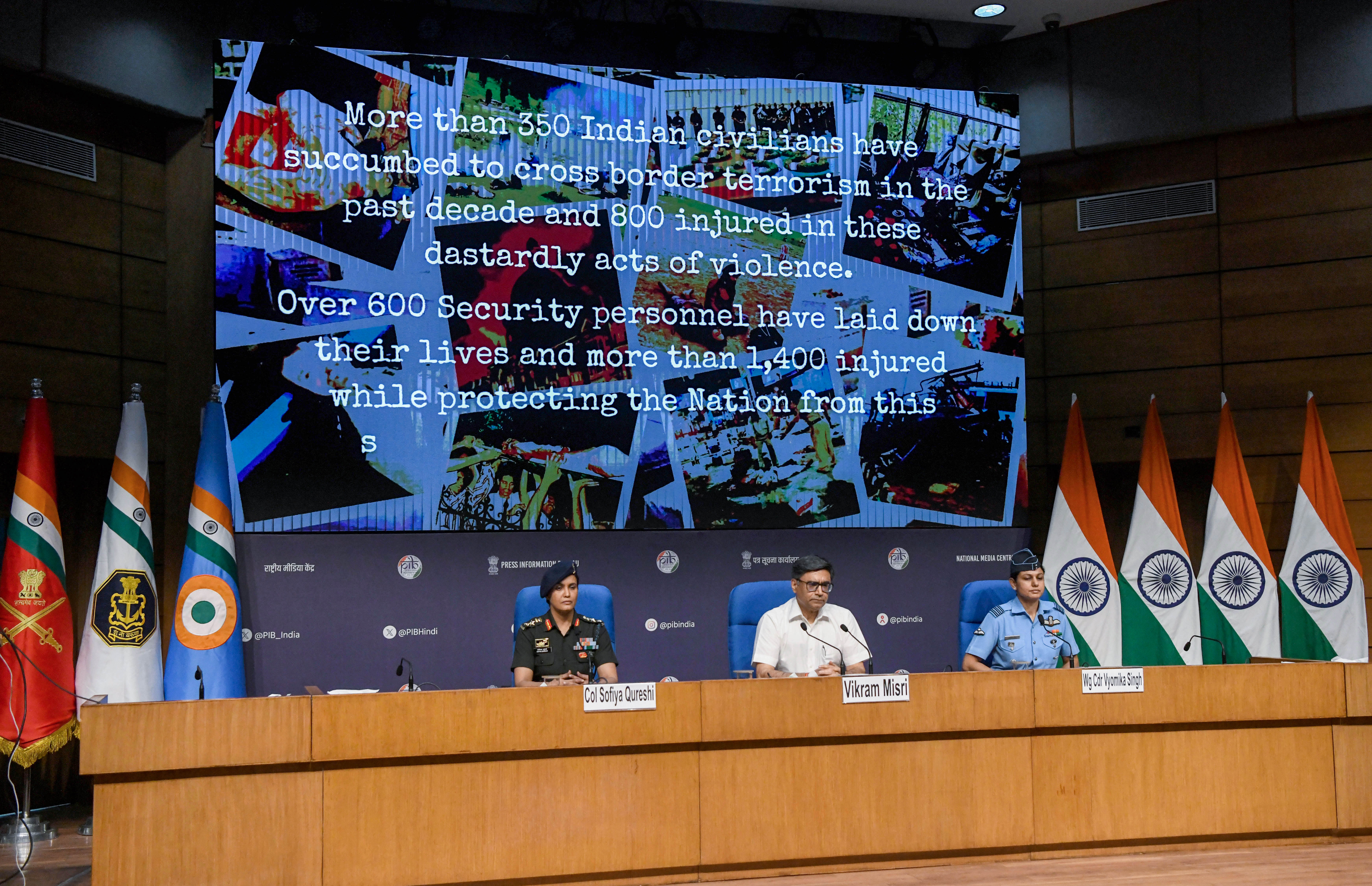 Col Sofiya Qureshi, Foreign secretary Vikram Misri and Wg Cdr Yvomika Singh briefing media on Operation Sindoor
Operation Sindoor was launched in retaliation for the April 22 Pahalgam Attack. It was on this day that Pakistan-based Lashkar-e-Toiba terrorists killed 26 tourists at a small Valley in South Kashmir.The Operation manifested bold political vision, military precision, and a clear sense of purpose, and sought to erase India's image as a soft state.
Its optics – two women Military briefing the media on the Operation, India openly conveying to Pakistan about its intention to hint the terrorist training schools in advance and the use of indigenously developed modern military equipments like Akash and BramhMos missile and real time recordings of the attacks through modern technology to dispel any doubts about India’s actions – alluded to a resurgent India.
Operation Sindoor not only gave confidence to the Indians about their government and a sense of security, but also changed the rules of engagement with Pakistan and others, if they too dared proxy attacks against India.
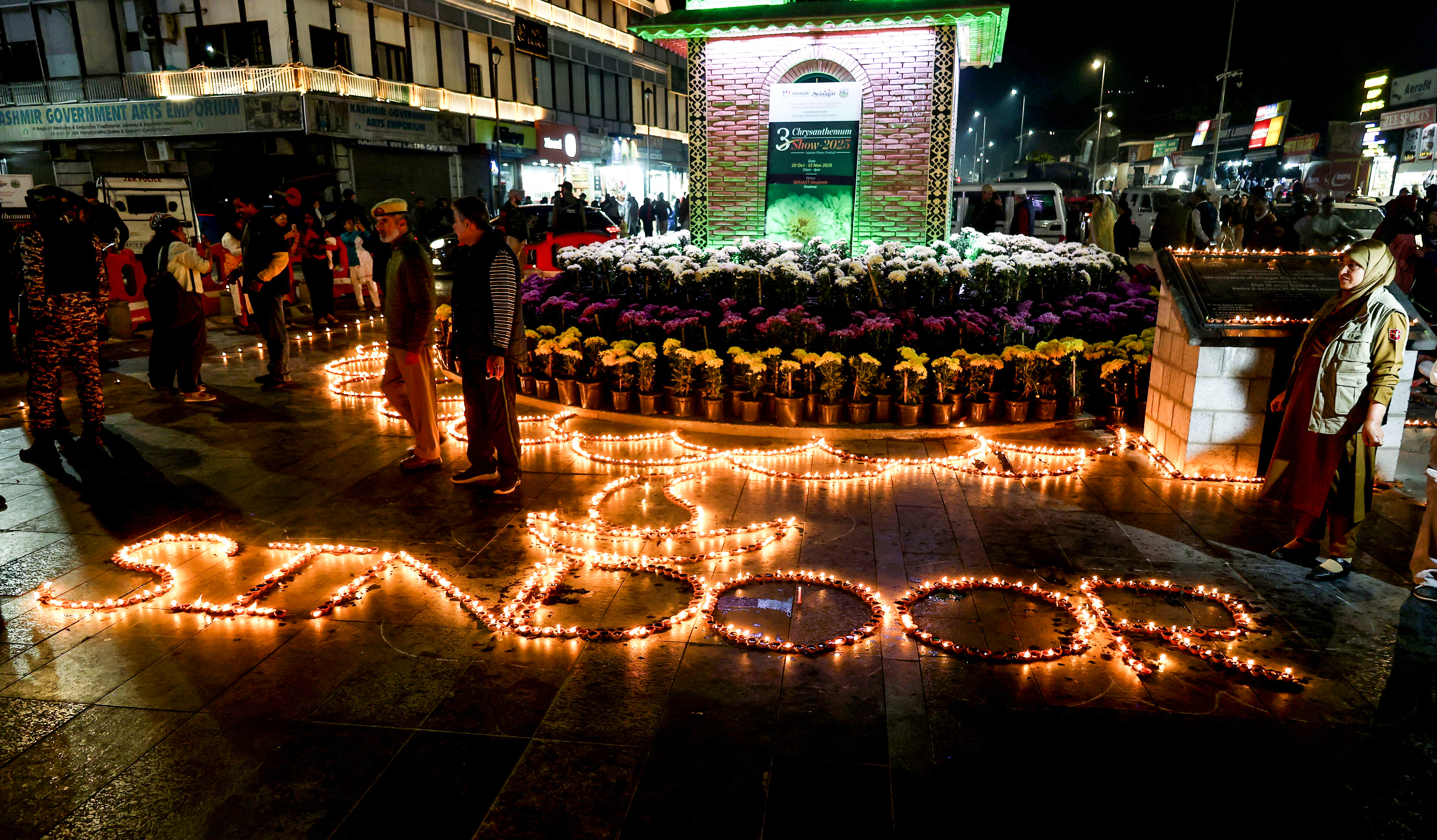
Operation Sindoor celebrations at Lal Chowk, Srinagar
Operation Sindoor was carried out with finesse and a strong sense of purpose that no country raised a finger against. India received overwhelming support in taking on the terror machinery run by the ISI inside Pakistan.
On the political front, the Bhartiya Janata Party continued to loom large on the horizon. It won a landslide victory in Delhi and led the NDA to victory in the Bihar Assembly election. Close to the end of the year, the BJP had made inroads into Kerala in the local body elections, where the party was once considered anathema in the left-oriented political system.
However, this year too, the Congress party's decline remained a constant in Indian politics. This trend is sure to be detrimental to Indian democracy in the long run. The party lost many elections, and yet there was neither a change of political strategy nor leadership.
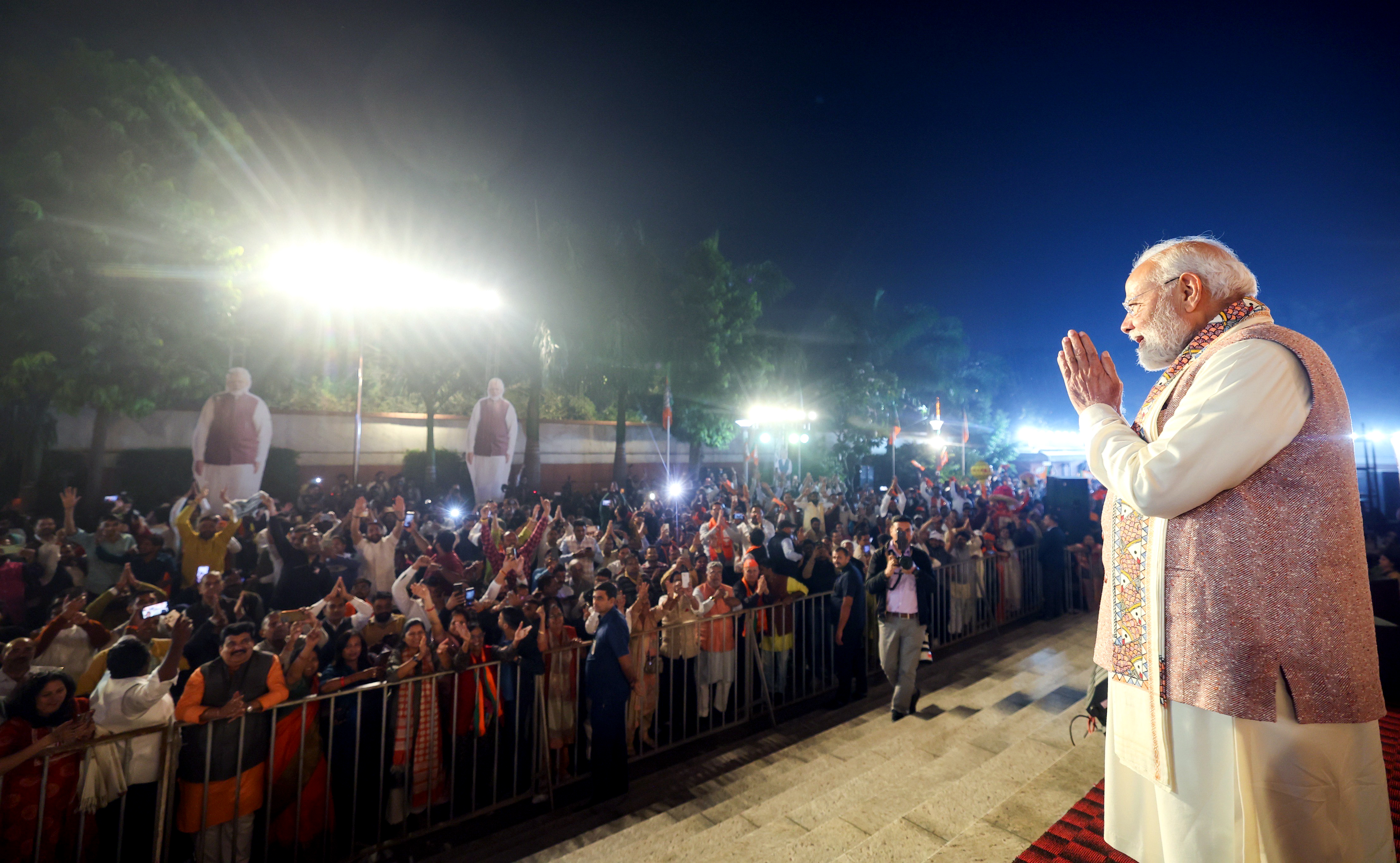 Prime Minister Narendra Modi greeting BJP activists after party's victory in Delhi
The year saw an unsavoury political incident in which Vice-President Jagdeep Dhankhar resigned quietly, almost mid-term, and leading to an election in September where the NDA candidate, C.P. Radhakrishnan, was elected as the 15th Vice President of India. Nobody is quite sure why Dhankar resigned. Neither the ruling party nor Dhankar has spoken.
Another dramatic event that affected Muslims in the country was the passing of the Waqf (Amendment) Act, 2025. The move brings to an end the informal management of the properties willed by Muslims for the community, and the alleged misappropriation of these properties and corruption.
The passage of the bill was a contentious issue with the opposition and Muslim bodies calling it direct interference in the personal laws of Muslims, and the ruling party asserting it was for proper utilisation of the Waqf properties and ending the claims on lands by waqf boards and the lands belonging to individuals or religious places.
The year saw a dangerous rise in homegrown radical terrorism with the Red Fort blast and the events around it. Shocking revelations about professionals like doctors and burqa-clad women getting involved in terrorism emerged from the Red Fort blast case.
 Police taking stock of security at New Delhi Railway stations after Delhi blast
This has led to fresh worries about renewed challenges for the security apparatus. Kashmir, which is otherwise enjoying normalcy and peace, saw its youth being roped in by Pakistan to spread terror in other parts of the country. The key conspirators and the executioners in the Red Fort blast were from Kashmir, and this is giving sleepless nights to security forces, the governments and parents of young Kashmiris.
Recently, the police have arrested a teenager from Jammu who was trained to become a suicide bomber and was on the verge of donning the bomb-fitted jacket. The young boy was sent to Jammu to join the coaching classes for NEET. His parents had no idea that their son was being brainwashed to don the suicide vest and not become a doctor.
On the economic front, India continued to rise and defeat the trend that was meant to bring it down. Despite the US tariffs and ongoing conflicts in the world, the IMF has projected India to remain the fastest-growing major economy, with a projected GDP growth of 6.2% in 2025.
READ MORE: Nirmal, my Abba's most trusted son
India’s plans to become atmanirbhar in all fields, including science and technology, saw the Indian Space Research Organisation (ISRO) achieve the milestone of the 100th launch from Sriharikota with the GSLV-F15/NVS-02 mission. The Indian Space Programme also got a shot in the arm with the first Indian astronaut, Shubhanshu Shukla, visiting the International Space Station as part of a private mission.

.jpg "Gujarat’s women entrepreneurs bring their craftsmanship to life during Navratri")





.jpg "Delhi High Court")
_(1).jpg "Representational Image")
.jpg "Congress President and Leader of Opposition in the Rajya Sabha Mallikarjun Kharg")

_(2).webp)
.webp)
