Sahibganj
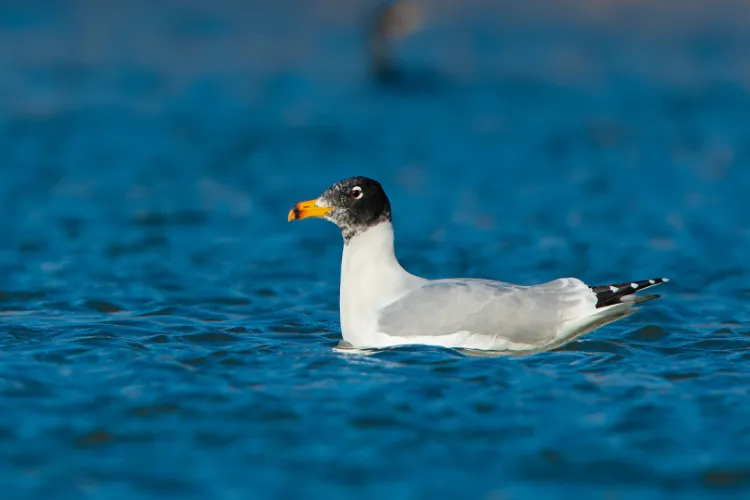
A rare migratory species, the Pallas’s Gull—also known as the Great Black-headed Gull—has been sighted at the Udhwa Bird Sanctuary in Jharkhand’s Sahibganj district after nearly ten years, officials said on Thursday.
The juvenile bird was spotted by bird watchers on Wednesday evening, Sahibganj Divisional Forest Officer Prabal Garg told PTI.
“A juvenile Pallas’s Gull (Ichthyaetus ichthyaetus) was noticed at the Udhwa Bird Sanctuary, the state’s only Ramsar site and eastern India’s only bird sanctuary. It was last recorded here during the 2015 bird census. Its return after almost a decade is a positive sign for the sanctuary’s biodiversity,” Garg said.
The species, which breeds in colonies across marshes and islands from southern Russia to Mongolia, migrates in winter to the eastern Mediterranean, Arabia and India. The ground-nesting gull typically lays two to four eggs.
Garg stressed that all migratory birds are protected under the Wildlife Protection Act, and harming them or disturbing their habitat is a cognizable, non-bailable offence carrying imprisonment of up to seven years.
Satya Prakash, state coordinator for the Asian Waterbird Census, said the sighting underscores the sanctuary’s ecological health. The bird was sighted at Berhale Lake, part of the Udhwa Bird Sanctuary located along the Ganga; in 2015, it was seen at Patoura Lake.
“During this year’s January census, 60 wetland bird species from 18 families were recorded. Of these, 33 per cent were residents, 32 per cent resident migrants and 35 per cent winter migrants. A total of 10,031 birds were documented at Udhwa Lake Bird Sanctuary,” Prakash said.
Frequent winter visitors include bar-headed geese, northern pintails, common teal, greylag geese, gadwalls, spot-billed ducks and red-crested pochards. Resident species include purple herons, Asian openbills, little grebes and kingfishers.
Overall, the sanctuary hosts around 160 bird species. However, Prakash warned that agricultural expansion, fishing and trespassing pose significant threats to avian populations.
Forest officials said they have increased surveillance, including the installation of cameras, manual patrolling and monitoring using thermal drone systems, alongside awareness programmes for students to prevent violations of the Wildlife Protection Act.
The juvenile bird was spotted by bird watchers on Wednesday evening, Sahibganj Divisional Forest Officer Prabal Garg told PTI.
“A juvenile Pallas’s Gull (Ichthyaetus ichthyaetus) was noticed at the Udhwa Bird Sanctuary, the state’s only Ramsar site and eastern India’s only bird sanctuary. It was last recorded here during the 2015 bird census. Its return after almost a decade is a positive sign for the sanctuary’s biodiversity,” Garg said.
The species, which breeds in colonies across marshes and islands from southern Russia to Mongolia, migrates in winter to the eastern Mediterranean, Arabia and India. The ground-nesting gull typically lays two to four eggs.
Garg stressed that all migratory birds are protected under the Wildlife Protection Act, and harming them or disturbing their habitat is a cognizable, non-bailable offence carrying imprisonment of up to seven years.
Satya Prakash, state coordinator for the Asian Waterbird Census, said the sighting underscores the sanctuary’s ecological health. The bird was sighted at Berhale Lake, part of the Udhwa Bird Sanctuary located along the Ganga; in 2015, it was seen at Patoura Lake.
“During this year’s January census, 60 wetland bird species from 18 families were recorded. Of these, 33 per cent were residents, 32 per cent resident migrants and 35 per cent winter migrants. A total of 10,031 birds were documented at Udhwa Lake Bird Sanctuary,” Prakash said.
Frequent winter visitors include bar-headed geese, northern pintails, common teal, greylag geese, gadwalls, spot-billed ducks and red-crested pochards. Resident species include purple herons, Asian openbills, little grebes and kingfishers.
Overall, the sanctuary hosts around 160 bird species. However, Prakash warned that agricultural expansion, fishing and trespassing pose significant threats to avian populations.
ALSO READ:NASA astronaut Pettit delights Muslims with his unique picture of Kaba
Forest officials said they have increased surveillance, including the installation of cameras, manual patrolling and monitoring using thermal drone systems, alongside awareness programmes for students to prevent violations of the Wildlife Protection Act.















.webp)