




New Delhi
India and China are currently in the process of normalising relations after a serious setback following the 2020 Galwan clashes. The momentum was set by Prime Minister Narendra Modi’s visit to Tianjin in 2025 to attend the Shanghai Cooperation Organisation Summit. This was followed by Chinese President Xi Jinping’s recent visit to India to attend the BRICS Summit.
Both sides have also been holding discussions on boundary management. In Delhi, President Xi held a bilateral meeting with Prime Minister Modi. Chinese Foreign Minister Wang Yi was also in New Delhi to attend the BRICS National Security Advisers’ meeting.
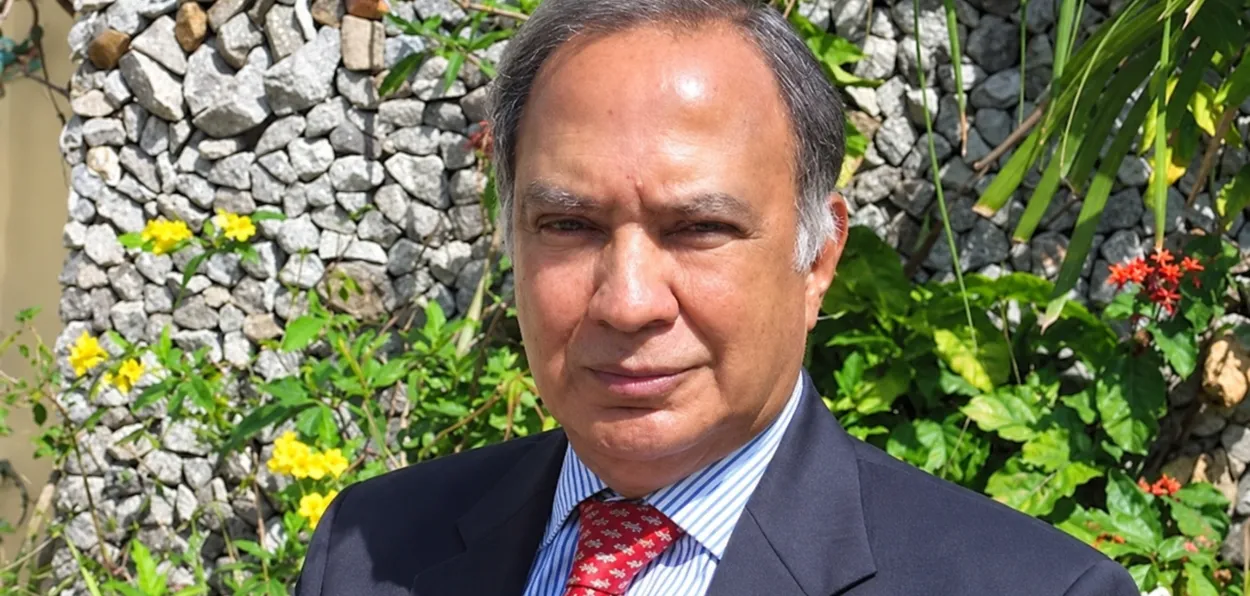
To understand where India-China bilateral relations stand today and how they can be taken forward, Aditi Bhaduri spoke to Krishnan Srinivasan, India’s former Foreign Secretary.Srinivasan (1959 IFS batch) served as India’s Foreign secretary from Feb 1994 for one year. Excerpts from the consversation:
What do you see as the main takeaways from President Xi’s visit to India vis-à-vis India-China relations?
It is always a good barometer of bilateral relations when heads of government meet without friction. In 2026, Xi visited India for the BRICS Summit, which was no great surprise since China has, for the past year, stated that it will support an Indian presidency, and the presidency is rotational. China is to host the summit in 2027.
I see this reset in bilateral relations as a positive development. Let us recall that Nehru said that India and China together could make this an era for Asia, and Lee Kuan Yew said that India and China were like two wings of a bird that could make Asia fly. The desirability of good relations with China, a major Asian and world economy with considerable influence, should speak for itself, quite apart from external considerations.
At the same time, it would be unwise to place undue emphasis on heads-of-government meetings. Long-standing problems can rarely, if ever, be settled at a summit without lengthy legwork being done in advance by officials.
President Xi Jinping said that India and China can learn from each other’s strengths. What is something that India can learn from China, and what is one thing that China can perhaps learn from India?
India can and must learn that the key to global influence is a solid and impressive domestic base—not just political, but also economic, industrial, technological and military—and that it must be competitive as well. No country can grandstand without this domestic foundation. India’s performance is far short of optimal.
China could understand that there is much to be said for greater openness in the political structure, the administration and the media. Despite severe and progressive obstacles and diminution, this openness is to be found in India.
PM Modi, President Xi had a productive meeting; reviewed steady progress in India-China relations since their last meeting in Tianjin.
— News Arena India (@NewsArenaIndia) September 12, 2026
- MEA Statement pic.twitter.com/L0Falgp3dK
Do you see the current thaw in relations as something that can be sustained?
Yes, with two important provisos. Provided some remaining glitches in trade, visas, investment, and negative perceptions in the media and public opinion can be overcome, there is reason to hope.
More importantly, some basic obstacles from the past remain. Among these are the Dalai Lama’s presence, China’s full support for Pakistan, uncertainty and tension along the entire India-China border, India’s ‘alliance’ with the USA, and its participation in the Quad.
India has eased rules to allow Chinese investments to enter India. Some have urged caution. What is your take on that?
Seen objectively, the figures are stark: India-China trade stands at $120 billion in imports and $18 billion in exports; investment by China in India totals $2.7 billion, which is a minuscule 0.3% of total inward investment. And this is happening at a time when India is crying out for investment in manufacturing, export-oriented industries and technology.
Investment by neighbours (e.g. China) requires prior government permission. This is now promised within two months. Lately, 10% Chinese ownership has also been permitted. These are niggardly measures and hardly great inducements for a nation that has invested $162 billion abroad, mainly in infrastructure and energy. India should note that China spent 1.7% to 2% of GDP over three decades to support industry and ensure competitiveness.
India should learn from this. However, it still prizes protection over exports when it should play to its labour strength and build scale in assembly before chasing self-reliance. There is no effort to attract Chinese tourists, who number more than 100 million a year, to India. Chinese businesspeople still face difficulties in obtaining Indian visas.
ALSO READ: India needs to scale up manufacturing to become unmissable
During their bilateral meeting, PM Modi said that peace in the border areas remained an essential basis for the continued development of bilateral relations. What is your take?
Clearly, a tense situation on the border and positive developments in bilateral relations cannot go together. While a settlement on the actual border may be distant, provocations and the movement of forward positions along the Line of Actual Control and the McMahon Line would be definite setbacks. To the extent that China places value on working with India in global affairs, it will refrain from agitating the border issue.










.webp)