 Shankar Kumar
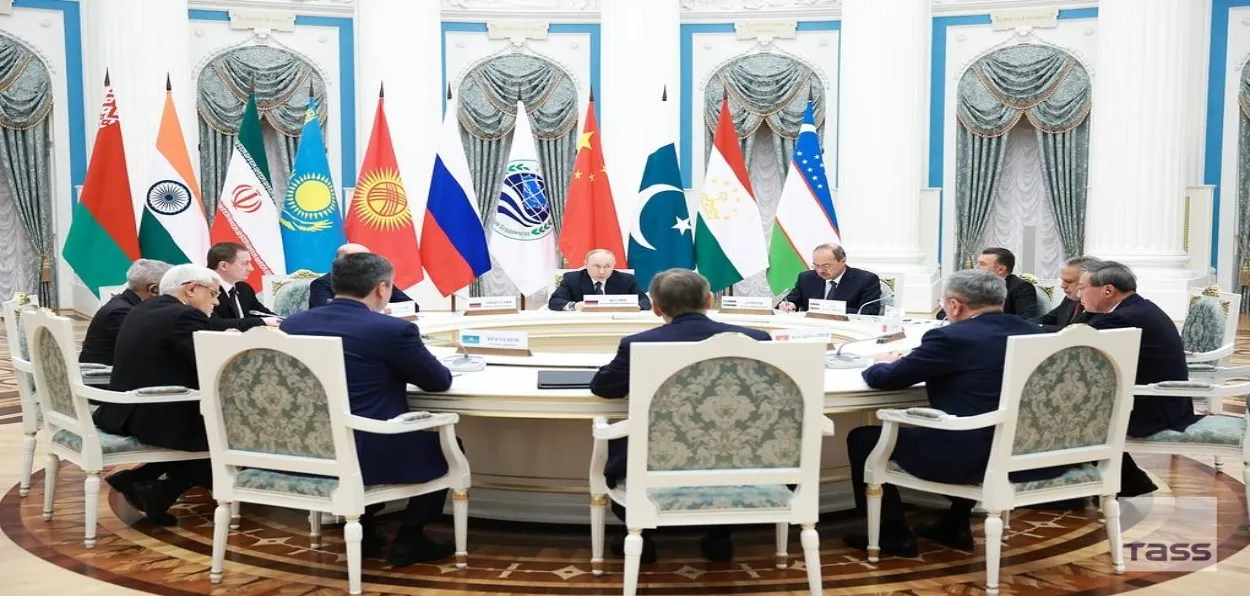
A week after a suicide bomber detonated a car loaded with ammonium nitrate fuel oil near Red Fort area in Delhi, killing more than 10 people and injuring over a dozen others, India told leaders at the Shanghai Cooperation Organisation Council of Heads of Government meeting in Moscow that evils of “terrorism, separatism, and extremism…have become even more serious in the years that have passed.”
Founded in 1996, the SCO identified security and counter terrorism as the primary focus of cooperation among member states. Between 2011 and 2015, SCO member states prevented 20 terrorist attacks, averted 650 crimes of a terrorist and extremist nature, and neutralised 440 terrorist training camps and 1,700 members of international terrorist organisations, said a UN report.
Despite this, questions are being asked about the effectiveness of the Regional Anti-Terrorist Structure of the SCO, whose objective remains in coordinating counterterrorism efforts among member states. While intelligence sharing is deeply uneven because of mistrust among some member states, lack of political will has blunted the SCO’s effort to fight the menace of terrorism, which has rapidly changed these days.
Evolving nature of terrorism
Now, even well-educated youth, including those with medical and engineering backgrounds, are being drawn into terrorist ranks. Today, terrorist outfits increasingly target individuals with specialised skills who can handle sophisticated operations—from bomb-making to cyber planning.
Adding to these challenges is the extensive use of the internet and social media for radicalisation, fundraising, communication, and the expansion of terror networks. Social media has provided extremist groups with unprecedented reach, enabling them to disseminate propaganda, mobilise sympathisers, and coordinate activities across borders with minimal detection. This demands a concerted response from the SCO and the international community.
“We must never forget that the SCO was founded to combat the three evils of terrorism, separatism, and extremism. These threats have become even more serious in the years that have passed. The world must display zero tolerance towards terrorism in all its forms and manifestations. There can be no justification, no looking away, and no whitewashing,” External Affairs Minister Dr S Jaishankar said in his remarks at the SCO Council of Heads of Government meeting in Moscow on November 18.
Jaishankar’s statement, delivered in the backdrop of the November 10 blast near the iconic Red Fort in Delhi, reinforced India’s long-held view that terrorism remains a major threat to regional stability. It also underscored India’s unwavering stand that the SCO must move beyond the narrow prism of good and bad terrorists and instead commit to a comprehensive, unequivocal fight against the menace.
Covert support for terrorism
Covert support for terrorism by some SCO countries has made the region vulnerable to increased terrorist attacks. For example, Pakistan-sponsored terrorism has not only hit India hard but has also inflicted incalculable suffering on Afghanistan and Iran.
Between 2000 and November 2025, India witnessed 11 major terrorist attacks, including the November 10 Delhi blasts. At least 595 people were killed in these attacks, which bear the imprint of Pakistan-based terrorist outfits such as Jaish-e-Mohammed (JeM), Lashkar-e-Taiba (LeT) and Harkat-ul-Mujahideen (HuM).
Yet, Pakistan has not faced any sanctions or isolation from the international community. At the 22nd SCO Defence Ministers meeting in Qingdao, China, on June 26, 2025, Defence Minister Rajnath Singh declined to sign the joint declaration as it failed to mention the ghastly terror attack in Pahalgam in Jammu and Kashmir, carried out by Pakistan-backed terrorist outfit, The Resistance Front (TRF), a proxy of Lashkar-e-Taiba, on April 22.
Within the United Nations Security Council, China has repeatedly blocked India’s proposal to designate Pakistan-based terrorists and their organisations as global terror entities. China has in the past blocked lists to designate Masood Azhar, Abdul Rauf Asghar, Sajid Mir, Abdur Rehman Makki, Talha Saeed, Shahid Mehmood Rahmatullah---all Pakistan-based terrorists as global terrorists, who have been involved in several terror attacks in India, including the 26/11 attacks.
Between December 2023 and February 2025, as per several media reports, India made three submissions on the TRF to sanction it, but China blocked all of them. While all these developments have led to questioning the UNSC’s effectiveness, they also erode the significance of the SCO’s ‘Shanghai Spirit,’ which emphasises shared commitment to regional stability, mutual trust, mutual benefit, equality, and pursuit of common development among member states.
Selective approach to terrorism
A selective approach to terrorism benefits terrorist groups. Backed by states, not only do they get safe havens, funding, and training, but also political cover. The result is the emergence of a strong terror ecosystem, a phenomenon that is seen in Pakistan.
In fact, shielded from global scrutiny, these groups expand their network by recruiting young and educated people across borders, refine their operational capabilities by leveraging technology, social media, and financing channels---all this contributes to making them far more dangerous. Yet, a selective approach is undertaken towards the menace, even as it continues to claim hundreds of lives in the world every year.
This is where India keeps itself different from others. However formidable the challenge, India, regarded as a responsible global actor remains unwavering in its fight against terrorism. In this context, National Security Adviser Ajit Doval’s statement at an event at the Islamic Cultural Centre in New Delhi on July 11, 2023, merits attention.
ALSO READ: Iphone and Thar are icons of aspirational India
He said, “The challenge of extremism and global terrorism compels us not to lower our guard. To preserve the security and stability within our border and also rise to the security challenges beyond, India has been leading the fight—the fight against individuals and organisations who are promoting extremism, narcotics, and terrorism.”
The author is an independent journalist who writes on strategic and global affairs

_(1).jpg "Visitors gather at the Santosh Mitra Square Durga Puja pandal, themed on the 150th anniversary of Vande Mataram and its historic role in India's freedom movement, ahead of the festival, in Kolkata")

.jpg "Gujarat’s women entrepreneurs bring their craftsmanship to life during Navratri")







_(4).webp)
_(2).webp)