Eman Sakina
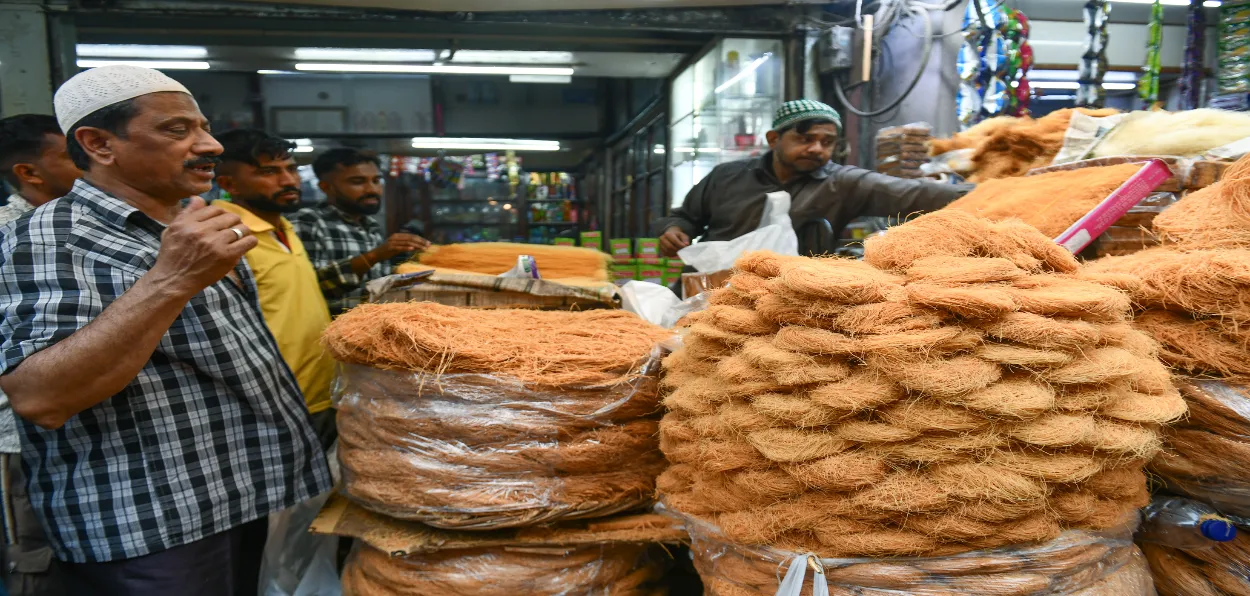
Business is often described in terms of profit, competition, investment, and growth. But in Islam, business is more than a way of making money. It is also a test of character.
Friday Musings
Every transaction involves two human beings placing some degree of trust in one another. A customer trusts that the seller will not deceive him. A partner trusts that the other person will honour an agreement. An employee trusts that wages will be paid fairly. A trader trusts that his dealings will be conducted with honesty. Islam therefore does not separate business ethics from faith. The marketplace is one of the places where a person's values become visible.
The lives of the prophets give us a powerful foundation for understanding this idea.
Before receiving revelation, Prophet Muhammad was known among his people for his honesty and trustworthiness. These qualities were not separate from his commercial life. They were part of it.
He worked as a trader and conducted business on behalf of Khadijah, may Allah be pleased with her. His reputation for honesty and integrity became one of the reasons she trusted him with her trade.
This is an important lesson for today's businessperson: reputation is an asset that money cannot easily buy.
A trader may make a quick profit through exaggeration, hidden defects or false promises. But such profit comes at the cost of trust. Once customers discover dishonesty, rebuilding a reputation can take years.
The Prophet taught Muslims that honesty brings blessing to a transaction. He also warned against deception. In one famous teaching, he said:
“Whoever cheats us is not one of us.”
This principle is remarkably relevant today. Whether deception occurs through misleading advertisements, edited product photographs, fake reviews, hidden charges, manipulated discounts or dishonest product descriptions, the ethical problem remains the same.
Technology may have changed the marketplace, but human responsibility has not.
The story of Prophet Yusuf gives another important lesson for business and economic life.
When Egypt faced years of famine, Yusuf proposed a careful system of storing grain during the years of abundance so that society could survive the difficult years ahead. He demonstrated not only honesty but also competence, planning and responsible leadership.
This teaches modern traders something important: good intentions alone are not enough.
An ethical businessperson should also strive to become competent. Poor management can harm employees, customers and investors even when the owner has good intentions. Responsible business requires planning, accurate records, sensible risk management and awareness of the needs of others.
Profit and responsibility do not have to be enemies.
A successful business can create employment, provide useful products, support families and contribute to society. The question is not simply, “How much money did I make?” but also, “How did I make it, and what did my business contribute?”
The Quran repeatedly condemns dishonesty in weights and measures.
Allah says: “Give full measure and do not be among those who cause loss.”
Another passage warns: “Woe to those who give less than due.”
These verses speak directly to traders, but their message extends much further.
Giving less than what is promised can happen in many forms today. A product may be advertised as premium while an inferior version is delivered. A service provider may promise a certain standard and quietly provide less. A business may take full payment but delay or reduce what it owes.
The scale may no longer be sitting on a traditional market counter, but every modern business still has its own scales.
Islam does not condemn wealth or legitimate profit. Trade is permitted, and earning through lawful work is honoured. What Islam challenges is the attitude that makes profit more important than everything else.
When greed takes control, almost anything can be justified: exploiting workers, hiding information, manipulating prices, taking advantage of desperate customers or ignoring the social consequences of business decisions.
The prophetic model offers a different approach. Wealth should remain a means, not become a master.
A Muslim trader can be ambitious while remaining honest. He can seek growth without becoming arrogant. He can negotiate firmly without becoming cruel. He can compete without wishing for another person's destruction.
The Quran places great emphasis on fulfilling agreements: “O you who believe, fulfil your contracts.” — Quran 5:1
In business, a promise is not merely polite language. It can become an obligation.
A deadline, payment agreement, partnership arrangement, employment contract or delivery commitment carries moral weight. An ethical trader does not look for loopholes simply because the other party may not be powerful enough to object.
Trust becomes meaningful precisely when dishonesty would be easier.
Today, business can happen without people ever meeting face to face. A customer can purchase something from another country with a few clicks. Artificial intelligence can write advertisements. Algorithms can study consumer behaviour. Social media can turn a small company into a global brand overnight.
Yet none of this removes the need for morality.
A trader who earns honestly to support a family, pays workers fairly, serves customers sincerely and avoids forbidden sources of income is doing more than running a business. He is practising his faith through his livelihood.
The prophetic examples remind us that success cannot be measured only by the size of a bank account.
A business becomes truly successful when its income is clean, its dealings are fair, its promises are honoured, and its success does not come at the expense of someone else's dignity.
The prophets teach us that character belongs everywhere—including the marketplace.
In an age that often celebrates winning at any cost, Islamic business ethics offers a quieter but stronger message: earn, but do not deceive; compete, but do not oppress; grow, but do not forget God; and make profit without losing your principles.
ALSO READ: Allama Iqbal faced fatwa for writing Gayatri Mantra in Urdu
Because at the end of the day, the greatest business is not the one that leaves behind the biggest fortune; It is the one that leaves behind a clean record before Allah.











.webp "People offering Eid prayers at the Hazratbal shrine, Srinagar")


.webp)