Bhakti Chalak
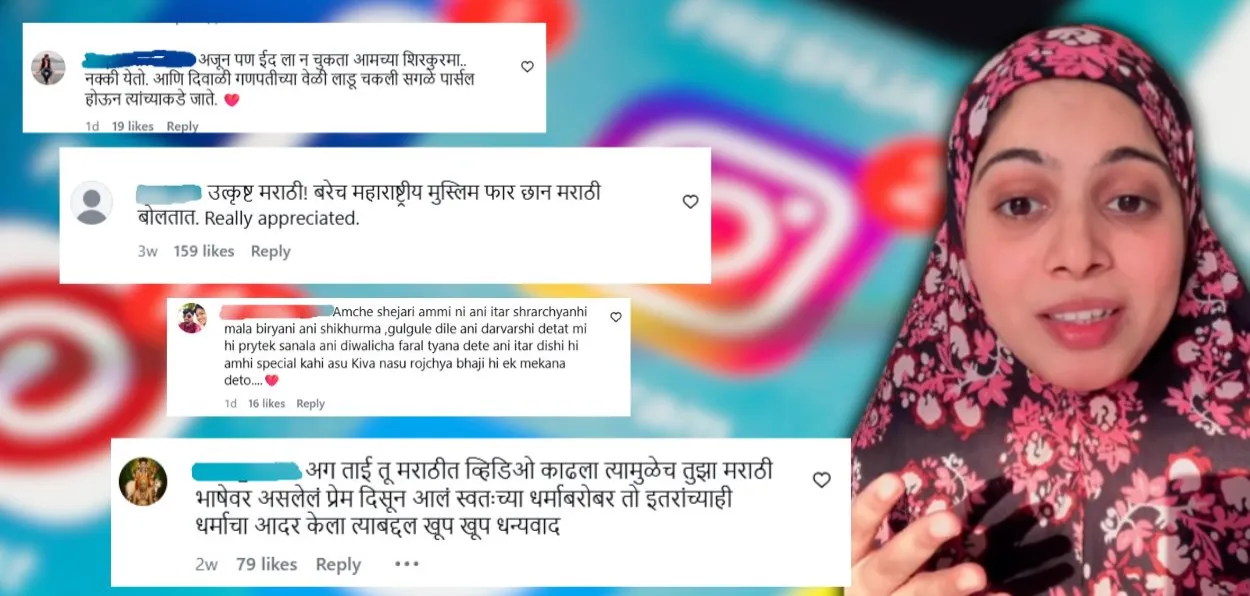
Using social media, Tanuja Mohsin Sande, a young Muslim woman from Pune, Maharashtra, is addressing a general perception that Muslims in Maharashtra do not speak Marathi. Tanuja has shattered this myth through her videos POSTED ONLINE.
In her videos, the Hijab-wearing Tanuja is seen communicating in fluent Marathi.
She says, "Many people think that Muslim people do not speak Marathi. But I want to tell them that I am a Maharashtrian Muslim and I was born in this very soil. Therefore, taking pride in the language, I decided to make my videos only in Marathi. And the majority of the audience watching my videos is Marathi-speaking. “
This style of speaking and her activism on social media were behind her special initiative 'Ramadan Eid cha Dabba' (Ramadan Eid Lunchbox).
Because of TV news and videos on social media, a perception is that there is inherent enmity between Hindus and Muslims.
However, if you peek into the life of a common man, the picture looks different. Through her initiative, Tanuja has highlighted this reality.
Tanuja spent her childhood in the police line of Dadar Hindmata, Mumbai. Her father, Rashid Shaikh, was an Assistant Sub-Inspector (ASI) in the Mumbai Police force.
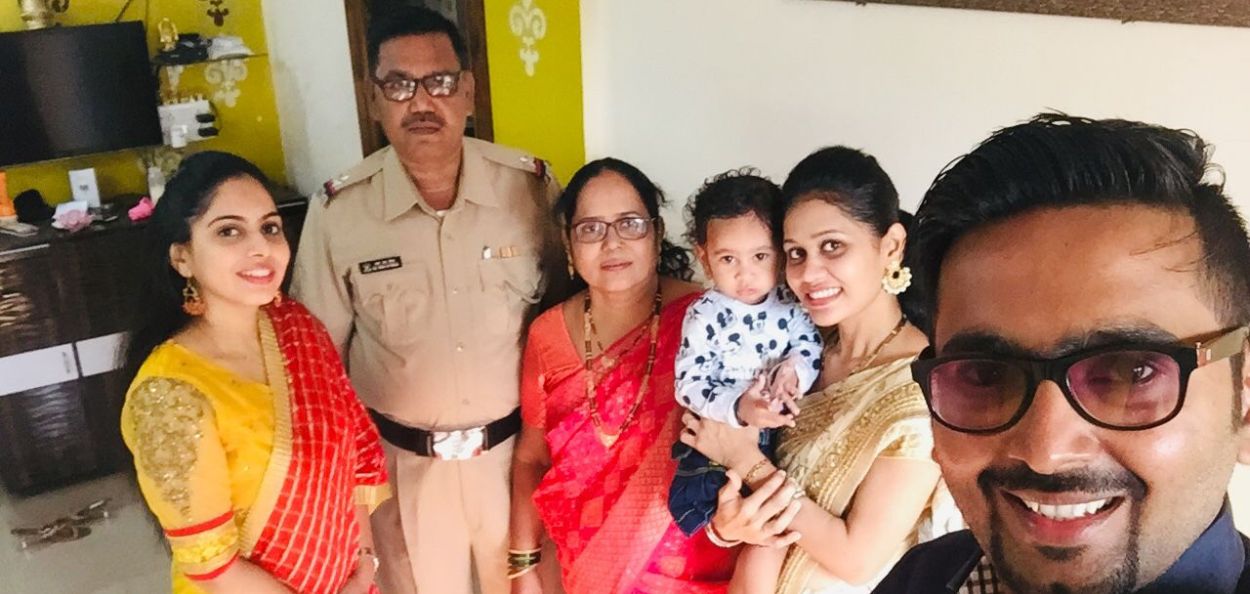 Tanuja Mohsin Sande (Holding the baby) with her family
Spending her childhood in the police line, she says she never faced discrimination in the name of religion. Despite hers being the only Muslim house in the colony, she celebrated all festivals like Holi, Dahi Handi, and Shimga (a form of Holi) along with her Hindu neighbours.
Even today, while living in Pune, she preserves this legacy. Jain, Marwadi, and many Hindu families live in her society. On the day of Diwali, after the Lakshmi Pujan, the first plate of Faral (Diwali snacks) is delivered at her place.
Similarly, on Eid, Tanuja personally delivers 30 to 35 lunchboxes to her neighbours before the family eats their meal. This year, under the concept of 'Ramzadan Eid cha Dabba', of her offering to her neighbours, Tanuja made a video and posted it on social media.
In that video, she mentioned that she was giving Eid lunchboxes to her Hindu neighbours. And she also gave a message of communal harmony.
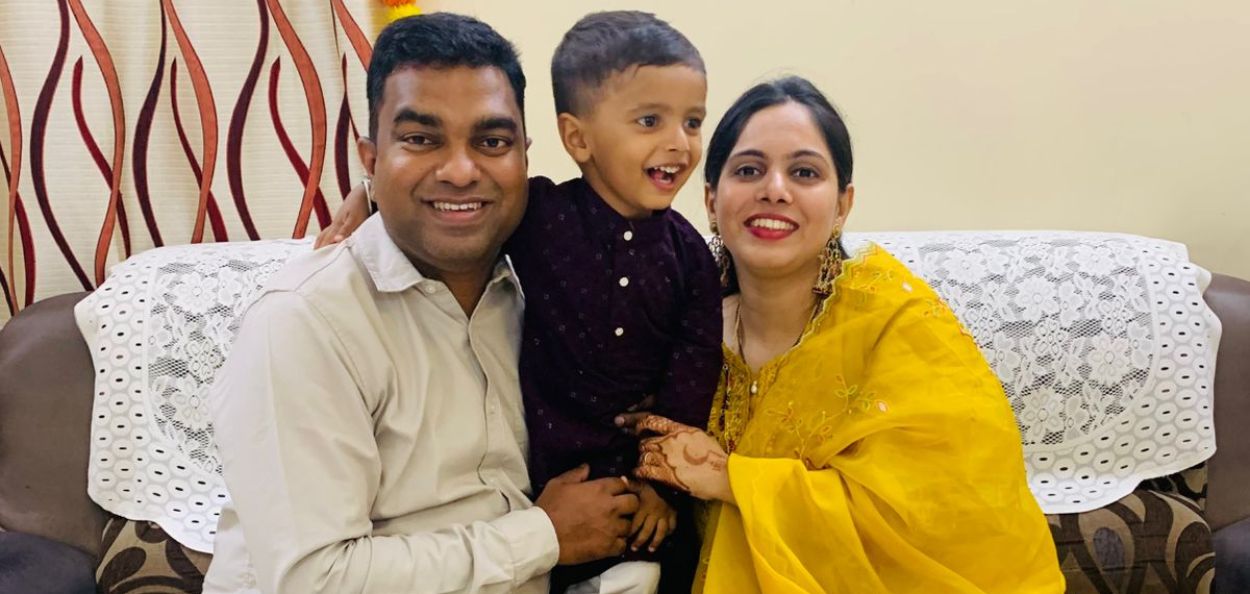 Tanuja Mohsin with her husband and son
Tanuja Sande explained the concept of her 'Ramadan Eid cha Dabba' initiative.
She says, "The politics in the name of religion makes people feel that Hindu-Muslim means something that creates enmity. But in reality, there is nothing like that. We are all still together today. When I participate in Hindu festivals, no one ever considers me an outsider. The things shown on social media are not true; what we actually experience is very different from the world of social media."
She further says, "While giving the Ramadan lunchboxes, there is no compulsion of non-vegetarian food on anyone. To those who want vegetarian food, I lovingly give Sheer Khurma. Actually, our neighbours are very eagerly waiting for the Sheer Khurma.
How did you make this? What ingredients did you put in it? They ask for its recipe with such questions. And the joy one gets while sharing this recipe and spreading sweetness cannot be put into words."
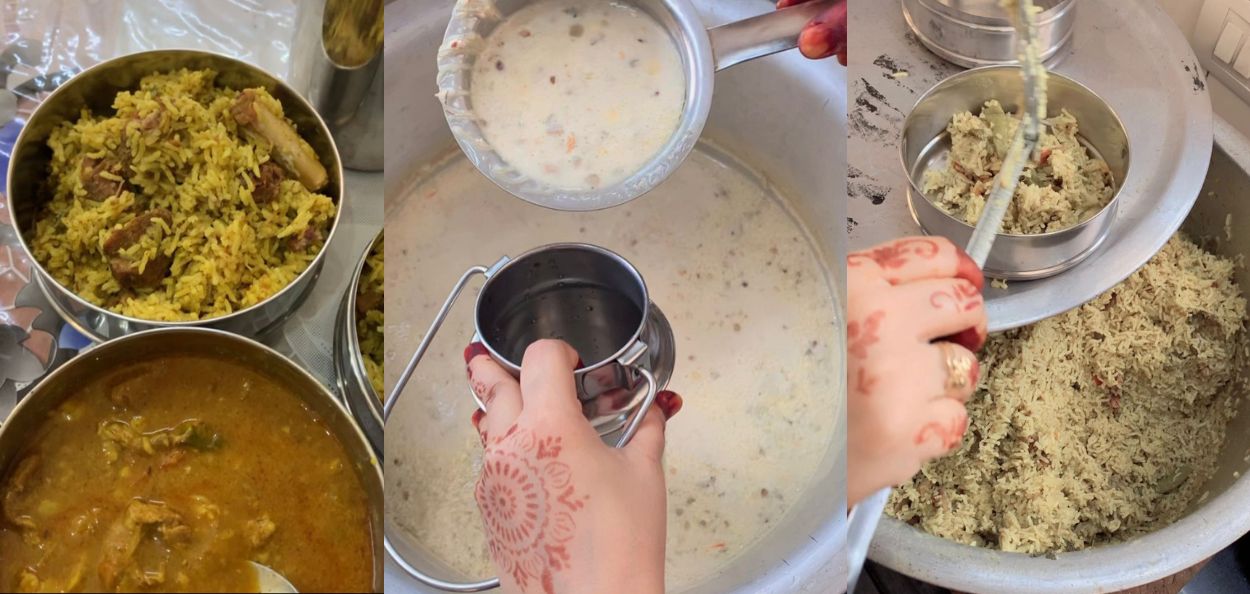 Tanuja Mohsin packing food for neighbours
After posting the video on social media on the day of Eid, she received a 99% positive response, but 1% of people made negative comments. Because of this, she was disturbed for some time. She thought of turning off the comment section or deleting the video.
She says, "When I turned off the comment section, people started messaging me. They requested, 'Sister, your video is very nice, we want to share our experiences, please turn on the comments.'" After that, Tanuja decided to ignore the negativity. In her comment section, many people also wrote memories of their childhood Hindu-Muslim friendships.
Tanuja started a series of videos during Ramadanan. Interestingly, it was a question asked by the house help that made her start content creation.
She says, "I have a three-year-old son. When I fast for the whole month of Ramadan, our helper asks me many questions. Since she is a Hindu, it is natural for her to have all these questions. She was very curious to know how I would look after the baby while fasting.
“Will you stay hungry the whole day? How do you fast without drinking water? Do you break the fast after seeing the moon?”
The idea of making this series came from such simple questions of hers." She made this series completely in Marathi, and people gave a tremendous response.
Tanuja is an engineering graduate, and she worked in the IT sector for 5 years. During the lockdown, she got married. She currently lives in Pune with her IT engineer husband, Mohsin Sande, and their 3-year-old son.
Her brother is also a content creator. He inspired Tanuja to do something different while staying at home. Her family supported her content creation. The very first like and comment on any of her videos comes from her father, she says.
ALSO READ: Advocate Tuba Snowbar is unapologetic, unstoppable
Tanuja Sande’s message to the youth is: "Let politics remain only online. The politics on TV is different, and our real life is different. There has been equality of religions in Maharashtra right from the beginning, and it will remain so. My father raised me with this leaning, and I will raise my son with these same values.”
“In crises, nobody cares who is helping whom. Respecting all religions is Maharashtra’s culture, and we must preserve it," she says.