




New Delhi
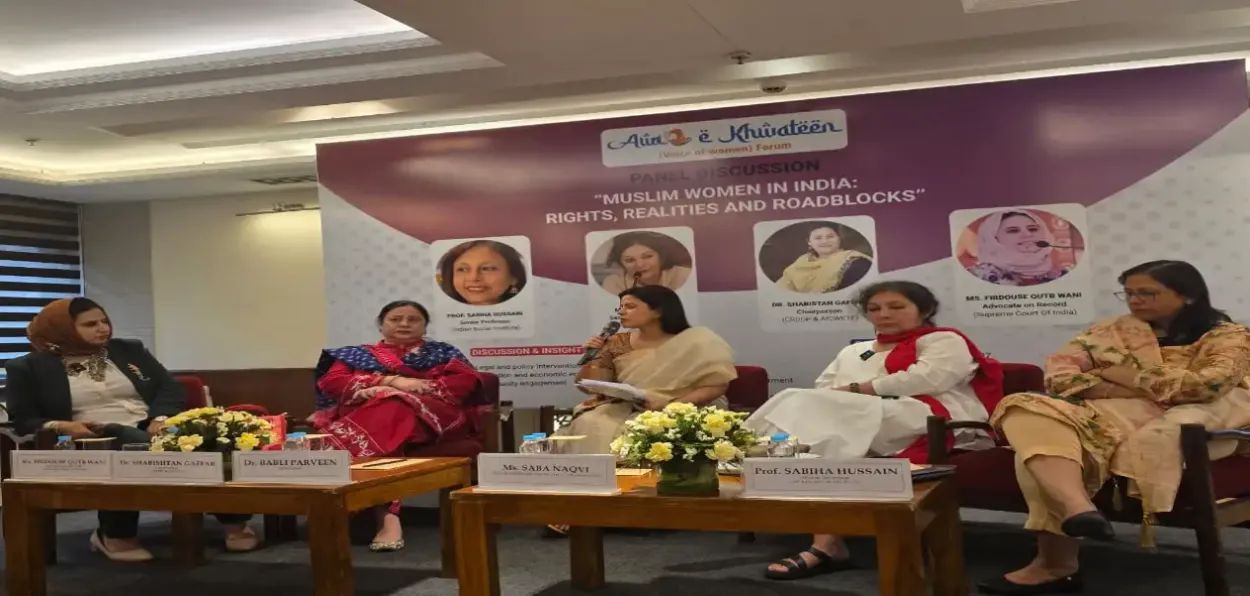
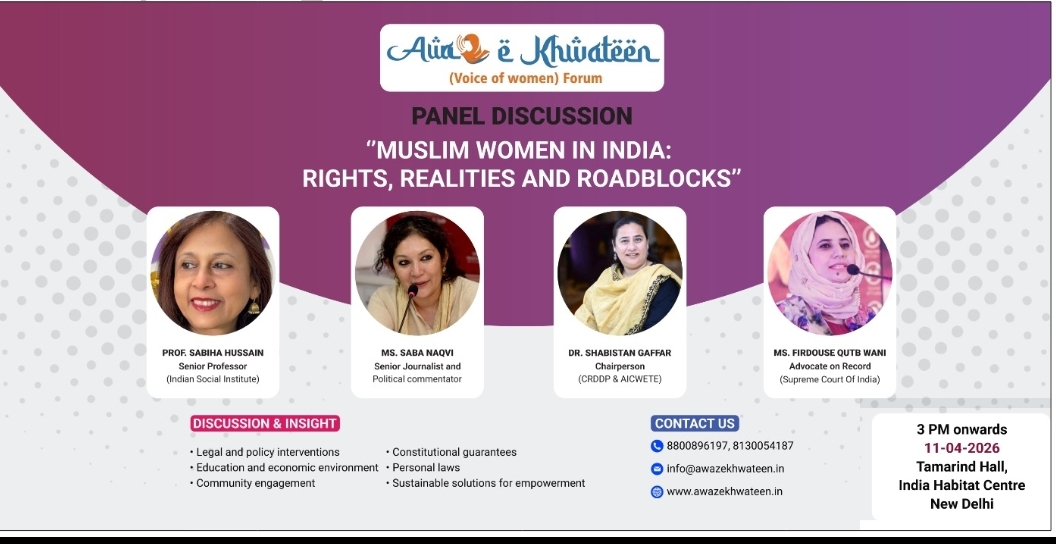
A panel discussion titled “Muslim Women in India: Rights, Realities and Challenges”, organised by the NGO Awaz-e-Khawateen emerged not merely as a formal exchange of ideas, but as a platform for in-depth deliberation on the multiple dimensions of ground realities, social attitudes, law, and identity.
The discussion highlighted that understanding the condition of Muslim women requires not only policy or religious perspectives, but also an integrated approach that takes into account history, society, literature, and contemporary realities.
The session was moderated by Dr. Babli Parveen, Honorary Convener of Awaz-e-Khawateen, who offered important insights into the broader condition of women in India. Drawing on the ideas of scholars and philosophers, she contextualised the discussion within both historical and contemporary frameworks, setting the stage for a nuanced dialogue on gender, identity, and justice.
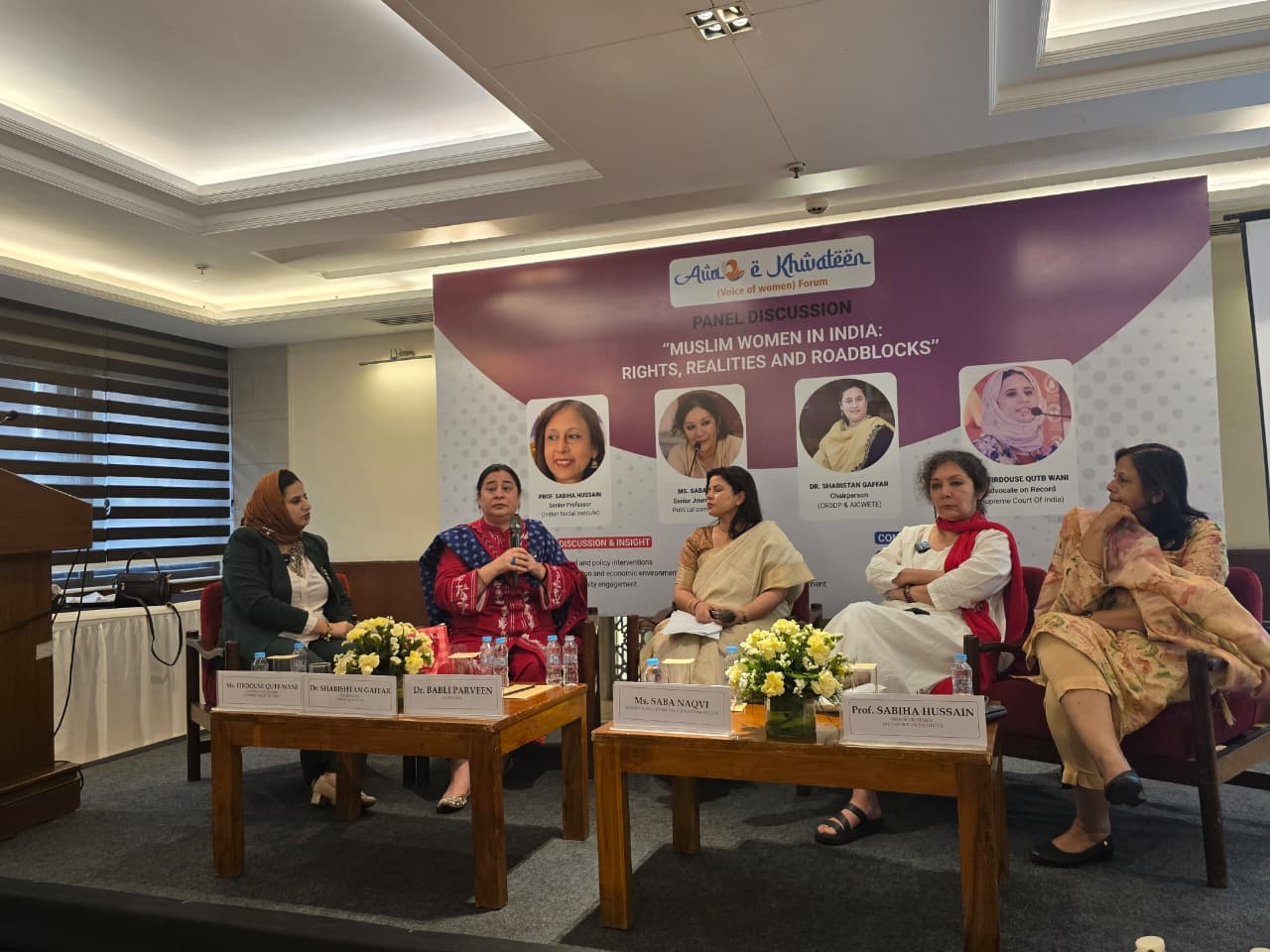
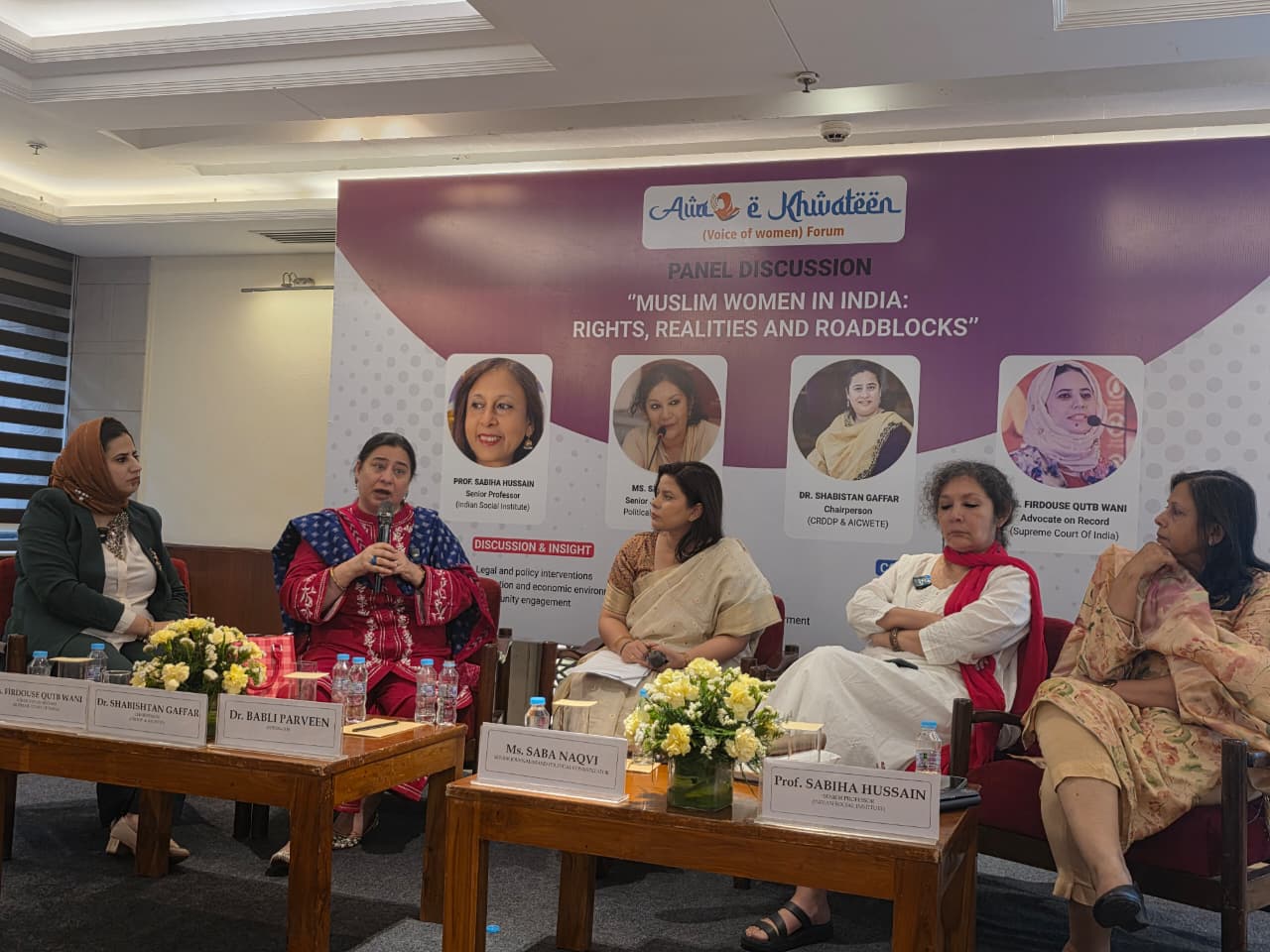
The panel featured senior journalist-author Saba Naqvi, Prof. Sabiha Hussain of the Indian Social Institute, Dr. Shabistan Ghaffar, Chairperson of CRDDP and AICWETE, and Supreme Court Advocate-on-Record Firdous Qutub Wani. The speakers shared perspectives grounded in their experience and research, discussing in detail the rights of Muslim women, lack of resources, social barriers, and emerging opportunities.
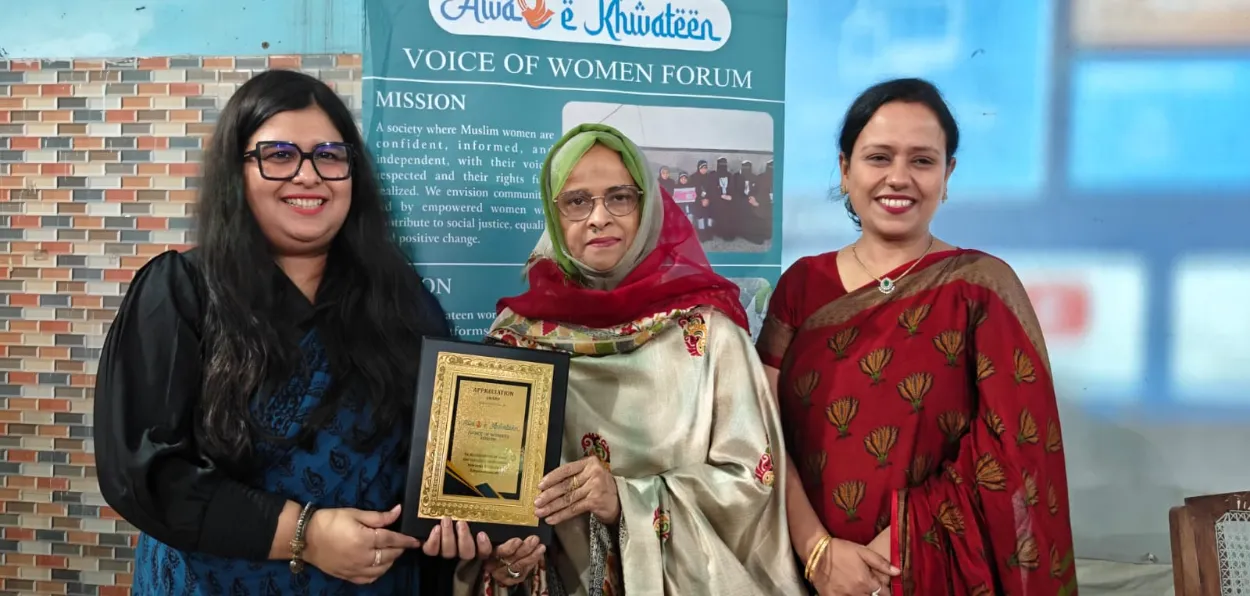
 Panel discussion at the event
A key point that emerged during the discussion was the significant gap between constitutional rights and ground realities. Limited access to education and employment, lack of legal awareness, social pressures, and restricted autonomy in decision-making continue to hinder the progress of Muslim women. It was also noted that while many women are aware of their rights, fear of societal and familial repercussions often prevents them from asserting them.
Citing writers Mahadevi Verma and Ismat Chughtai, Dr. Parveen remarked that literature serves as a mirror to society, helping to understand the real condition of women. She added that the long-standing tendency to view women not as “human beings” but merely as “women” has constrained their identity and freedom.
Prof. Sabiha Hussain emphasised that viewing Muslim women solely through an Islamic lens is a narrow approach. She stressed the need to understand the issue through four dimensions—“rights, resources, realities, and roadblocks.” Sharing her personal journey, she noted that she was the first Muslim woman from Bihar to reach Jawaharlal Nehru University (JNU), achieving this milestone despite lacking an academic background. She highlighted that talent can overcome barriers, but proper guidance and the role of teachers—as mentors and counsellors—are crucial.
 Panel discussion at the event
Dr. Shabistan Ghaffar stated that the root cause of the challenges faced by Muslim women is not religion, but poverty and lack of resources. She pointed to poor quality of education, lack of basic facilities, and growing economic inequality as major issues, remarking that “the poor are getting poorer and the rich richer.” She also observed that government policies are not effectively reaching the grassroots and called for serious attention to the shortage and closure of educational institutions for Muslim women.
On legal aspects, the discussion highlighted that while India has adequate laws for the protection of women—covering marital rights and other safeguards—their accessibility and utilisation remain limited. Speakers noted that girls are often denied decision-making power within households, whether in matters of education, career, or other significant life choices.
Firdous Qutub Wani advised women to choose their life partners thoughtfully, stating, “Choose a partner who supports you, not merely permits you.” She emphasised the importance of emotional support within families and encouraged women to move towards self-reliance.
The question of identity was also discussed, with participants stressing that the hijab or scarf should not be seen as a burden but as a matter of personal identity. Examples were cited of women who embrace their identity with pride and present it as a mark of individuality.
 Poster of the event
The discussion underscored that education remains the most powerful tool to break stereotypes and discrimination. Speakers emphasised the importance of “equity” over mere “equality,” arguing that women should be provided opportunities suited to their circumstances. They also highlighted the important role of religious and community leadership in spreading positive messages and providing correct guidance.
Dr. Ghaffar, sharing her experiences, emphasised cultural diversity and the importance of education, while also noting that religion is not merely an inheritance but something to be understood and practised. She encouraged women to actively engage in acquiring religious knowledge and contributing to positive social change.
It was also observed that celebrating occasions like “Women’s Day” alone cannot bring meaningful change; sustained and concrete efforts are essential for real empowerment.
In her concluding remarks, Dr. Babli Parveen thanked all the speakers, participants, and members of Awaaz-e-Khawateen, including Yusra Siddiqui and Tooba Khatoon. She also extended special thanks to Atir Khan, Editor-in-Chief of Awaaz The Voice, and Hafizur Rahman, Convener of Khusro Foundation, for their presence.
READ MORE: Why Indians are remembering Homi J. Bhabha amid war, global fuel crisis
Participants actively engaged in the interactive session, and there was a consensus that empowering Muslim women requires a combined focus on education, awareness, legal access, social support, and policy reforms. The event not only served as a platform for dialogue but also as a significant step towards shaping future action.






.webp "Dipika Pal shaping an idol")


_(1).jpg)
_(4).webp)