Kathmandu
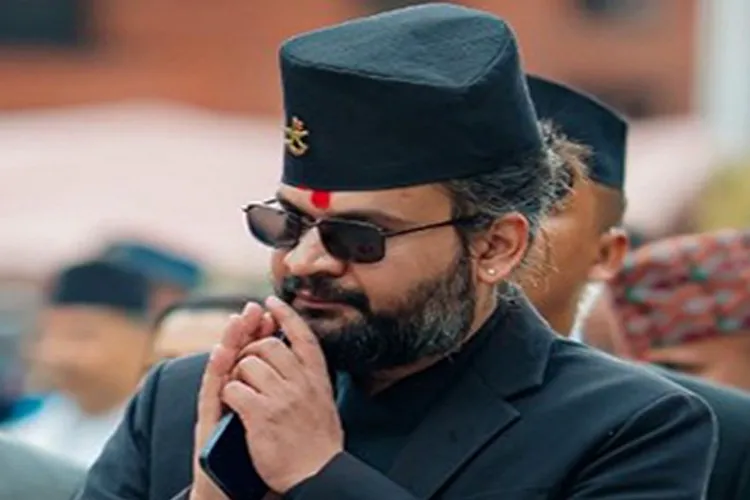
In a major political development, the Rastriya Swatantra Party (RSP) has unanimously chosen Balendra Shah—popularly known as Balen—as its parliamentary party leader, paving the way for his appointment as Nepal’s next Prime Minister.
The decision was taken during a Central Committee meeting held at the party office in Kathmandu. As per party rules, the parliamentary party leader is eligible to become Prime Minister, clearing Shah’s path to the country’s top executive post.
Shah is expected to take the oath of office at the President’s Office from Ram Chandra Paudel in a special ceremony scheduled for Friday. According to party leaders, the swearing-in will include symbolic rituals such as the blowing of seven conch shells, recitations by 108 Batuks (novice Hindu priests), and chants by 16 Buddhist monks, reflecting Nepal’s syncretic religious traditions.
The leadership transition follows an earlier agreement between RSP President Rabi Lamichhane and Shah, under which Lamichhane will continue as the party’s central chairperson while Shah assumes parliamentary leadership and the prime ministerial role.
At just 35, Shah is poised to become one of the youngest Prime Ministers in Nepal’s history, marking a dramatic shift in the country’s political landscape. His rise has been meteoric—from an underground rapper to a structural engineer and then a political disruptor who captured national attention.
Shah first shot to prominence in 2022 when he was elected Mayor of Kathmandu as an independent candidate, defeating established political figures by a wide margin. His unconventional campaign, backed by a strong youth following and digital outreach, signaled growing public disillusionment with traditional parties.
Earlier this year, Shah formally joined the RSP and contested parliamentary elections from Jhapa-05, a stronghold of veteran leader K P Sharma Oli. In a surprising upset, Shah defeated Oli by a significant margin, cementing his reputation as a formidable political force.
Born in 1990, Shah combines a technical background—holding an engineering degree and a master’s in structural engineering—with a strong digital presence. With millions of followers on social media, he often communicates directly with the public, bypassing traditional media channels.
However, his outspoken and sometimes controversial style has also drawn criticism. Past remarks targeting major global powers and domestic political actors, along with his combative rhetoric, have led some to question his temperament for high office.
Despite this, his supporters view him as a symbol of change and authenticity in a political system long dominated by entrenched elites. His decision to decline an earlier opportunity to lead an interim government in favor of pursuing a full-term mandate is seen by many as a calculated and strategic move.
Following his swearing-in, Shah is expected to form his Cabinet and assume office at Singha Durbar, Nepal’s administrative headquarters.
READ MORE: Pilot Hana Mohsin Khan defies social and religious stereotypes
As Nepal prepares for this leadership transition, Shah’s tenure will likely test whether his unconventional style can translate into effective governance. His rise reflects a broader generational and political shift—one that could redefine the country’s future trajectory.
.gif)