Tehran
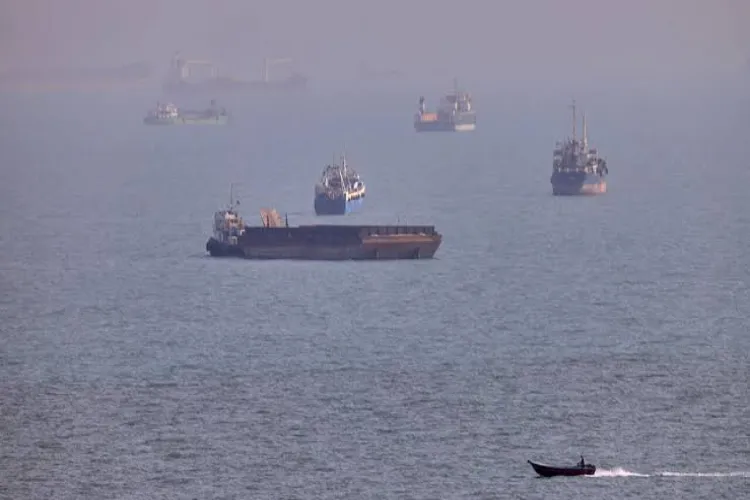
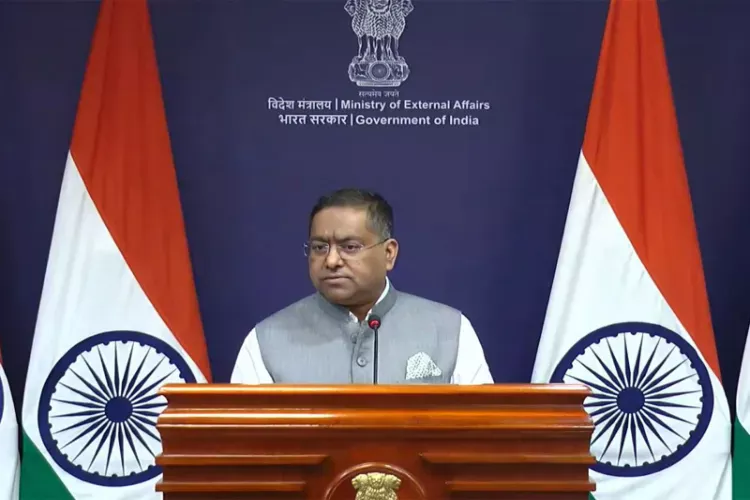
Iranian Foreign Ministry spokesperson Esmail Baghaei on Monday said that Iran is not currently discussing the details of possible transit fees in its ongoing negotiations with Oman over a new route for shipping through the Strait of Hormuz, while stressing that talks on the broader maritime mechanism remain ongoing.
Addressing questions during a press briefing, Baghaei was asked whether the issue of transit fees had been raised in Iran's negotiations with Oman and, if so, whether such fees would be shared between the two countries or allocated solely to Iran.
"We are not discussing such details at this stage," Baghaei said in response.
Baghaei said that the discussions between Tehran and Muscat were continuing and reiterated that the two sides had reached an understanding on the traffic map for the proposed route.
"I had previously said that an understanding has been reached regarding the traffic map. Regarding the joint statement, there are still some technical points that are being discussed, but the negotiations are taking place in a very smooth and constructive manner," he said.
Baghaei also said that the two sides were also discussing mechanisms concerning the safe passage of shipping through the Strait of Hormuz, environmental issues, maritime services and combating crime.
"We are not discussing these details right now. What is clear is that mechanisms will be established that, in addition to monitoring the safe passage of shipping through the Strait of Hormuz, will provide the necessary measures on issues related to the environment, cooperation in providing maritime services, and combating crime," he said.
The Foreign Ministry spokesperson further stated that while the two sides were discussing the practical arrangements for shipping, compensation for maritime services would ordinarily be expected.
Baghaei said, "As a rule, when you provide maritime services, you should definitely receive compensation for it."
Meanwhile, responding to a question on what Iran considers necessary for the Strait of Hormuz to be fully opened and for the naval blockade to end, Baghaei distinguished the bilateral discussions with Oman and the wider military situation involving the United States.
He said the Strait was not closed because of a dispute between Iran and Oman, but as a consequence of the US and Israeli military aggression against Iran and the use of bases along the southern Persian Gulf coast.
"The reason for the closure of the Strait of Hormuz was the military aggression of the United States and the Zionist regime [Israel] against Iran and the misuse of the Strait of Hormuz and the use of bases located on the southern coast of the Persian Gulf to attack Iran," Baghaei said.
He said the negotiations with Oman were therefore focused specifically on establishing a safe shipping route, while the question of fully opening the Strait remained linked to the broader military situation.
"The opening of the Strait of Hormuz is subject to the fulfilment of the conditions that have been imposed on the Islamic Republic of Iran, this waterway, and the entire region due to the military aggression of the United States and the Zionist regime," he said.
Baghaei further stressed that Tehran considers itself to remain in a state of war.
"Keep in mind that we are still at war," he said.
The Iranian Foreign Ministry spokesperson said Tehran would not consider the waterway fully safe while what it describes as a US naval blockade and other violations continue, adding that the bilateral understanding with Oman, even if finalised, would not by itself be sufficient to establish conditions for a complete reopening of the Strait.
"As long as the US naval blockade continues, according to UN General Assembly Resolution 3314, such a naval blockade is an act of aggression," Baghaei said.
"As long as other US violations continue, the necessary conditions will not exist to say that the Strait of Hormuz has become a safe waterway," he added.
READ MORE: Sufiya Khan sets Kanyakumari to Karakoram world record!
Earlier, Iran's parliamentary commission for National Security and Foreign Policy on Sunday passed the broad framework of a strategic initiative aimed at bolstering regional security and sustainable development in the Persian Gulf and the Strait of Hormuz.
According to Press TV, the commission spokesman Hassan Qashqavi stated that lawmakers reviewed the draft proposal alongside delegates from pertinent government organisations and institutions.
_(1).webp "The Khanqah of Pandua, Malda, West Bengal")


.webp "Shrine of Bulbul Shah, Srinagar, J&K")









_(1).webp)