

New Delhi
Intense grief is not the only emotion that can affect the heart -- extreme anger, fear or shock can temporarily weaken the heart’s pumping ability, triggering a rare condition known as Takotsubo cardiomyopathy or “broken heart syndrome”, experts said.
Usually associated with a sudden surge of stress hormones following an intense emotional or physical event, the condition can be triggered by bereavement, relationship breakdown or extreme anger, highlighting the complex link between emotional stress and cardiovascular health.
“A sudden and intense emotional episode, including extreme anger, can trigger a powerful adrenaline response and temporarily affect the heart muscle’s ability to contract normally. The trigger need not always be sadness or grief,” said Dr Rajiv Narang, Head of the Department of Cardiology at AIIMS, Delhi.
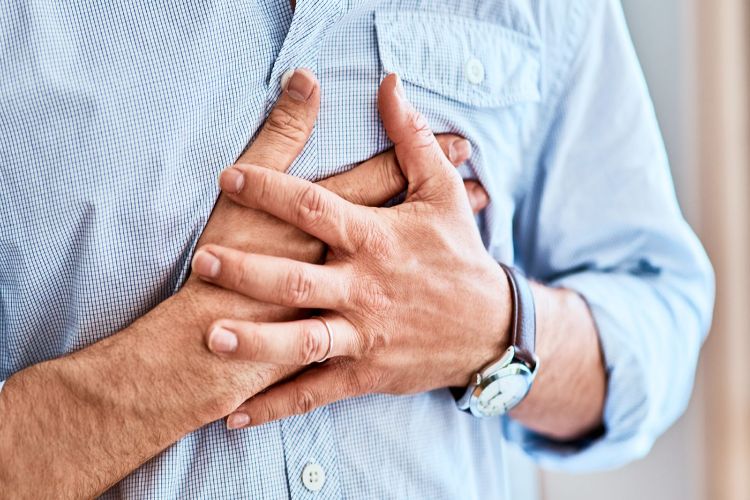
The condition can mimic an acute heart attack, with patients experiencing sudden chest pain, breathlessness, sweating or palpitations. An electrocardiogram may also show abnormalities similar to those seen during a heart attack, Narang said.
However, doctors often find no major blockage in the coronary arteries to explain the symptoms in patients with Takotsubo cardiomyopathy.
“A patient with Takotsubo can appear to be having a conventional heart attack. Stress should not be assumed to be the cause without urgent cardiac evaluation, as symptoms and initial ECG changes can overlap substantially with those of a heart attack,” Narang said.
Patients can develop severe complications in the initial stages and may need close observation in a coronary care unit. However, heart function recovers over subsequent days or weeks in most patients, and the long-term prognosis is generally better than that for patients with conventional heart attacks, he said.
The name Takotsubo comes from a Japanese octopus-trapping pot, as the affected heart can develop characteristic ballooning of the left ventricle during the acute phase. Some patients may also have coincidental blockages in their coronary arteries.
The exact mechanism is not fully understood, but a sudden surge of catecholamines, including adrenaline, is believed to temporarily stun the heart muscle, said Dr Anjan Siotia, Director of Cardiology at BM Birla Heart Hospital, Kolkata.
The condition is more common in post-menopausal women, though men and younger people can also develop it. Physical stressors such as surgery, severe illness and neurological events can also trigger it, he said.
“Broken heart syndrome is not limited to heartbreak. The cardiovascular system responds to intense physical and emotional stress. Though usually reversible, it can cause serious complications, including heart failure, abnormal rhythms and, rarely, cardiogenic shock,” Siotia said.
Dr Suraj Kumar Kulkarni, Senior Consultant in Interventional Cardiology at SPARSH Hospital, Bengaluru, said the condition also underlines the importance of recognising the physical effects of prolonged or intense emotional stress.
“Emotional triggers cannot always be avoided, but recognising their physical impact is important. Regular physical activity, adequate sleep, management of blood pressure and diabetes, and timely medical evaluation of new cardiac symptoms can help reduce overall cardiovascular risk. People should also avoid self-diagnosing chest symptoms as anxiety simply because they occur after an emotional event,” he said.
Ordinary anger or sadness does not mean a person will develop Takotsubo cardiomyopathy, but severe emotional episodes can cause marked changes in heart rate, blood pressure and the body’s stress response, Kulkarni said.
For patients who have experienced the condition, doctors may also assess underlying cardiovascular risk factors and monitor the heart’s recovery through follow-up imaging and other tests.
Unlike a conventional heart attack, in which a blocked coronary artery usually causes injury to a portion of the heart muscle, Takotsubo cardiomyopathy generally involves temporary weakening of the heart muscle and does not necessarily involve an obstructed artery, said Dr Niraj Kumar, Director and Head of Cardiology at PB Health, Gurugram.
Most patients recover cardiac function over days to weeks with appropriate medical care, although recovery time varies and recurrence is possible, Kumar said.
Doctors cautioned against assuming that every episode of chest pain following emotional distress is Takotsubo cardiomyopathy.
READ MORE:Azhar Iqubal left IIT to launch Inshorts and make news a 60 word affair
“The biggest mistake would be to label chest pain as anxiety, anger or emotional stress without evaluation. Whether the trigger is grief, anger or excitement, new chest pain or breathlessness should be treated as a potential cardiac emergency until serious causes such as a heart attack have been ruled out,” Kumar said.