

Saquib Salim
“The Indian people have spoken, so that even the deaf might hear, and proclaimed that they will not have this constitution. They have given notice to quit to British imperialism. This constitution must therefore go, lock, stock and barrel, and leave the field clear for our Constituent Assembly.”
Constitution Day
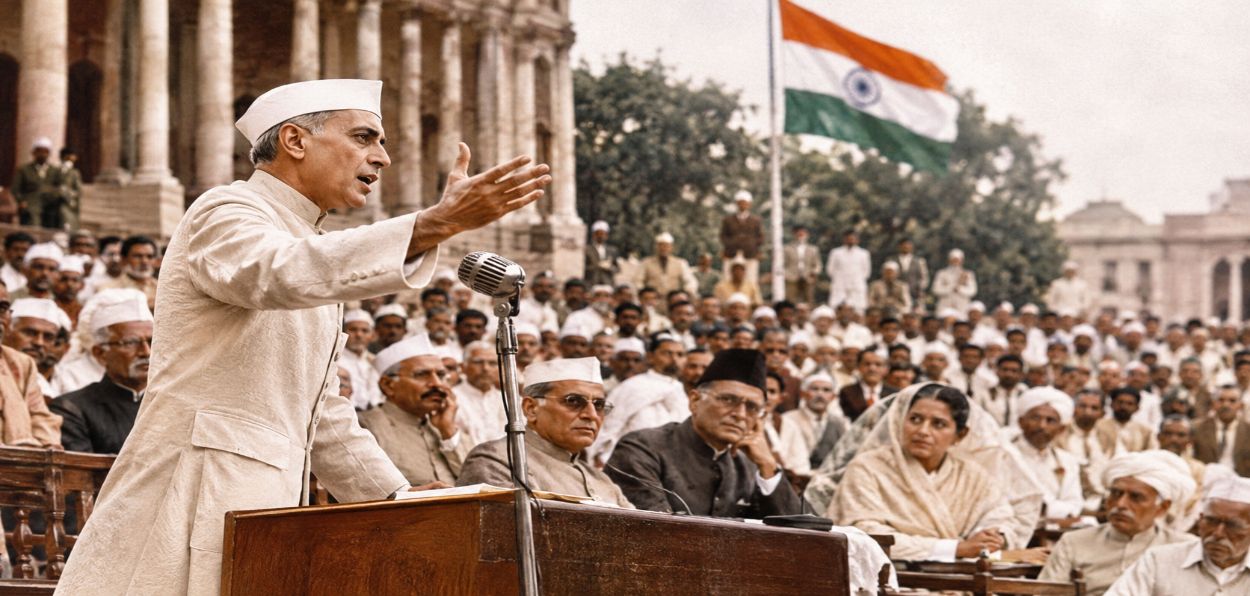
Jawaharlal Nehru spoke these words at Delhi in March 1937, presiding over the National Convention of Congress Legislators. After the Indian National Congress (INC) had won a majority in seven of the eleven provinces in the first elections under the Government of India Act, 1935.
It is not often appreciated that at least between 1937, after India Act 1935, and the call for Quit India in 1942 Indians led by the INC had their primary demand in a Constituent Assembly of their own. From the 1935 Act to the Quit India Resolution, a national Indian Constitution remained the central demand of the freedom fighters rejecting the Act as colonial baggage.
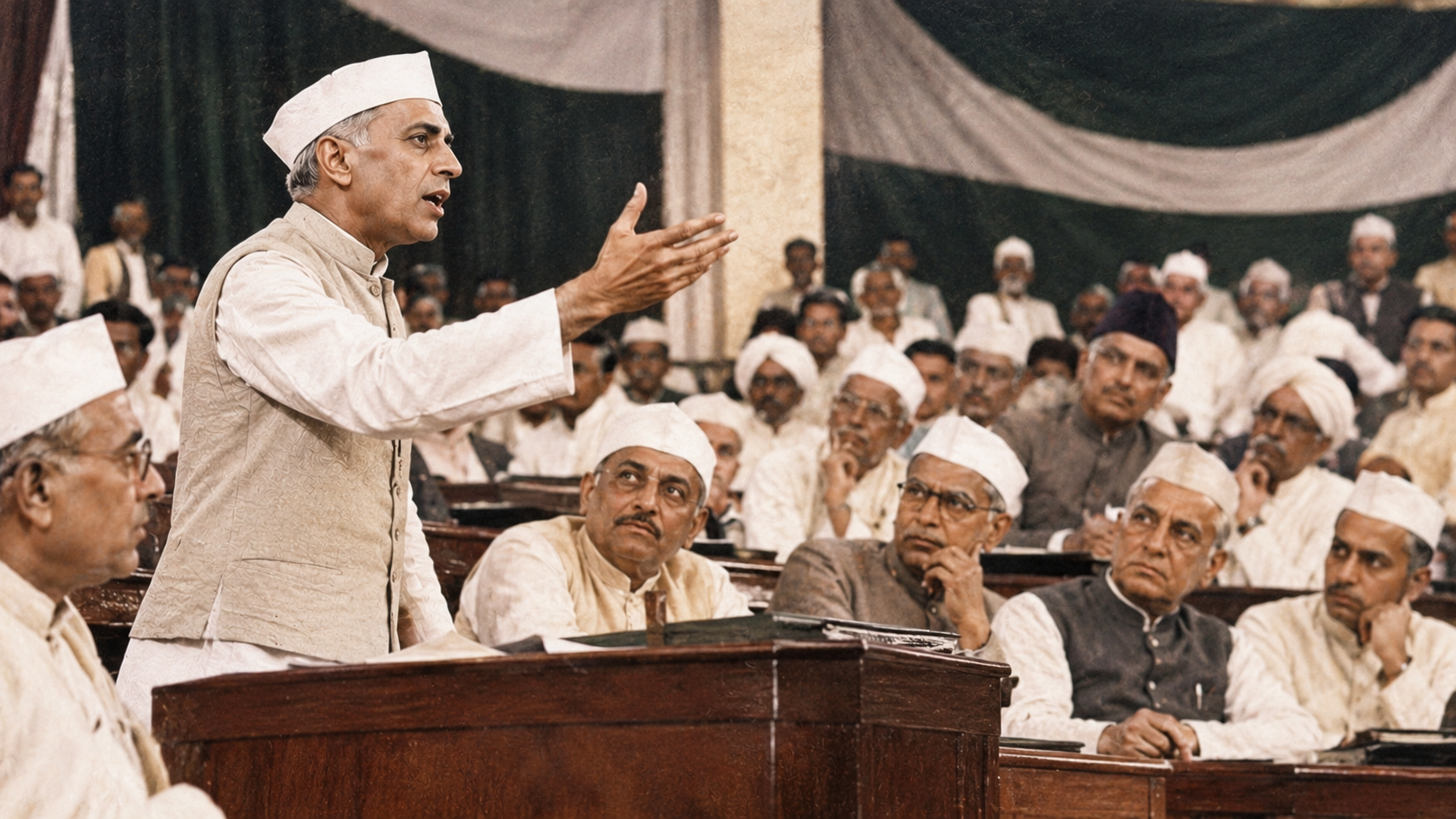
In May 1934, rejecting the proposals that became the Act, the Swaraj Party at Ranchi under M. A. Ansari claimed for India “the right of self-determination”. The demand was made “to convene a Constituent Assembly representative of all sections of the Indian people”. The Congress Working Committee adopted the demand in June 1934.
At Lucknow in April 1936 the Congress rejected “the new constitution (the Government of India Act, 1935) in its entirety”. No constitution “imposed by outside authority” could be accepted because the constitution of India “can only be framed by a Constituent Assembly”.
Nehru, in 1936 at Faizpur, spoke of the demand for “a Constituent Assembly elected under adult suffrage”. He stressed, “That is the very corner-stone of Congress policy today and our election campaign must be based on it.” Such an Assembly “must not be conceived as something emanating from the British Government”. It needed “the will of the people behind it”.
The Faizpur resolution added that the Congress “does not and will not recognize the right of any external power or authority to dictate the political and economic structure of India.”
The elections of 1937 turned this demand into a mandate. On March 18, 1937 the All-India Congress Committee said that the INC had entered the polls with “the demand for a Constituent Assembly to frame India’s constitution”. The people “desire to frame their own constitution, based on national independence, through the medium of a Constituent Assembly elected by adult franchise.”
Nehru said that the INC had promised to the peasants “panchayati raj, fashioned by a Constituent Assembly, a grand panchayat of the nation, elected by all our people.” The work of Congress legislators was “primarily to fight the Act and press and work for a Constituent Assembly”. INC members in the Assembly “will represent the sovereignty of the Indian people and will meet as the arbiter of our destiny.”
The INC carried the demand into the legislatures. Between August and October 1937 the assemblies of the seven Congress provinces, and of Sind, demanded that the Act be “repealed and replaced by a constitution for a free India framed by a Constituent Assembly elected on the basis of adult franchise”.
On September 17, 1937 S. Satyamurti raised the demand in the Central Legislative Assembly. He said, “No objection has been taken by any minority, much less by any Moslem minority, in any of these provinces to the phrase ‘Constituent Assembly’.” He foresaw “a new race of nationalists, Muslim and Hindu,” who would “fight the battle of the freedom of this country”.
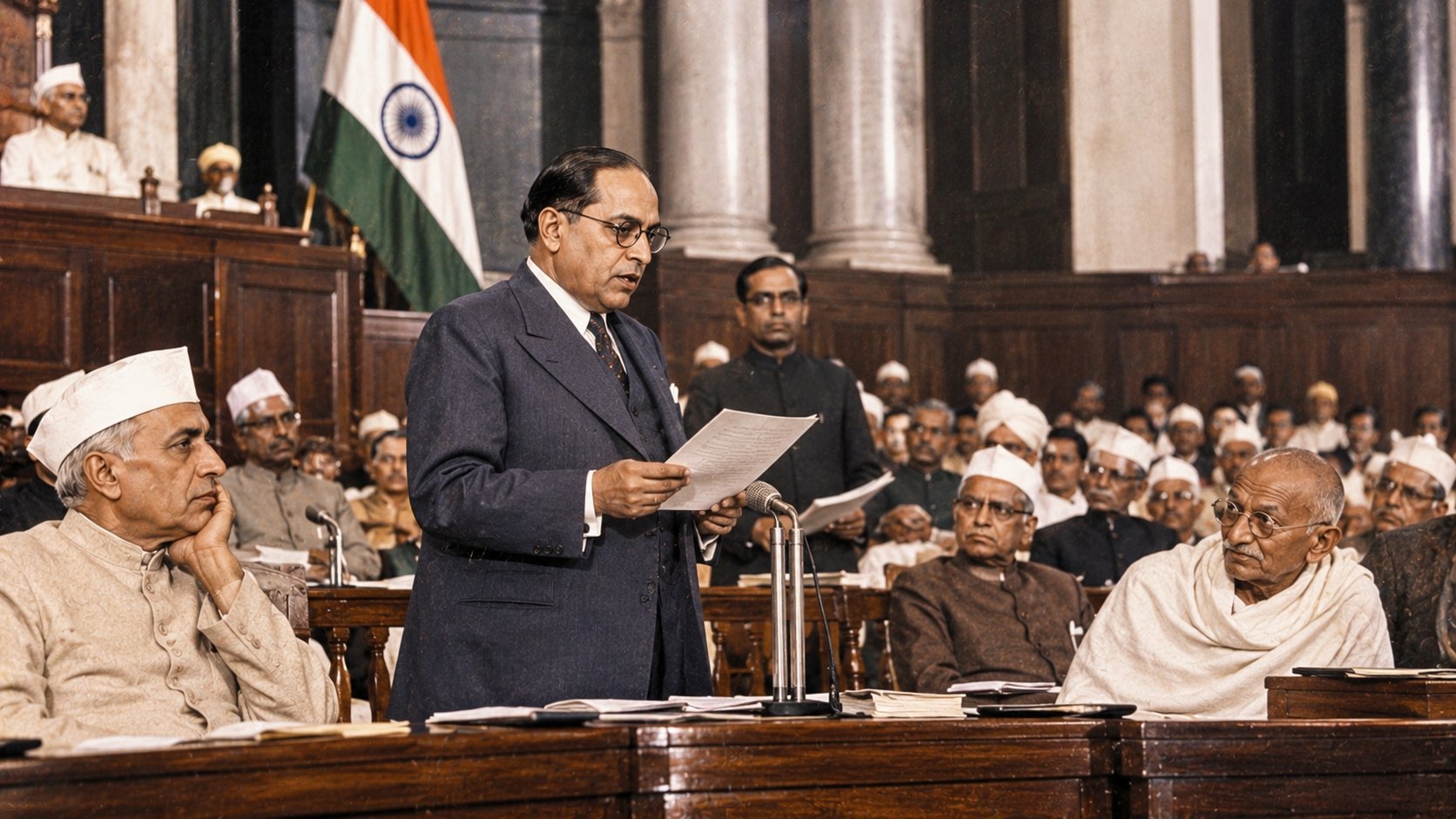
At Haripura in February 1938, under Subhas Chandra Bose, the INC reiterated that India’s constitution “can only be framed by the people themselves by means of a Constituent Assembly, without interference by any foreign authority.”
The Second World War made the issue even more relevant. In October and November 1939 the Congress provinces protested that Britain had made India a participant in the war “without the consent of the people of India”. They said that India “should be regarded as an independent nation entitled to frame her own constitution.” The Congress ministries then resigned.
Mahatma Gandhi also backed the demand. In “The Only Way”, published in the Harijan of November 19, 1939, he admitted that he had first accepted the idea out of faith in Nehru’s knowledge of democracy. “Hard facts have, however, made me a convert and, for that reason perhaps, more enthusiastic than Jawaharlal himself.” He saw in the Constituent Assembly a remedy “for our communal and other distempers”.
Gandhi wrote, “I cannot conceive of a people governing themselves rightly through a government imposed from without.” “The only way out is a Constituent Assembly.”
C. Rajagopalachari affirmed that Gandhi “has not backed the slogan of the Constituent Assembly for the love of a grandiloquent phrase.”
The Congress Working Committee resolved in November that a Constituent Assembly “is the only democratic method of determining the constitution of a free country”. In December it called the Assembly “the only way to attain a final settlement of communal questions.”
These demands could no longer be ignored. In the August Offer of 1940 the Viceroy, Linlithgow, acknowledged “very strong insistence” that framing the new constitution “should be primarily the responsibility of Indians themselves”.
Yet it was postponed until “after the conclusion of the war”, and power was refused to any system “whose authority is directly denied by large and powerful elements in India’s national life.”
The Cripps Offer of March 1942 promised that “Immediately upon cessation of hostilities” Britain would set up “an elected body charged with the task of framing a new constitution for India.”
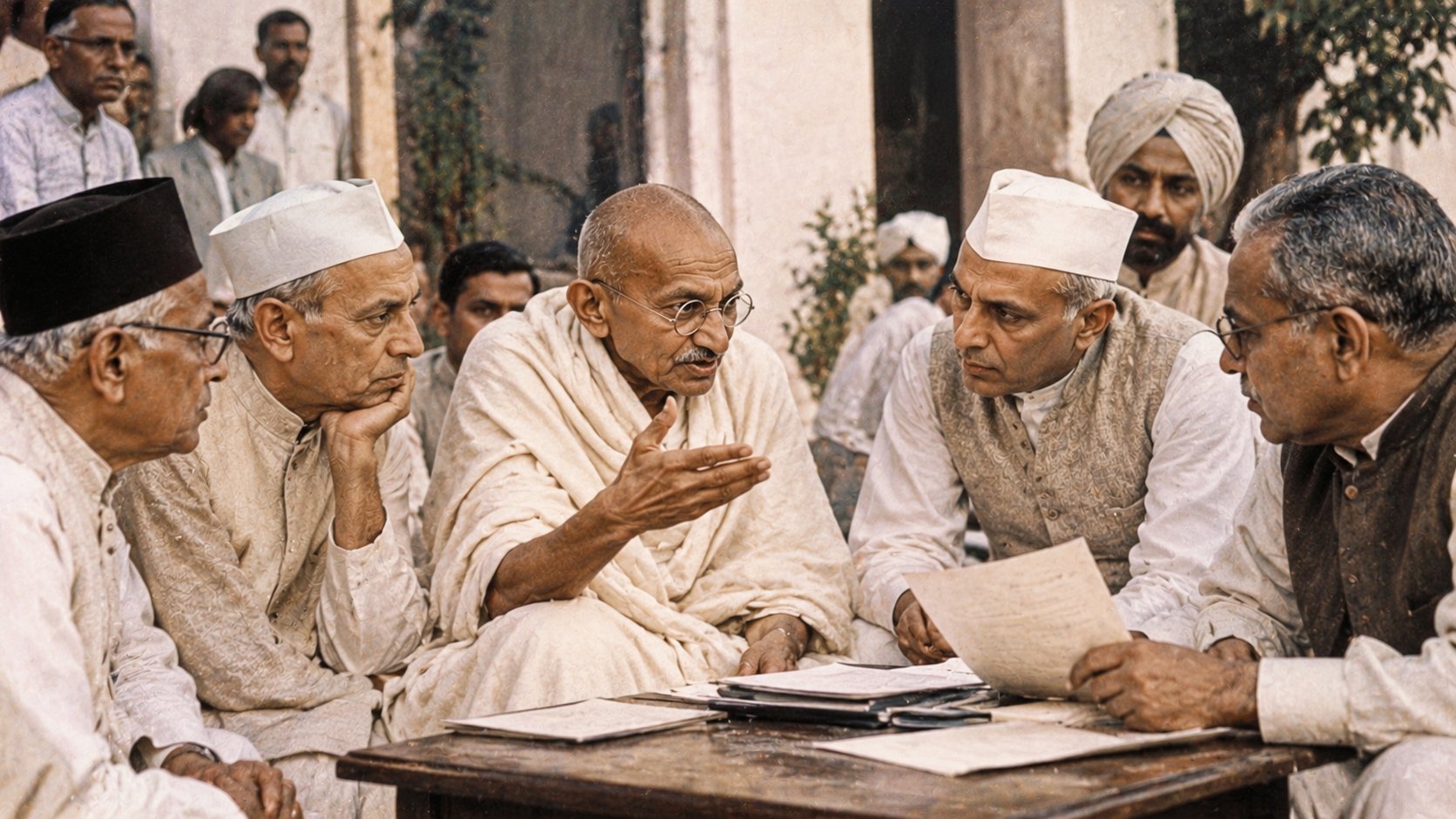
But on April 2, 1942 the Congress Working Committee rejected the offer. Saying that “even the constitution-making body is so constituted that the people’s right of self-determination is vitiated by the introduction of non-representative elements.” The ninety millions of people in the Indian States would have “no voice in choosing those representatives”. Real freedom, the Committee feared, “may well become an illusion”.
Four months later came the Quit India Resolution, adopted at Bombay on August 8, 1942. It demanded “with all emphasis the demand for the withdrawal of the British Power from India.”
The resolution also reiterated “The provisional Government will evolve a scheme for a Constituent Assembly which will prepare a constitution for the Government of India acceptable to all the sections of the people.” Power, it promised, “will belong to the whole people of India.”
READ MORE: Kashmir's Sadiq Ali Mir founded his aerospace startup in college
The struggle for national independence was a fight to get a truly representative Constitution to govern India. Though the British left the country on 15 August 1947, the dream of freedom fighters was fulfilled on 26 November 1949 when the Constituent Assembly adopted the final draft of the constitution.