

Sabiha Fathima
Why are Indian Muslim’s religious places getting involved in legal conflicts? The obvious response would be to blame it on the political developments. But the issue is much deeper than that. Such controversies place the community at odds with fellow citizens and often deepen social divisions.
Islamic history, however, places great emphasis on ensuring that sacred places remain free from disputes and that the land on which they stand is acquired through the fairest and most transparent means.
Many historical examples illustrate this principle.
Imagine the dust-laden winds sweeping across the plains on the 2nd of Muharram, 61 AH. A small caravan halts abruptly as Imam Hussain ibn Ali’s horse refuses to move any further. The name of the place echoes like a prophecy: Karbala, the land of grief and affliction.
The Imam, fully aware of the tragedy that would unfold, showed extraordinary moral clarity before initiating a battle.
He summoned the local tribesmen, chiefly from the Banu Asad, along with the residents of nearby Neynawa and Ghadiriyya. He purchased the land—approximately four miles by four miles—for 60,000 dirhams.
The owners protested that the land was barren. "This accursed earth yields nothing," they said. With prophetic foresight, Imam Hussain replied, "This land will become fertile with my blood and the blood of my family and companions. Pilgrims will come."
He registered the purchase in his son Ali al-Akbar’s name, and gifted it back as a charitable trust, on the condition that the local people would guide and shelter visitors to the graves for three days.
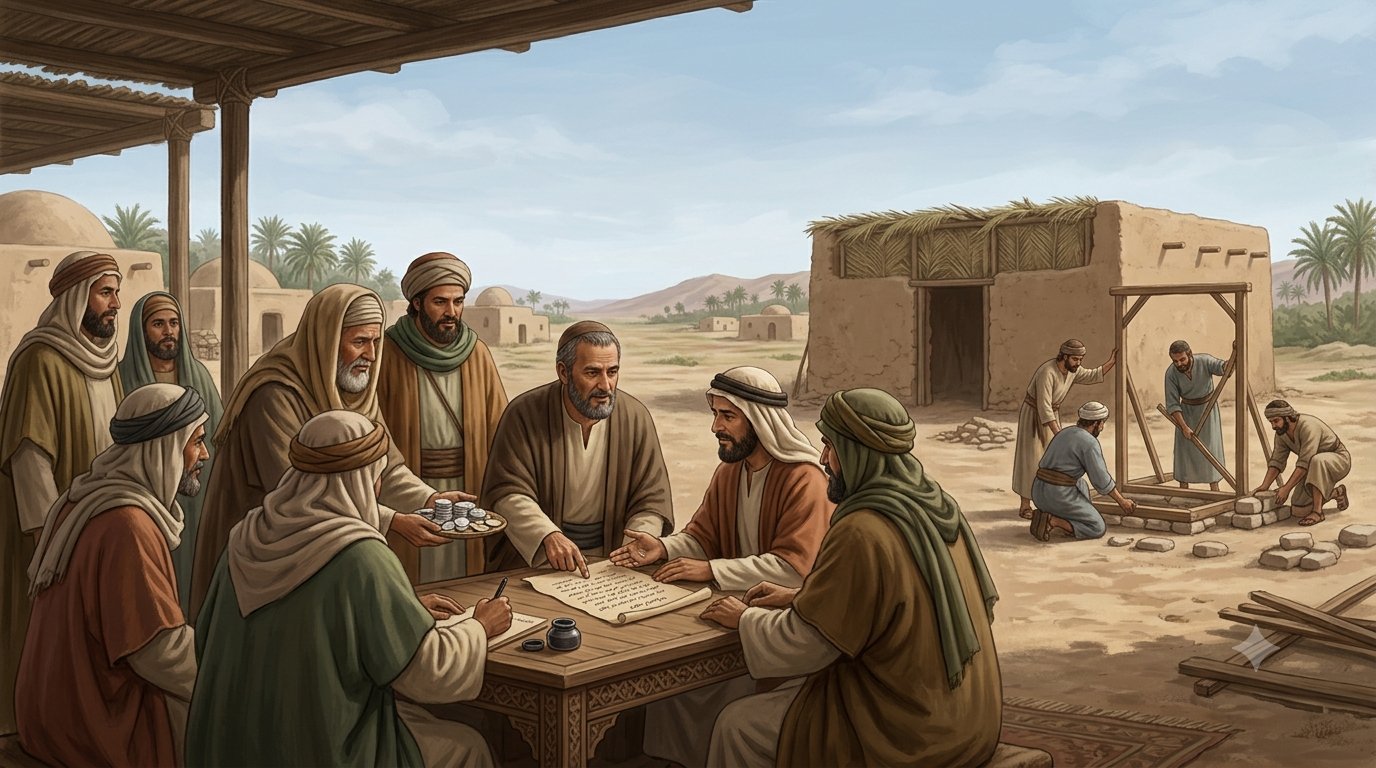
This was far more than a legal transaction. It was an enduring moral framework, ensuring that the resting place of the martyrs stood on land that had been lawfully and legitimately acquired.
Narrations preserved in Al-Mustadrak and other historical traditions affirm this ethical example. This principle also echoes the foundational act of Prophet Muhammad (peace and blessings be upon him) in Madinah.
When seeking land for worship and community life, he identified a plot used for drying dates that belonged to two orphan brothers, Sahl and Suhayl. Although they offered the land as a gift, the Prophet insisted on paying a fair price, ensuring complete transparency and justice.
He personally laboured alongside companions such as Ammar ibn Yasir in building Masjid al-Nabawi on land free from dispute. There was no coercion, no seizure, and no ambiguity—only goodwill and lawful acquisition.
This became an enduring Islamic template: sacred spaces should embody divine guidance (deeni hidayat) without the stain of injustice or unresolved claims.
Waqf endowments are intended to be permanent covenants. Classical scholars have consistently warned that blessings cannot flourish upon tainted foundations. The land itself becomes a witness to prayers at dawn, Quranic learning, charity, and generations seeking spiritual refuge.
In contemporary India, the search for land for mosques and madrasas presents both opportunity and challenge.
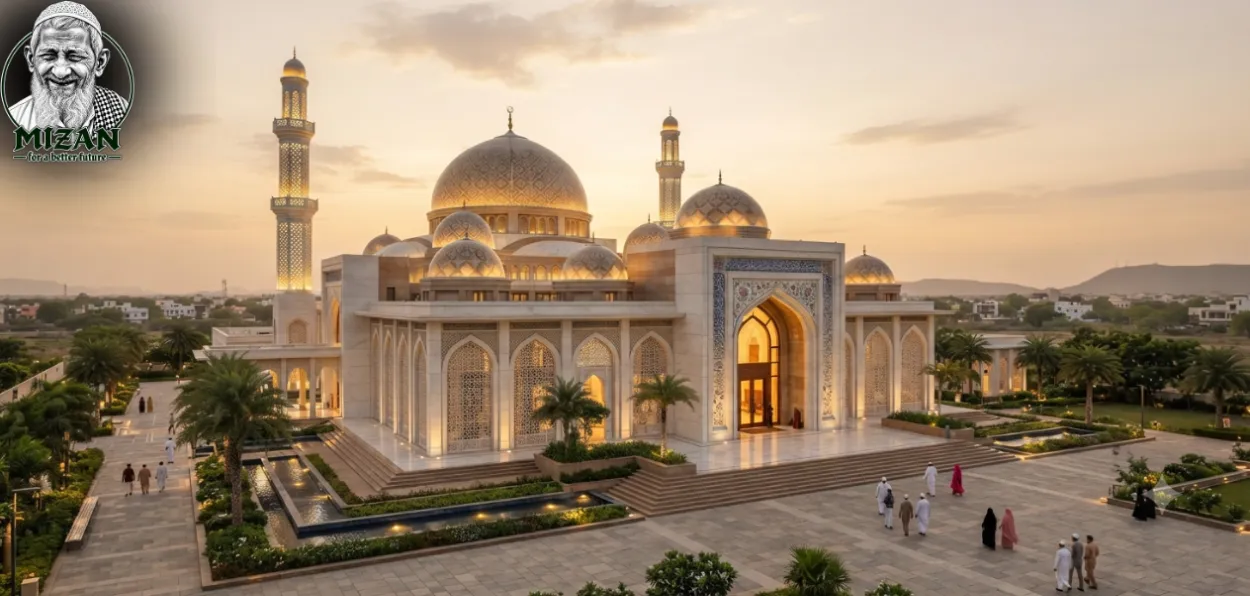
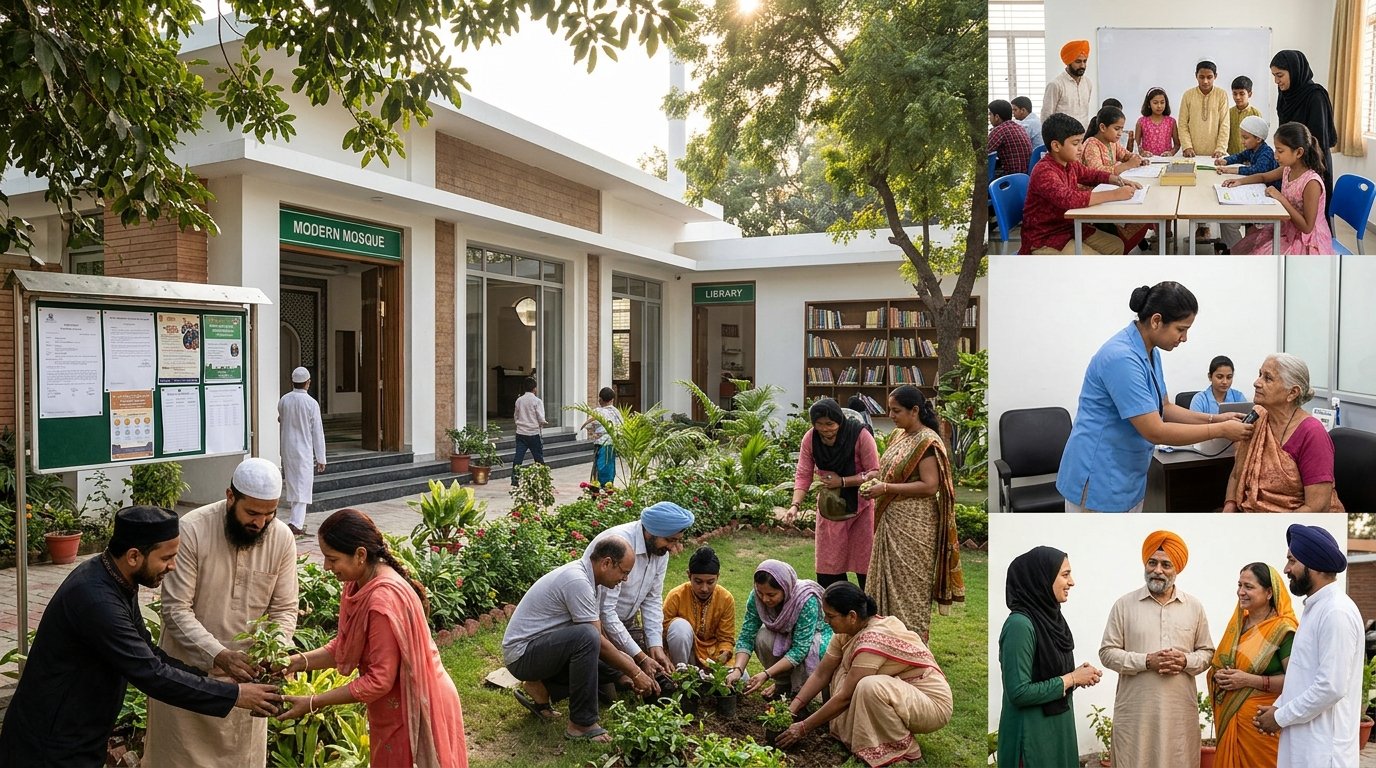
Ideal institutions emerge where ownership is undisputed, waqf documentation is complete, community consent is secured, and planning serves not only worshippers but also the wider neighbourhood.
Prayer halls, classrooms, health facilities, and community spaces can together become centres of harmony and public service. Many newly built mosques in expanding Indian cities exemplify this approach, having been funded transparently through voluntary community contributions.
Yet many historic sites continue to be under the shadow of ownership disputes, encroachments, prolonged litigation, and development pressures. For millions of believers, threats to these places are experienced not merely as property disputes but as challenges to their religious identity and collective memory.
These are places where the azaan gathers the faithful, madrasas nurture young minds, and elders pass on religious traditions from one generation to the next. When disputes arise, they consume communal energy, deepen social polarisation, and create opportunities for political exploitation.
Islamic wisdom instead counsels sabr (patience), lawful resolution through courts or mediation, and the avoidance of fitna (discord). The true strength of a mosque lies not in its walls but in its unquestionable moral and legal legitimacy.
India's history offers important lessons.
Claims involving earlier sacred sites, including ancient Hindu temples and other places of worship, have fuelled decades of legal and political contestation.
The Babri Masjid in Ayodhya, constructed during the 16th century, became the most prominent example. Claims that it stood at the birthplace of Lord Ram led to decades of litigation, communal violence, and ultimately the demolition of the mosque in 1992.
The Supreme Court's 2019 judgment allocated the disputed site for the construction of a Ram Temple while directing that alternative land be provided for a mosque, representing a judicial effort to resolve a deeply contested dispute through legal process and evaluation of evidence.
Similar questions continue to arise regarding the Gyanvapi complex in Varanasi. Claims relating to the existence of an earlier Shiva temple have resulted in surveys, judicial proceedings, and ongoing litigation under the Places of Worship Act, 1991.
Comparable disputes have surfaced elsewhere, demonstrating how unresolved historical claims can keep sacred spaces entangled in prolonged conflict. Encroachments have further increased the vulnerability of many religious institutions.
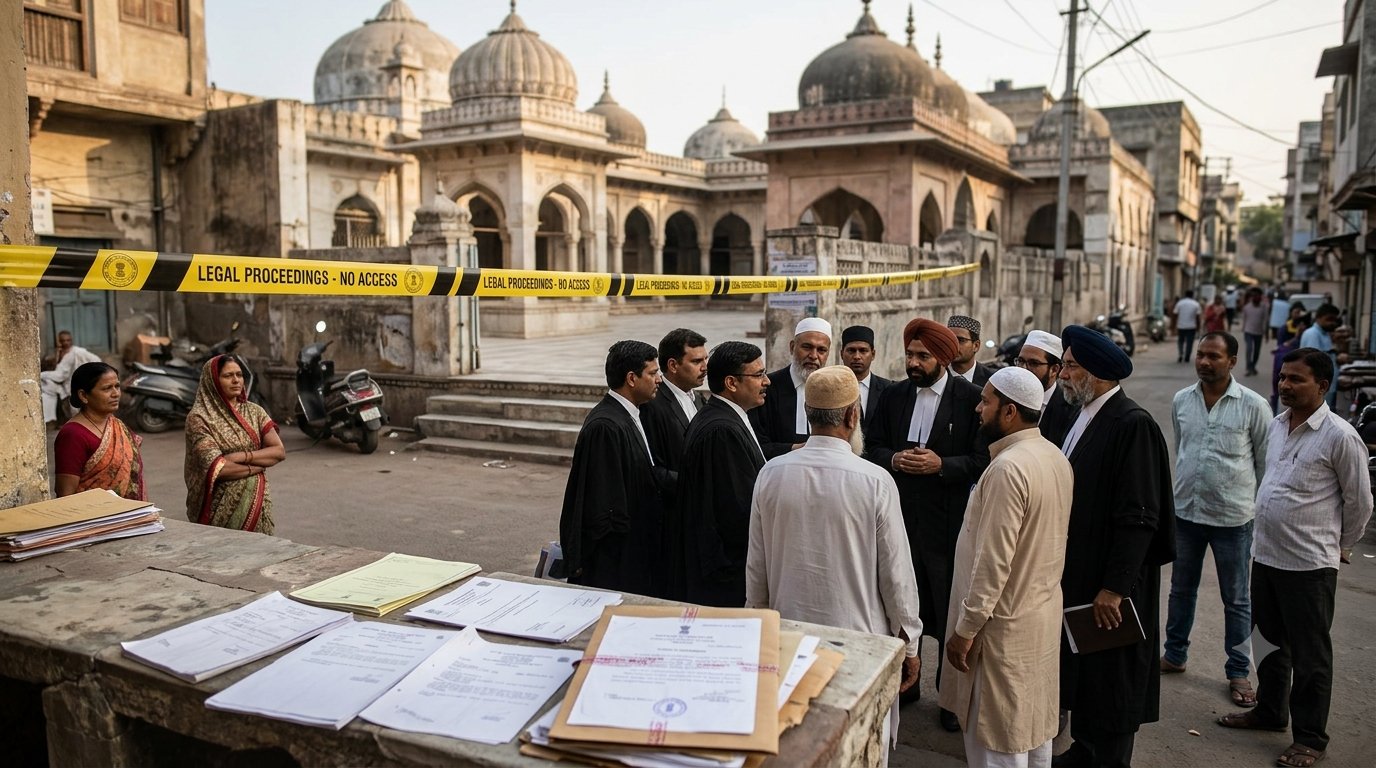
Across India, numerous waqf properties, including mosques and madrasas, face illegal occupation, unclear ownership records, or internal administrative weaknesses, leading to prolonged litigation and the loss of valuable community assets.
At the same time, anti-encroachment drives—popularly described as "bulldozer culture"—have resulted in the demolition of structures alleged to violate building regulations or occupy public land.
Reports have documented demolitions affecting mosques, madrasas, and related institutions in several states. While authorities have generally described these actions as enforcement of the law, critics have questioned whether due process, adequate notice, and equal standards have always been observed, particularly during periods of communal tension.
Whether arising from historical claims, disputed ownership, unauthorised construction, or state action, the underlying lesson remains the same. Land whose legal status is uncertain inevitably becomes a source of conflict, drains community resources, and widens social divisions.
Yet even in moments of tension, there are inspiring examples of hope.
In villages across Kerala, Tamil Nadu, Uttar Pradesh, and Rajasthan, non-Muslims have voluntarily donated land for mosques and madrasas as gestures of goodwill and shared humanity.
Farmers have offered portions of their fields so that "your children can pray in peace." Landowners have regarded madrasas as institutions that strengthen the moral fabric of the entire community.
Friendships across religious boundaries, acts of mutual assistance, and interfaith solidarity have created remarkable stories of trust. Converts and members of blended families have also dedicated ancestral land out of personal conviction.
These quiet acts remind us that land has the power to unite when it is offered freely and accepted honourably. The examples of Madinah and Karbala are not merely historical memories. They remain enduring blueprints for ethical conduct.
Communities must exercise rigorous due diligence regarding ownership, land titles, and waqf documentation. Neighbouring communities should be engaged with openness and sincerity from the very beginning. Funding should remain transparent and fully halal.
Religious institutions should be designed to serve society through education, charity, healthcare, and community harmony alongside worship.
Where disputes arise, justice must be pursued through mediation and the courts, always within the framework of fairness and full legal compliance.
Imam Hussain secured the land of Karbala knowing that his blood would sanctify it. The Prophet Muhammad established that sacred objectives must always be pursued through sacred means.
In India's diverse democracy, adherence to these principles protects Muslim institutions while strengthening the country's pluralistic character.
Sacred ground is never merely soil. It becomes holy through the sincerity invested in it, the justice that protects it, and the service that flows from it.
ALSO READ: Muslims must remember that cleanliness is half faith
When every mosque, madrasa, and waqf institution stands upon land that is legally secure, ethically acquired, and free from dispute, even the most contested earth can one day become a garden of peace and remembrance.
Protect the spirit first, and the land will follow.