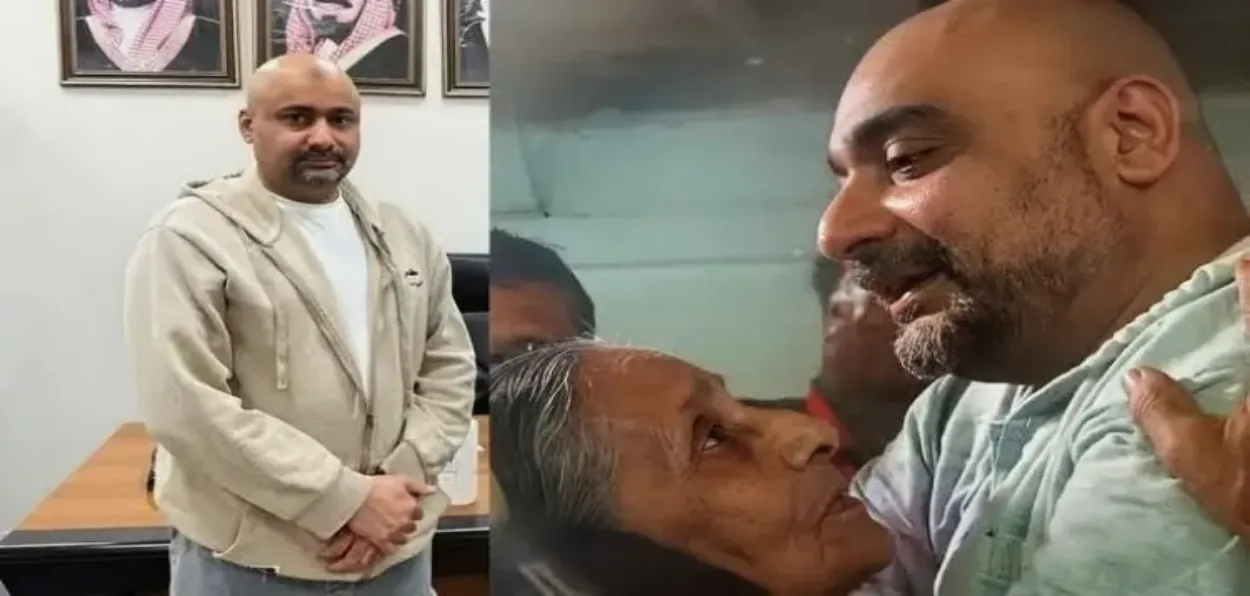
.webp "Humayun Kabir, founder of the Aam Janata Unnayan Party (AJUP)")
Beldanga (West Bengal)
Three adjoining assembly seats in West Bengal's Murshidabad district have turned into the most volatile theatre of the 2026 poll battle, with the proposed Babri Masjid-style mosque at Rejinagar reshaping loyalties, hardening religious identities and threatening to fracture the minority vote, the TMC's bedrock.
Bharatpur, Rejinagar and Beldanga form a contiguous arc around the site where suspended TMC MLA Humayun Kabir, now the founder of the Aam Janata Unnayan Party (AJUP), laid the foundation stone on December 6 last year for a mosque modelled on the demolished structure in Ayodhya.
What began as a local act of defiance after Kabir's expulsion from the TMC has, within months, turned into the emotional pivot of the election in this part of Murshidabad.
Every campaign, conversation and political calculation here circles back to one question: Can the "Babri" appeal consolidate Muslim voters behind Kabir, or will it trigger a counter-consolidation among the Hindus?
The first Eid prayers there in March drew crowds from Murshidabad, Nadia and North 24 Parganas.
Trucks carrying bricks and cement arrive almost daily. Donation boxes overflow. Videos of supporters carrying bricks on their heads have spread across social media, transforming the under-construction mosque into a political symbol larger than the constituency itself.
For the BJP, the imagery is politically invaluable. "Every brick being carried in the name of Babri is helping consolidate Hindu votes in this belt. People see it as another example of appeasement politics," a senior BJP leader from Murshidabad said.
Party leaders cite the project as proof of "appeasement politics" and argue that it is fuelling anger among Hindus in nearby pockets, where a considerable number of voters are from the majority community.
The TMC, however, fears that Kabir, especially after joining hands with AIMIM chief Asaduddin Owaisi, could prise away a section of Muslim voters in the very belt where the ruling party has built its dominance.
"Humayun is trying to create an emotional issue before the polls, but people know who stood by them in difficult times. Development and welfare, not provocation, will decide the election," said a senior district TMC leader.
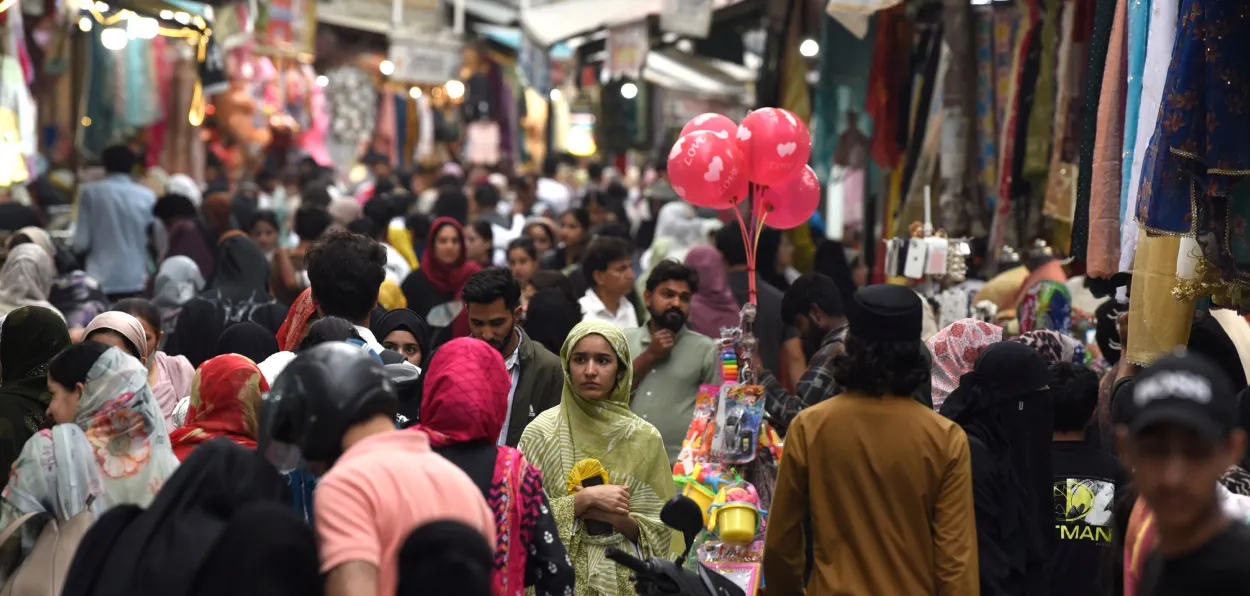
Murshidabad, where nearly seven in every 10 residents are Muslims, has been one of the strongest pillars of the TMC's minority support base.
Of the state's 85 Muslim-dominated seats, the party won 75 in 2021. But the AJUP-AIMIM combine is now seeking to convert the Babri Masjid issue into a rallying point for political assertion among Muslims, particularly younger voters disillusioned with both the TMC and the Congress.
Rejinagar is at the centre of that experiment. The constituency, entirely rural with around 65 per cent Muslim, is where Kabir is contesting this time. He first won the seat in 2011 as a Congress candidate, lost the 2013 bypoll after defecting to the TMC, and watched another defector, Rabiul Alam Chowdhury, carry the seat for the TMC in 2021 by over 68,000 votes.
Now Kabir is trying to turn Rejinagar into the launchpad of his new party by making the Babri mosque the centrepiece of his campaign.
"This is not just about a mosque. It is about self-respect and political dignity. Muslims in Bengal now want their own voice, not tokenism," Kabir, who shifted to this seat from Bharatpur, told PTI.
If even a fraction of Muslim voters shift from the TMC to AJUP, the electoral arithmetic across adjoining constituencies could change dramatically.
That is especially true in Bharatpur, where Kabir had won as a TMC candidate in 2021 by more than 43,000 votes. Bharatpur has nearly 58 per cent Muslim voters, though local estimates place the minority population much higher.
The constituency lies close to the Bangladesh border and has long been shaped by migration, identity and allegations of infiltration.
The TMC's problem is that Kabir still retains influence in Bharatpur despite no longer being its candidate. Local leaders privately admit that sections of Muslim voters continue to see him as their most assertive voice.
If those votes move with him towards AJUP in neighbouring Rejinagar, the TMC could face a split in its traditional support base, opening space for the Congress in Muslim pockets and the BJP in Hindu-dominated clusters.
Beldanga, located between Bharatpur and Rejinagar and closest to the proposed mosque site, will decide whether the Babri issue remains symbolic or becomes electorally decisive.
A Muslim-majority constituency with a history of communal flare-ups, Beldanga has witnessed tense protests, heavy police deployment and increasingly sharp rhetoric after the mosque project was announced.
The Congress once dominated here, winning in 2011 and 2016, before the TMC captured the seat in 2021. Yet the margins in recent Lok Sabha polls have narrowed dramatically, with the TMC leading the Congress by barely 4,455 votes in the segment in 2024.
A three-cornered contest is now taking shape -- the TMC trying to hold its minority base, the Congress hoping to regain lost ground, and the BJP banking on Hindu consolidation if communal temperatures continue to rise.
The BJP's calculation is blunt: the more the Babri mosque dominates the campaign, the greater the possibility of religious polarisation helping it in adjoining Hindu pockets, even if it remains structurally weak in the three seats.
Political analyst Biswanath Chakraborty said the three-seat belt had become "a laboratory of competitive communalism".
"Kabir is trying to turn Muslim identity into political capital, while the BJP is converting that assertion into a Hindu consolidation narrative. The TMC is trapped between the two," he said.
In Bharatpur, Rejinagar and Beldanga, roads and jobs have faded into the background; it is the shadow of Babri Masjid that now looms over the ballot box.
READ MORE: Two-time World Champ Nikhat Zareen's story begins with smashing stereotypes









.webp "Senior Congress leader D. K. Shivakumar")

_(2).webp)