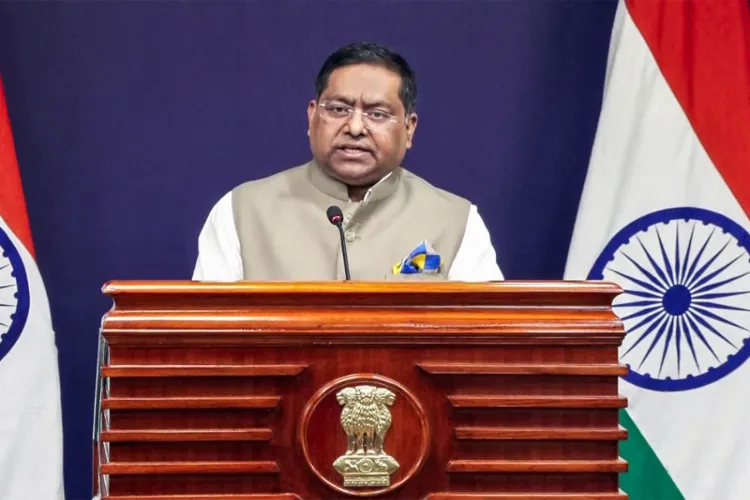
.webp "Harish Beeran of the Indian Union Muslim League")
New Delhi
A member of the Rajya Sabha on Monday urged the government to introduce legislation on end-of-life care for terminally ill patients, noting that Parliament has yet to act despite multiple recommendations by the Law Commission of India and directives from the Supreme Court of India over the past two decades.
Raising the issue during Zero Hour, Harish Beeran of the Indian Union Muslim League called on the government to introduce the proposed Medical Treatment of Terminally Ill Patients (End-of-Life Care) Act, as recommended by the Law Commission.
He also urged the government to mandate palliative care infrastructure in every district hospital and primary health centre.
Beeran referred to a recent Supreme Court order permitting withdrawal of life support for Harish Rana, who had been in a permanent vegetative state for 13 years following an accidental fall in 2013.
The judgment was delivered by a bench of Justices Jamshed Pardiwala and K. V. Viswanathan.
Beeran said the Law Commission’s 196th report in 2006 had examined passive euthanasia and even included a draft law, but Parliament did not act on it.
Later, the Supreme Court framed guidelines in the 2011 Aruna Shanbaug case.
The Law Commission of India again proposed draft legislation in its 241st report in 2012. In 2018, a Constitution bench issued guidelines in the Common Cause case, clarifying that they would remain in force only until Parliament enacted a law. These guidelines were later modified in 2023.
Beeran said the latest judgment in 2026 once again expressed hope that Parliament would enact legislation.
“How much more can the Supreme Court stretch Article 21?” he asked, referring to the constitutional right to life with dignity, which courts have interpreted to include the right to die with dignity.
He also highlighted the financial burden on families, noting that more than 65 per cent of healthcare expenditure in India is paid out of pocket.
READ MORE: An officer can't afford to go wrong, says top cop Ajeetha Begum
Citing Kerala as an example, he pointed to its community-based palliative care programme launched in 2008, which covers every gram panchayat in the state and works in partnership with over 500 NGOs.













.webp)