




 Aditi Bhaduri
Prime Minister Narendra Modi’s visit to Uzbekistan has once again put the spotlight on India’s longstanding ties with the Central Asian country. The Prime Minister visited Tashkent, the capital, which some believe has an Indian connection—the name, according to one theory, is derived from the Sanskrit Tasherkhand. Whatever the veracity of that claim, there is no doubt that India’s links with the region go back millennia.
Tashkent is better known in India as the place where the second India-Pakistan peace treaty was signed and where India’s second Prime Minister, Lal Bahadur Shastri, died. Buddhist excavations at Termez and historical evidence of colonies of Hindu merchants in Bukhara, another important medieval city, testify to an interface between the two regions that stretches far back into history.
Yet it is perhaps the southern city of Andijan—Andijon in Uzbek—that best exemplifies the changing yet enduring ties between India and Uzbekistan.
Most Indians may never have heard of Andijan, located in the heart of the Ferghana Valley, at the foothills of the Tien Shan and Pamir mountains, in the country’s fareast. But an event that took place here in 1483 continues to influence India, directly and indirectly, even today.
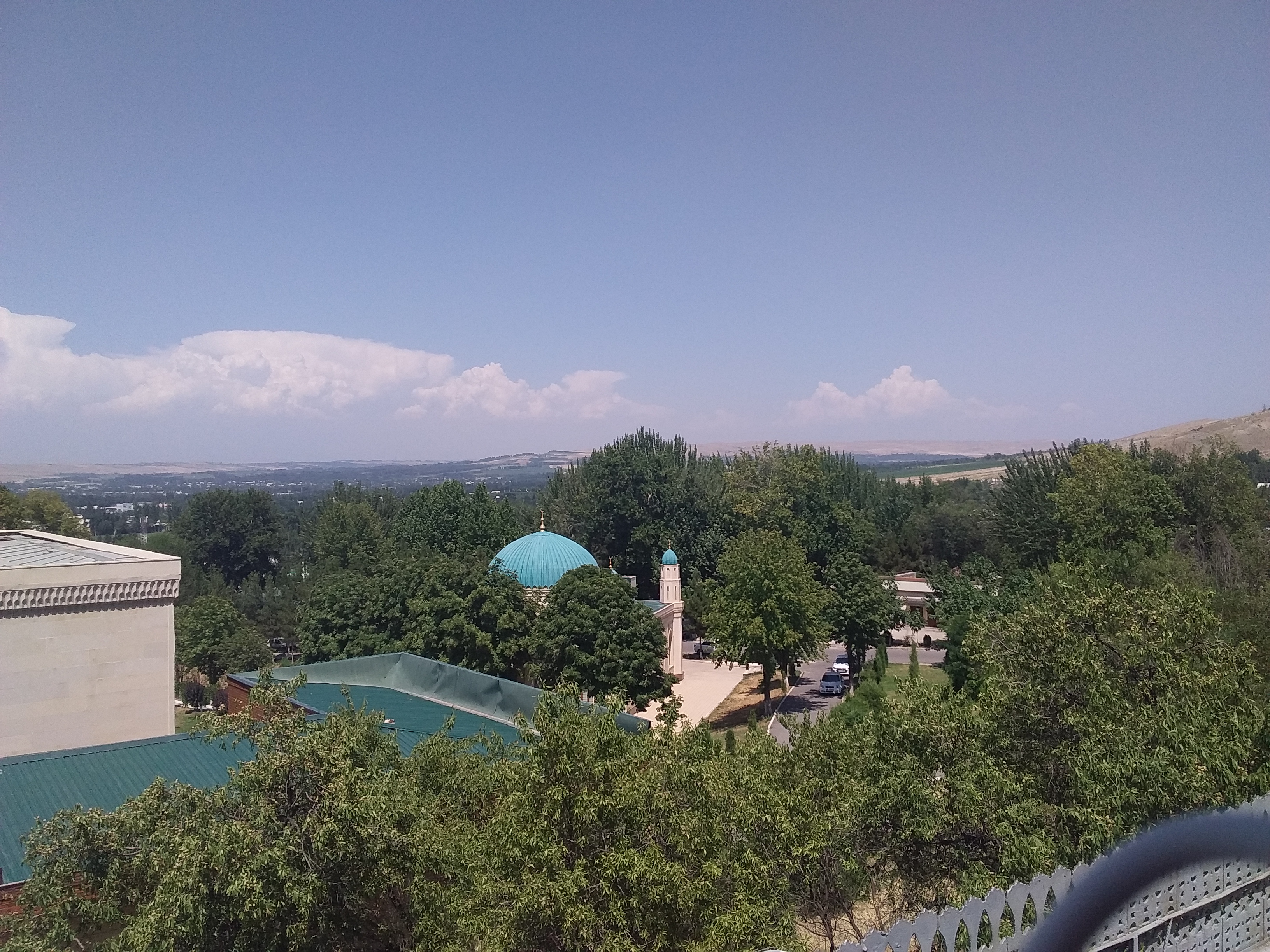 A view of the city of Andijan, Uzbekistan
On February 14 that year, Zahiruddin Muhammad Babur was born into the family of Umar Sheikh Mirzo, the ruler of Ferghana. The region was then embroiled in internecine warfare, and when Mirzo was killed in 1494, Babur was only 12. Though he succeeded his father as ruler of Ferghana, a power struggle soon forced him from the throne. He made several attempts to capture Samarkand but failed and eventually established himself in Kabul.
After further unsuccessful attempts to reclaim his Central Asian territories, Babur turned his attention to fabled Hindustan, whose tales of wealth, prosperity and exotic riches had travelled across Central Asia.
In 1526, after defeating Ibrahim Lodi at the First Battle of Panipat, Babur laid the foundation of the Mughal Empire, which would rule large parts of India for the next three centuries. He lived for only four years after his victory, but his arrival in India set in motion a chain of events whose consequences continue to reverberate today.
In Uzbekistan, Babur is revered as a national hero, remembered particularly as a military genius and poet. His Baburnama occupies an important place in the country’s literary and historical consciousness, with competitions and seminars devoted to the work. His birthday, February 14, is commemorated across the country.
.jpg) Babur's bust at Andijan museum
Babur's bust at Andijan museum
But, as I discovered during my visit, it is in Andijan that Babur has become part of everyday life. His childhood home and garden have effectively become a place of pilgrimage.
When I visited Andijan a couple of years ago, I was agog with excitement. What would this modern city, once home to a 15th-century prince who would leave such an indelible mark on my country, be like?
The train pulled into the city late at night. Instead of the medieval town I had imagined, I found a modern railway station, clean and broad roads, and kebab kiosks doing brisk business.
The following day was a Sunday, a lazy, sunny summer day. Presidential elections were being held, and I was there as an election observer. Duty occupied the first half of the day as I moved from one polling booth to another. I found the people warm, gentle and optimistic, deeply invested in their country’s progress. The moment anyone learned that I was from India, I seemed to acquire a new friend.
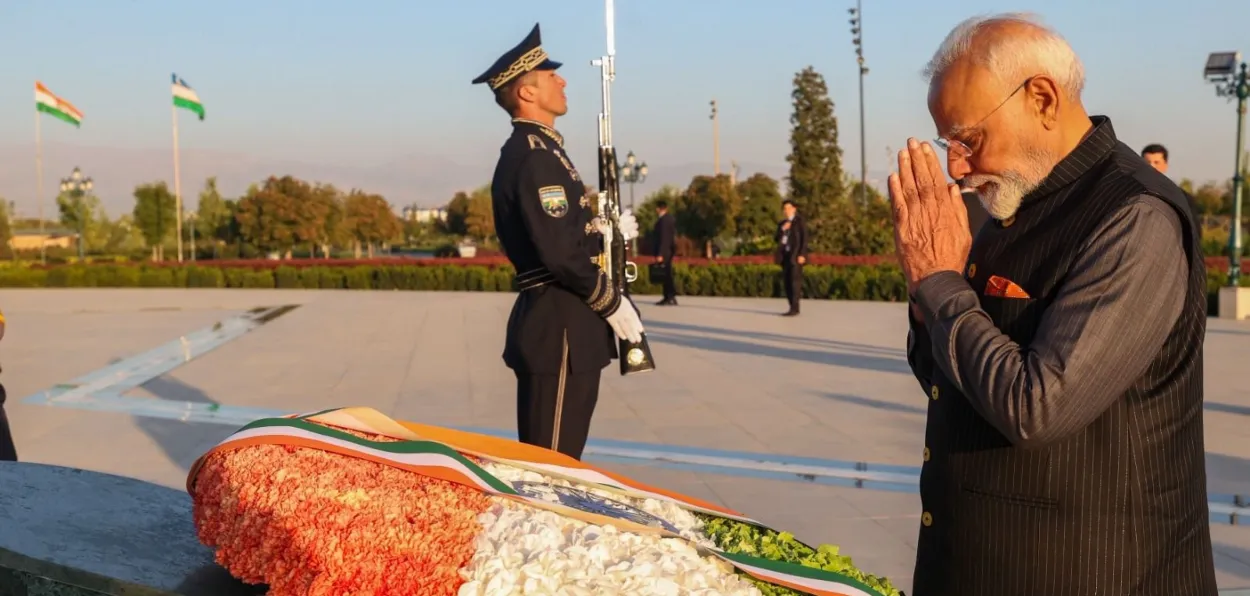
Prime Minister Narendra Modi being conferred the highest award of Uzbekistan in Tashkent:
Proud moment for 140 crore Indians!
— Anurag Thakur (@ianuragthakur) August 30, 2026
Hon'ble Prime Minister Shri @narendramodi ji conferred the Order of “Oliy Darajali Dustlik”, Uzbekistan’s supreme state award, by President Shavkat Mirziyoyev in Tashkent.
This 35th global honor is a testament to India's ever growing bond… pic.twitter.com/JsYIQeFqG0
Babur’s hometown is no longer a medieval settlement but a bustling provincial city of around 650,000 people and the capital of Andijan Province. Though relatively conservative, it is modern, with high literacy levels and a growing industrial and manufacturing base. Men and women seemed equally comfortable in Western clothes and traditional Uzbek attire. Coffee shops and restaurants stood alongside traditional chaikhanas, while traffic moved in an orderly fashion.
In the city’s Central Square stands a towering statue of Babur on horseback, gazing over the city. Shops and markets bear variations of his name—“Babor” in Uzbek.
About seven kilometres from the city, on the hill of Bogishamol, lies the Babur House Museum and Park. This was where Babur grew up, and he is said to have loved walking through its gardens, enjoying solitude in the shadow of the mountains while writing and reciting poetry. According to the Baburnama, before leaving his homeland for good, Babur returned here one final time to bid farewell.
Today, the site is a hallowed place for millions of Uzbeks and a popular attraction for visitors. A black-marble statue of Babur greets visitors at the entrance. The museum houses a bust of the ruler, along with objects associated with his life and times. Rare exhibits relating to Babur’s life and works, including coins, weapons, clothing, utensils and copies of the Baburnama, are displayed alongside literary works by his descendants.
The museum’s curator, Ms Mekhrunissa, gave me a detailed tour, speaking with palpable pride and affection about Babur and his legacy.
In 1993, a symbolic tomb was installed in the complex on the hilltop. It stands inside a marble vault containing soil collected from three places associated with Babur’s life: Andijan, his birthplace and homeland; Agra, where he died and was initially buried; and Kabul, where his remains were later moved and reburied.
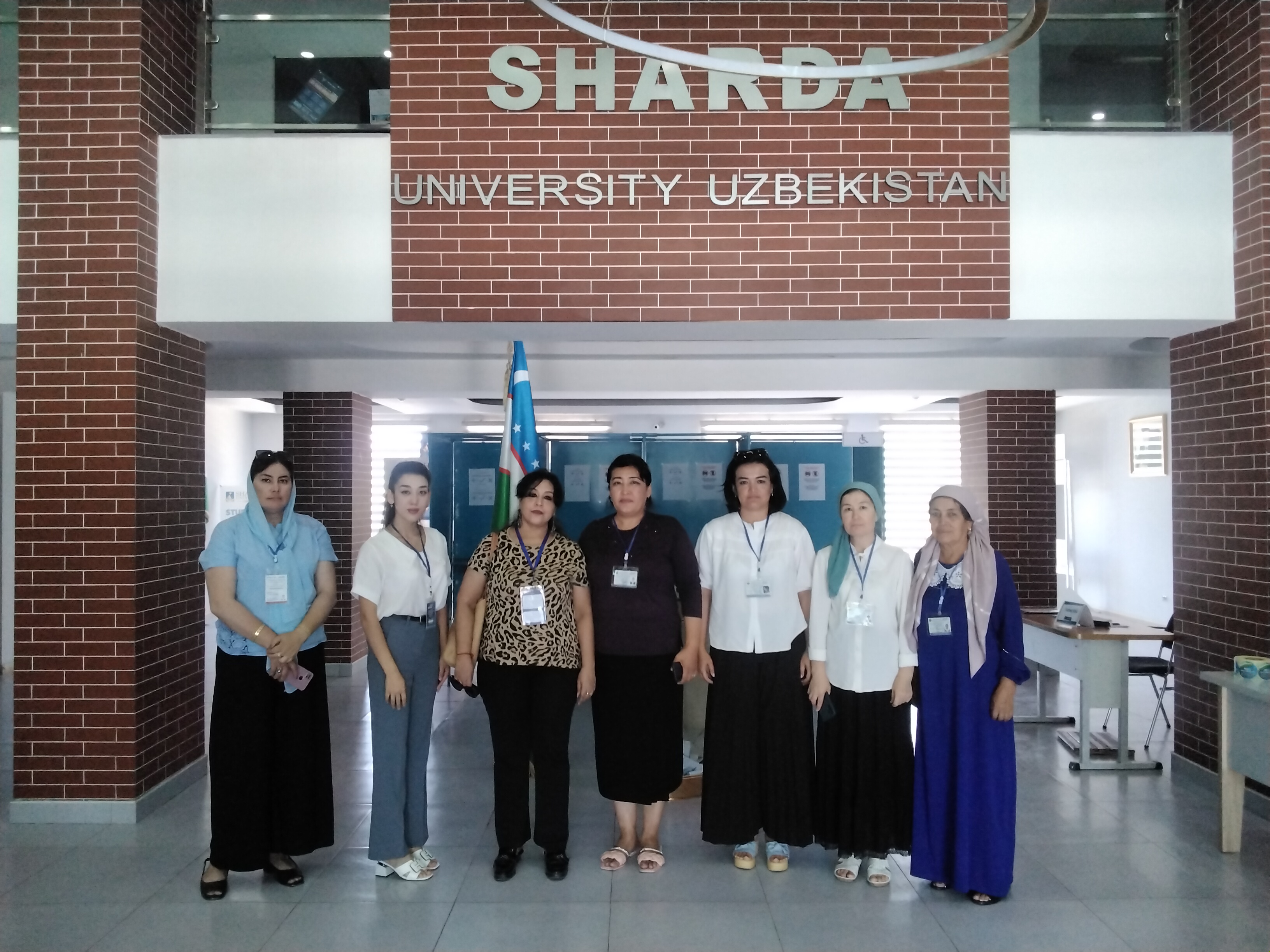 The author (third from left) at the campus of Sharda University in Andijan
Ms Mekhrunissa insisted that we climb the hill to the symbolic mausoleum. I was glad I did. The site offered not only an atmosphere of extraordinary tranquillity but also a remarkable display of reverence. My Uzbek companions began reciting prayers beside the mausoleum, and from the hilltop we could see the sprawling city of Andijan below.
If Babur set the wheels of Andijan’s historical dialogue with India in motion, India is helping to keep them turning in the modern era.
Sharda University established its Uzbekistan campus in Andijan, its first offshore campus. With a young population and a strong emphasis on education, the city has welcomed the university, which offers courses in areas such as computer science, business management, finance and English. I heard considerable praise for the institution from residents.
Walking through Andijan, I also came across a monument to Sardar Vallabhbhai Patel and a street named after him. My Uzbek colleagues pointed out the site where Cadila Pharmaceuticals had laid the foundation stone for a manufacturing plant, expected to create around 400 local jobs.
The relationship is not confined to individual projects. Andijan Province has been twinned with Gujarat, opening up prospects for greater economic, educational and cultural engagement between the two regions. It warmed my heart to see how Indian institutions and businesses were contributing to Andijan’s development while strengthening the bonds between the two countries.
As my trip drew to an end and the train gently pulled out of Andijan, the setting sun casting long shadows across the landscape, I found myself reflecting on the wheels of time and the rise and fall of empires and fortunes.
Much changes with the passage of centuries. Empires disappear, borders shift, and cities transform. What endures, however, is the friendship, affection and mutually beneficial partnership that can grow between peoples.
ALSO READ: How Uzbekistan is evolving as a model Muslim country
Andijan, where history brought me closer to a country I had known largely through books—and where I found new friends—proved that to me. (
Aditi Bhaduri took all the pictures except the top one)

.jpg "Gujarat’s women entrepreneurs bring their craftsmanship to life during Navratri")






_(2).webp)
.webp)
