New Delhi
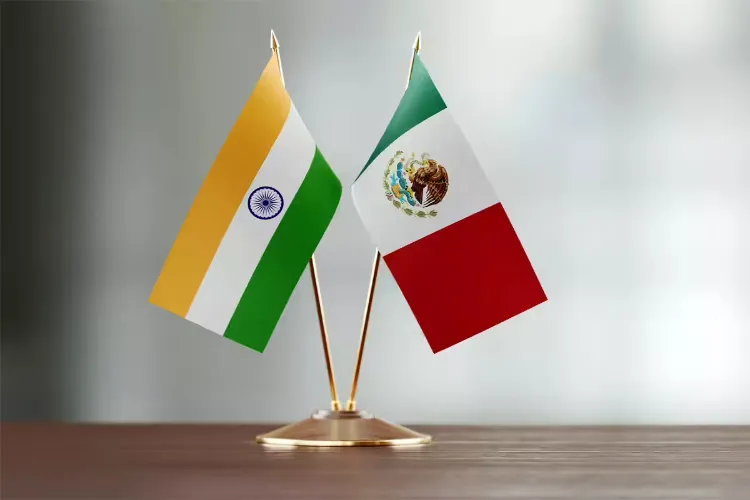
India has proposed a preferential trade agreement (PTA) with Mexico to help domestic exporters counter the steep import tariffs announced by the Latin American nation, a senior government official said on Monday.
Mexico has decided to impose import duties ranging from 5 per cent to 50 per cent on nearly 1,463 tariff lines covering goods imported from countries that do not have free trade agreements with it, including India, China, South Korea, Thailand and Indonesia. The revised tariffs will come into effect from January 1, 2026.
Commerce Secretary Rajesh Agrawal said India is actively engaging with Mexico to find a WTO-compliant solution.
“Technical-level talks are on. The fastest way forward is a preferential trade agreement because a free trade agreement (FTA) will take much longer. We are exploring what could be a viable path ahead,” Agrawal told reporters.
He explained that while an FTA involves significant duty elimination across most traded goods, a PTA allows tariff concessions on a limited set of products, making it a quicker alternative.
Agrawal said the tariff hike is WTO-compatible, as the duties fall within Mexico’s bound rates, and therefore cannot be legally challenged at the World Trade Organisation.
“We have proposed a PTA as a WTO-compatible way forward. Through this, we can seek concessions necessary for Indian supply chains and, in return, offer Mexico concessions where it has export interests in India,” he added.
Mexico has cited the need to support local production and correct trade imbalances as reasons for raising its Most Favoured Nation (MFN) tariffs. The measure is also seen as targeting rising imports from China, officials said.
Preliminary estimates suggest the decision could impact nearly USD 2 billion worth of Indian exports to Mexico, particularly in sectors such as automobiles, two-wheelers, auto components, textiles, iron and steel, plastics, leather and footwear.
India-Mexico bilateral merchandise trade stood at USD 8.74 billion in 2024, with Indian exports at USD 5.73 billion, imports at USD 3.01 billion, resulting in a trade surplus of USD 2.72 billion in India’s favour.
The government said it has been continuously assessing Mexico’s tariff revisions, engaging with stakeholders and pursuing constructive dialogue to protect Indian exporters and ensure trade stability.
Federation of Indian Export Organisations (FIEO) Director General Ajay Sahai said the decision was a matter of concern for key sectors including automobiles, machinery, electricals, pharmaceuticals, textiles and plastics.
“Such steep duties will erode competitiveness and disrupt supply chains that have taken years to develop,” Sahai said, adding that the move highlights the urgency of accelerating trade negotiations between India and Mexico.
READ MORE: Rajesh Khan Machchari's dedication has changed conditions for his backward community
Industry body ACMA also warned that domestic auto component manufacturers would face increased cost pressures following Mexico’s tariff hike.

.webp "Representational Image")








.webp "Representational Image")

.webp "Prime Minister Balendra Shah")


.webp)