

Male
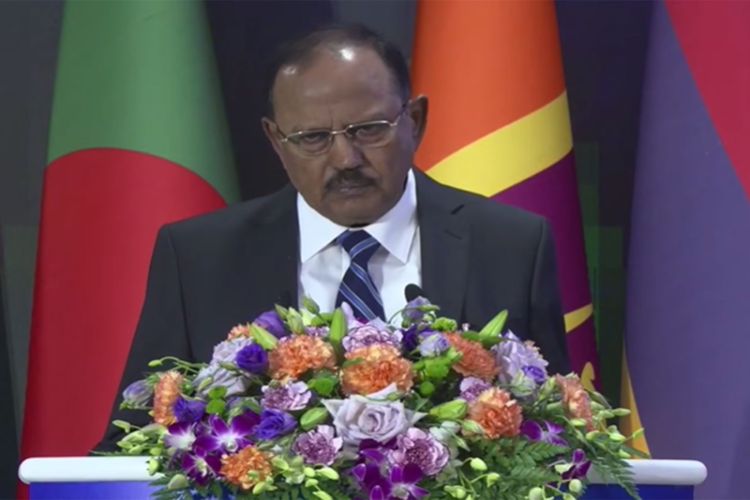
National Security Advisor Ajit Doval on Wednesday emphasised the shared maritime and civilisational ties among Indian Ocean littoral states, saying the seas must remain a space that connects nations rather than divides them.
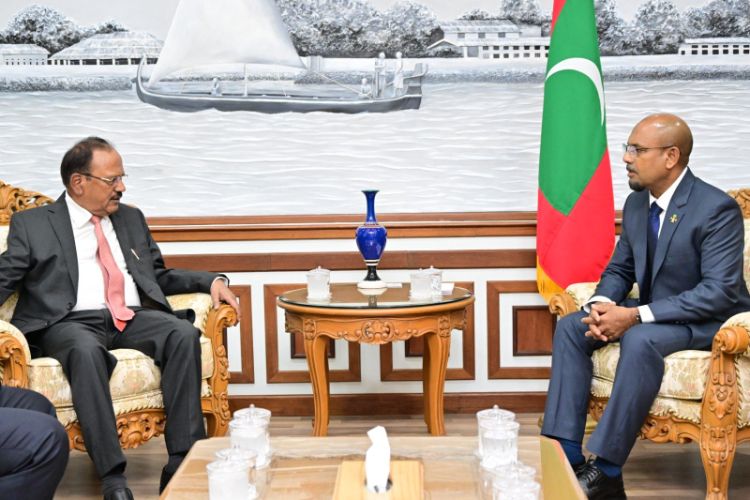
Addressing the 8th National Security Advisors' Meeting of the Colombo Security Conclave (CSC) in Male, Doval called for sustained cooperation among countries in the region to ensure maritime security, regional stability and economic prosperity.
“We the littoral states of the Indian Ocean region share a common maritime space and are connected by civilisational heritage shaped over a long period of history,” Doval said.
Recalling the legacy left by previous generations, he said the seas had historically connected communities and countries, and urged participating nations to preserve this tradition for future generations.
“As was mentioned by the National Security Advisor of Maldives that the generations before us left the legacy for us that the seas connected us. Let us leave for our progeny also a heritage, a tradition that will bind them together and not divide them through these seas,” he said.
Doval said the formation of the Colombo Security Conclave in November 2020 was guided by a collective vision to ensure the safety, security and stability of the Indian Ocean Region.
“The formation of the Colombo Security Conclave in November 2020 was anchored by our collective vision for a safety, security, and stability of the Indian Ocean region,” he said, adding that the grouping had made considerable progress but still had a long journey ahead.
He also underlined India's commitment to strengthening the regional grouping, linking the CSC to New Delhi's neighbourhood-first policy and its broader MAHASAGAR vision.
“For India, the Colombo Security Conclave represents the intersection of our neighbourhood-first outlook and the Mahasagar vision, which stands for mutual and holistic advancement in security and growth areas. We are committed to continue working closely with the CSC countries to enhance our collective capacities in dealing with the evolving serious security challenges,” Doval said.
Assuring participating countries of India's continued support, he said New Delhi would extend necessary assistance to achieve the common objectives of the conclave.
“I assure all of you here that India, as one of the partner countries here, as one of the Speaker countries that initiated the idea of the Colombo Security Conclave, will give its best and will try to give all necessary help and assistance, and we assure you of our fullest commitment to achieve our common objectives,” he added.
Expressing appreciation to the Maldives for hosting the meeting, Doval said the CSC had evolved from an initial idea about the strategic importance of the Indian Ocean into a structured regional platform.
“It is indeed a very proud moment for me to be here and enjoy the great hospitality of the Government of Maldives. I am particularly grateful to the NSA of Maldives for the excellent arrangements that he has made for this conference and for giving us an opportunity to share our thoughts and opinions,” he said.
He noted that the Indian Ocean was important not only for the national security and economic prosperity of countries in the region but also for safeguarding the interests and welfare of their people.
“We started as a very rudimentary idea that the Indian Ocean is important for our national security; it is important for our economic prosperity; it's also important for the human dimension, looking after the interests of the people who are in this region,” Doval said.
He credited the participating countries for the development of the conclave, pointing out that it now had a secretariat and a Secretary General to strengthen its institutional framework.
“And the idea subsequently developed; it was with the cooperation of all of you that today now we have got a secretariat, we have got a proper Secretary General, and we do hope that in the coming months, we will be able to carry it forward,” he added.
Doval also highlighted the adoption of the CSC Charter and the Memorandum of Understanding on the establishment of its secretariat in August 2024, welcoming the progress made in institutionalising the grouping.
He praised Admiral Ghormade, who is associated with the leadership of the CSC Secretariat, describing him as one of the most outstanding professionals he had known during his career.
The CSC Member States signed the Charter and the Memorandum of Understanding for the establishment of the Secretariat on August 30, 2024. The signing ceremony was hosted by the Government of Sri Lanka in Colombo. Doval, Maldives National Security Advisor Ibrahim Latheef, Mauritius High Commissioner to Sri Lanka Haymandoyal Dillum and Sri Lanka's National Security Advisor Sagala Ratnayake signed the documents on behalf of their respective countries.
The CSC aims to promote regional security by addressing transnational threats and challenges of common concern to its Member States. Its five pillars of cooperation include maritime safety and security; countering terrorism and radicalisation; combating trafficking and transnational organised crime; cybersecurity and protection of critical infrastructure and technology; and humanitarian assistance and disaster relief.
READ MORE: Kashmir's Sadiq Ali Mir founded his aerospace startup in college
Earlier on November 24, Doval met Maldives Minister of Defence and National Service Hassan Rasheed on the sidelines of the meeting. The two sides discussed ways to strengthen bilateral defence and security cooperation and exchanged views on matters of mutual interest.
The 8th CSC Council of National Security Advisers meeting is being held in the Maldives from November 24 to 26, bringing together participating countries to discuss regional security cooperation in the Indian Ocean Region. The participating countries include India, Bangladesh, Maldives, Mauritius, Sri Lanka and Seychelles.