New Delhi
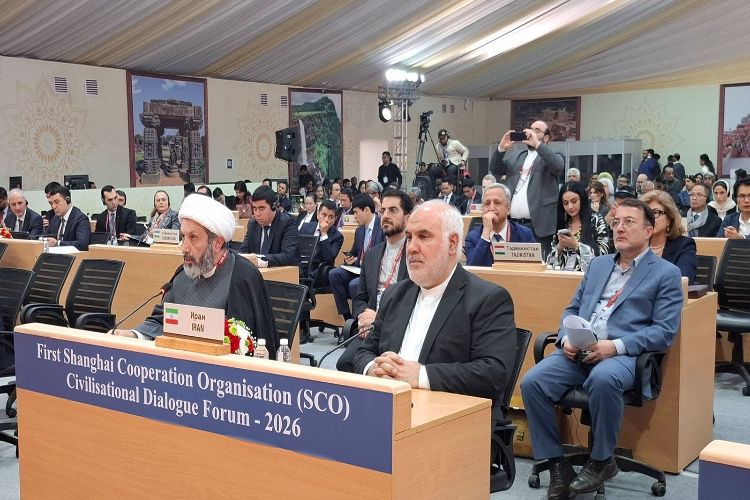
Iran has proposed three cultural and heritage initiatives to deepen cooperation among Shanghai Cooperation Organisation (SCO) member states during the First SCO Civilisational Dialogue Forum in New Delhi, according to a social media post by the Iranian Embassy in India.
Addressing the forum, Dr. Mohammad Mahdi Imanipour, president of Iran’s Islamic Culture and Relations Organisation, underscored the value of strengthening cultural and civilisational ties across SCO nations and thanked the government and people of India as well as the event’s organisers for hosting the gathering.
Iran Proposes Three Initiatives to Strengthen Civilisational Dialogue at SCO Forum in New Delhi Dr. Mohammad Mahdi Imanipour, President of the Islamic Culture and Relations Organization of the Islamic Republic of Iran, addressed the First SCO Civilisational Dialogue Forum in New Delhi, emphasising the importance of strengthening cultural and civilisational cooperation among member states. Expressing appreciation to the Government and people of India and the organisers for hosting the forum, Dr. Imanipour recalled Iran's longstanding commitment to dialogue among civilisations, noting that Iran's initiative at the United Nations in 1998 led to the designation of 2001 as the Year of Dialogue Among Civilizations. He emphasised that civilisational dialogue should go beyond the exchange of views and translate into practical cooperation in cultural, scientific and educational fields. Referring to the challenges facing humanity, he highlighted the atrocities in Gaza and the killing of innocent people, particularly children in Gaza and Minab, as well as the silence of international institutions. He also stressed the need to respect human dignity, social justice, spirituality and coexistence among civilisations. In his address, Dr. Imanipour presented three proposals to advance cultural and civilisational cooperation within the SCO framework: 1. Establishing a Network for Cooperation in Written and Civilisational Heritage: Creating a network of libraries, universities, documentation centres and cultural institutions to preserve, restore and digitise manuscripts and historical documents. Iran expressed its readiness to host a regional centre for this purpose. 2. Establishing a Centre for the Translation and Publication of Scientific and Cultural Works: Promoting the joint translation and publication of significant scientific, literary and cultural works, including Persian-language heritage, into other languages. 3. Establishing a Network for Dialogue Among Youths: Promoting exchanges of academic experiences, joint research and cultural projects to strengthen lasting human, cultural and scientific connections among younger generations of SCO member states. Concluding his remarks, Dr. Imanipour reaffirmed Iran's readiness to play an active and constructive role in achieving the objectives of the forum, strengthening dialogue among civilisations and expanding cultural cooperation among SCO member states.
— Iran in India (@Iran_in_India) November 21, 2026
Imanipour pointed to Iran’s long history of promoting dialogue among civilisations, noting that an Iranian proposal at the United Nations in 1998 paved the way for 2001 being designated the Year of Dialogue Among Civilisations. He argued that such dialogue must move beyond exchanging views into concrete collaboration across culture, science, and education.
Turning to global crises, Imanipour pointed to what he called atrocities in Gaza and the deaths of innocent people, specifically citing children in Gaza and Minab, alongside the silence of international institutions, while emphasising respect for human dignity, social justice, spirituality, and coexistence among civilisations.
To turn civilisational engagement into institutional action within the SCO, Imanipour put forward three proposals. The first is establishing a Network for Cooperation in Written and Civilisational Heritage that would link libraries, universities, documentation centres, and cultural bodies to preserve, restore, and digitise manuscripts and historical documents, with Iran offering to host a regional centre for the effort.
The second proposal calls for creating a Centre for the Translation and Publication of Scientific and Cultural Works to translate and publish major scientific, literary, and cultural works, including Persian-language heritage, into other languages. The third is setting up a Network for Dialogue Among Youths to foster academic exchanges, joint research, and cultural projects among younger generations across SCO member states.
Wrapping up his remarks, Imanipour reiterated that Iran stands ready to play an active and constructive role in advancing the forum’s goals, strengthening civilisational dialogue, and broadening cultural cooperation across the SCO.
Earlier on Friday, Prime Minister Narendra Modi inaugurated the First Shanghai Cooperation Organisation (SCO) Civilisational Dialogue Forum on Friday at Purana Qila in the national capital, bringing together participants from SCO member states, observers and dialogue partners to explore the region's shared civilisational heritage and strengthen cultural cooperation.
Addressing the forum, PM Modi said that cultural connections serve as the strongest guarantee for global peace.
"This is the first SCO Civilisational Dialogue Forum. At a time when discussions across the world are dominated by war and unrest, we in India are engaging in a dialogue on civilizational connections. This is significant because cultural connection serves as the strongest guarantee for global peace—which further underscores the importance of today’s event," the Prime Minister said.
Highlighting the SCO's journey and its achievements over the years, PM Modi said that the grouping had significantly strengthened cooperation in security, economy and connectivity, adding that civilisational and cultural cooperation would further strengthen ties among member nations.
"Just a few months ago, the Shanghai Cooperation Organisation (SCO) marked 25 years since its inception. Over the years, the SCO has significantly strengthened cooperation in the realms of security, the economy, and connectivity. In this context, cultural and civilisational cooperation will further fortify the ties between our nations," he said.
Expressing confidence in the outcomes of the inaugural forum, the Prime Minister said that the platform would generate new ideas and opportunities for cultural collaboration, while shared civilisational experiences would play an important role in bringing the world together.
"I am confident that this forum will bring forth new ideas and create fresh opportunities for cultural collaboration, and that our shared civilisational experiences will play a vital role in uniting the world," PM Modi added.
Union Minister of Culture Gajendra Singh Shekhawat was also present during the inauguration.
READ MORE: Star Footballer Suhail Ahmad Bhat is living his father's dream
India is hosting the three-day multilateral event from November 20 to 22, bringing together participants from SCO member states, observers and dialogue partners to explore the region's shared civilisational heritage and strengthen cultural cooperation.