.webp "Supreme Court of India")
New Delhi
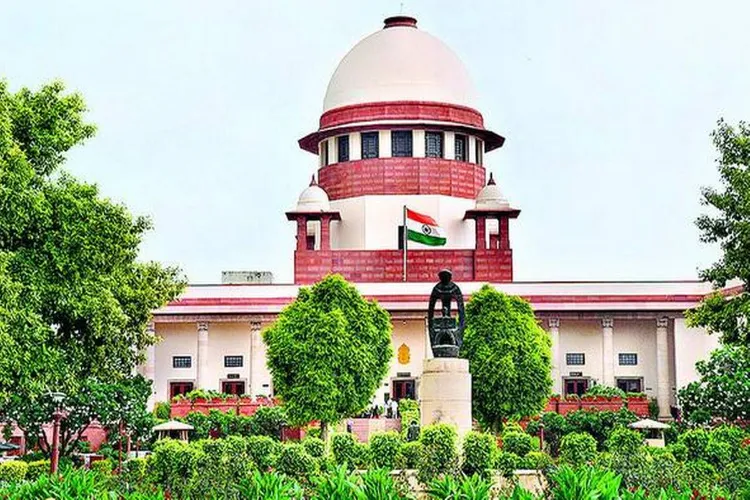
The Supreme Court of India on Tuesday granted anticipatory bail to folk singer Neha Singh Rathore in a case filed against her over a social media post on last year’s Pahalgam terror attack 2025 in which 26 people were killed.
A bench of Justices J K Maheshwari and A S Chandurkar granted the relief after noting that Rathore had appeared before authorities and recorded her statements in connection with the case.
The top court directed her to continue cooperating with the investigation.
Rathore has challenged a 2025 order of the Allahabad High Court rejecting her plea for anticipatory bail.
On January 7, the apex court had granted her interim protection from arrest in the case and issued notice to the Uttar Pradesh Government and the complainant, directing that no coercive action be taken against her.
The case relates to a social media post in which her remarks allegedly targeted Narendra Modi, Amit Shah and the Bharatiya Janata Party in connection with the killing of 26 tourists in Pahalgam in Jammu and Kashmir.
The Lucknow bench of the Allahabad High Court had on December 5 last year rejected Rathore’s anticipatory bail plea, observing that she had not cooperated with the investigation despite directions issued by an earlier bench that dismissed her petition seeking quashing of the FIR.
The FIR against Rathore was registered at Hazratganj Police Station in Lucknow on April 27, and the investigation is underway.
The complaint, filed by Abhay Pratap Singh, accused Rathore of targeting a particular religious community and threatening national unity by attempting to incite one community against another on religious grounds.
In her plea, Rathore contended that she had been wrongfully implicated under several provisions of the Bharatiya Nyaya Sanhita, including charges related to promoting communal hatred, disturbing public peace and endangering the sovereignty, unity and integrity of India.
READ MORE: Sofia Firdaus: an accidental politician who is here to stay
She also faces charges under the Information Technology Act, 2000.