Tehran
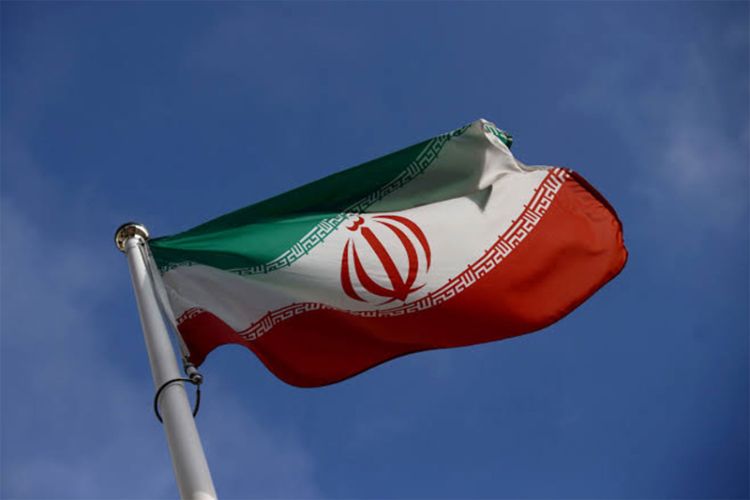
Iran has cautioned the United States against attempting to reignite military confrontation, declaring that Tehran will not accept an extended war of attrition or an indefinite state of neither war nor peace, state-run Press TV reported.
Speaking on Thursday, Islamic Revolutionary Guard Corps (IRGC) spokesperson Brigadier General Hossein Mohebbi stated that Tehran stands fully prepared for all potential operational scenarios, emphasising that the nation's military capabilities have advanced substantially while its forces maintain continuous surveillance over American troop movements.
Rejecting the notion of a drawn-out standoff, he declared, "We do not accept a situation of neither war nor peace."
"We will settle the matter of the war once and for all. This will either be determined on the battlefield, or the United States must accept Iran's conditions," Mohebbi added.
Turning to the measures taken to fortify national readiness following the 12-day war, Mohebbi noted that advancing domestic air-defence infrastructure became an urgent strategic priority after the conflict, with the task entrusted to the IRGC Aerospace Force under directives issued by the nation's military leadership, Press TV reported.
"Our colleagues in the IRGC Aerospace Force worked around the clock on designing and manufacturing new defence systems. Fortunately, today we have developed not just one system, but at least three new systems in this field," he stated.
According to Mohebbi, these homegrown platforms have matured to a stage where they not only fulfil domestic operational demands but are also being exported internationally, underscoring progress within Iran's indigenous defence manufacturing sector, as noted by Press TV.
"Today, the previous shortcomings in our air defence have been addressed, and with active and capable systems in place, the country's air-defence capacity has increased," he remarked.
Stressing that Iran no longer relies on foreign suppliers to satisfy its air-defence requirements, he added that the IRGC Aerospace Force and the Iranian Army now execute joint defensive missions using domestically engineered systems.
As evidence of this heightened vigilance, the spokesperson revealed that hostile aerial platforms are being tracked and intercepted continuously, noting that Iranian units have downed their ninth MQ-170 reconnaissance drone intact.
Beyond defensive shields, Mohebbi addressed Tehran's offensive ballistic reach, noting that Iran had previously demonstrated a missile range extending up to 4,500 kilometres, referencing waters in the Indian Ocean near Diego Garcia, Press TV highlighted.
He observed that while the previously declared 2,000-kilometre range ceiling had been established under a directive from the late Leader Ayatollah Seyyed Ali Khamenei, Iran retains the operational capacity to strike American military installations in Europe should the current Leader issue such an order.
Assessing the fallout of the recent war on Washington's regional posture, Mohebbi asserted that the conflict exposed critical vulnerabilities across America's expansive network of military facilities, compelling the US to reassess elements of its regional deployment framework.
He pointed out that the US had built roughly 16 military installations across the region over multiple decades, establishing an interconnected network designed to sustain military operations and project strategic influence, as detailed by Press TV.
These facilities encompassed Al Udeid Air Base in Qatar, characterised as a primary command-and-control hub for US aerial operations, alongside the Al Jufair and Sheikh Isa installations in Bahrain, which underpinned naval deployments. Meanwhile, bases in Kuwait, including Ali Al Salem and Ahmad al-Jaber, supplied logistical backing, personnel and hardware.
Equipped with airfields, command-and-control architectures, data-processing centres and missile reserves, this extensive network was transformed during the war into a strategic liability, forcing Washington to redirect substantial resources towards safeguarding its bases and air-defence batteries.
Mohebbi stated that several American installations were either destroyed or rendered inoperable, adding that reconstructing certain bases may no longer be operationally viable given the persistent threats confronting them, Press TV noted.
Consequently, Washington may be forced to shift elements of its military footprint farther away from the region, potentially establishing alternative staging facilities in areas such as the Horn of Africa.
Parallel to these land-based setbacks, the IRGC spokesperson underscored a steep contraction in American naval deployments within the Persian Gulf.
"Before the Ramadan War, the United States had around 40 warships in the Persian Gulf, but now none of them are present in the region," he remarked, noting that previous operations conducted by the US Fifth Fleet across Bahrain and the Persian Gulf have been severely curtailed.
He added that American aircraft carriers and surface combatants have repositioned farther out, situating US naval assets roughly 500 to 700 kilometres from the theatre.
Citing data published by Washington itself, Mohebbi also drew attention to a sharp depletion in American inventories of Patriot and Terminal High Altitude Area Defence (THAAD) interceptor systems, illustrating growing constraints on the US military's ability to sustain its regional posture and safeguard strategic interests.
Despite these setbacks, he cautioned that Washington could still initiate fresh military manoeuvres in a bid to salvage its damaged prestige and project enduring regional influence, emphasising that Tehran does not interpret the prevailing lull as an end to the threat of renewed aggression, according to Press TV.
"We do not consider any possibility in the military arena merely a possibility. We treat every possibility as a 100 per cent threat and have established full readiness accordingly," he stated.
He added that Iranian intelligence and armed forces closely track American troop deployments, aircraft movements, weapons platforms, equipment positioning and potential operational plans, maintaining peak operational readiness to counter any hostile move.
Mohebbi further contended that the recent conflict eroded Washington's credibility among regional partners, prompting several states to reconsider their dependence on US security guarantees and explore alternative regional security frameworks.
Warning that the United States cannot initiate another hostile act against Iran without exposing its own military and strategic assets to severe retaliation, he emphasised that Tehran's capacity to strike adversary infrastructure within operational range has expanded markedly, anchored in an asymmetric military doctrine designed to inflict heavy costs.
"Today, the Islamic Republic's ability to target enemy infrastructure within our operational range has increased compared with the past," he stated.
Explaining that Tehran's doctrine relies on retaliating through varied methods and against targets distinct from those chosen by an adversary, Mohebbi cautioned that any renewed aggression would invite an overwhelming, disproportionate counterstrike.
"Be assured that whatever action the enemy takes against us, it will receive at least three times as much in response. This response may come before the enemy takes action or afterwards," he warned.
Reiterating Tehran's long-standing position, he stressed that any nation permitting Washington to use its territory to launch attacks against Iran would immediately become a legitimate target for retaliation, irrespective of geographic location.
Addressing specific operational scenarios, Mohebbi dismissed the feasibility of a US ground offensive, arguing that Iran's land-defence capabilities far exceed its aerial and maritime strengths, whereas the American military relies structurally on naval and air superiority rather than ground formations.
Responding to queries regarding a potential US helicopter-borne raid, he similarly ruled out the prospect of Washington executing such an operation successfully, asserting that Iranian air defences are fully capable of intercepting incoming aircraft, Press TV reported.
He additionally cautioned that any American strike targeting Iranian dams would provoke a reciprocal response, warning that attacks on vital civilian infrastructure would mark a dangerous escalation carrying severe repercussions.
Concluding his remarks, Mohebbi argued that a protracted standoff where active fighting pauses while military and economic pressures persist is itself an ongoing form of warfare.
These warnings come against the backdrop of intense regional hostilities earlier this year. On February 28, Israel and the United States carried out joint strikes against Tehran and other Iranian cities, prompting Iran to retaliate with waves of missile and drone strikes aimed at Israel as well as US bases and assets across the region, while tightening control over the Strait of Hormuz.
Although a ceasefire took effect between the warring sides on April 8, followed on June 18 by a memorandum of understanding (MoU) between Iran and the United States to end the war across the region on all fronts, diplomatic efforts have since stalled.
READ MORE: Muslims must remember that cleanliness is half faith
Under the MoU, both sides were set to hold talks within 60 days, running through August 17, to work out a final accord covering Iran's nuclear programme and sanctions relief, yet they fell short of meaningful progress towards a deal as tensions kept rising.